Boundary Line Management
Locate, Blaze, Paint & Maintain
(We are not licensed surveyors.)
Any Season. Any Temperature. Any Terrain.
Step One: Locate Boundary Lines
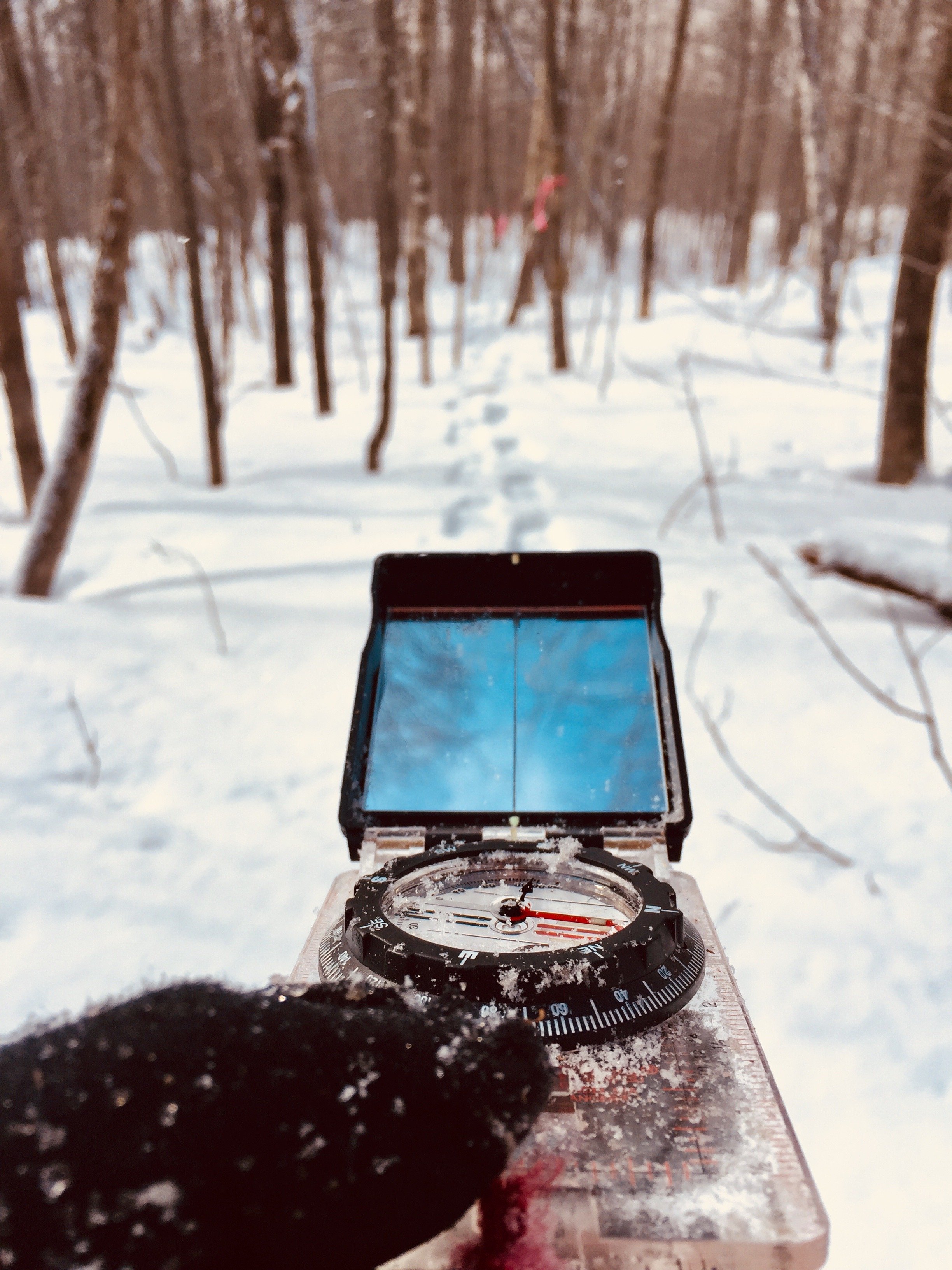
Using compass at times when portions of the old property lines are lost.

Utilizing maps created in ArcMap®.
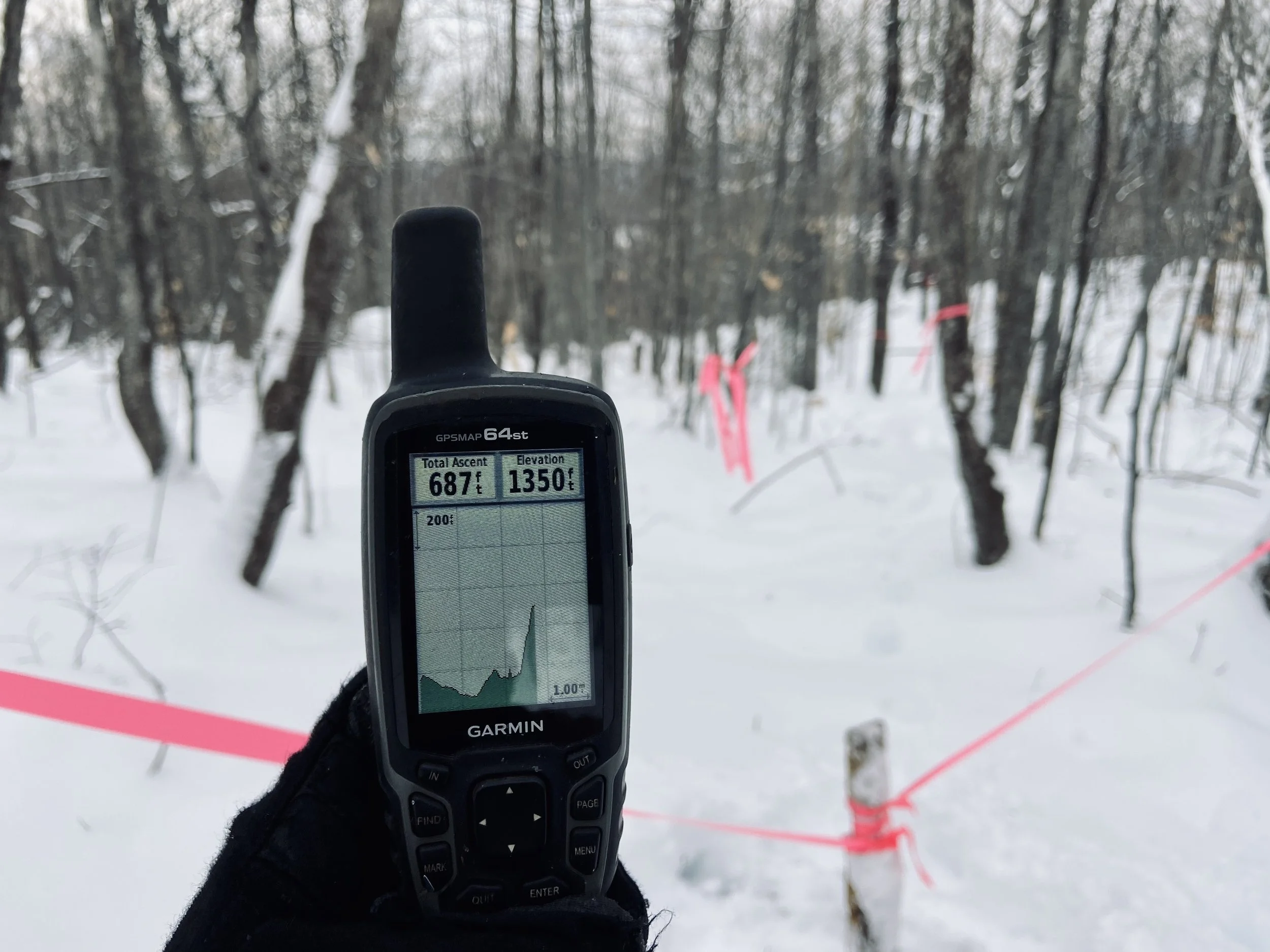
Via hand-held Garmin® GPS.
What we look for when locating a boundary line.
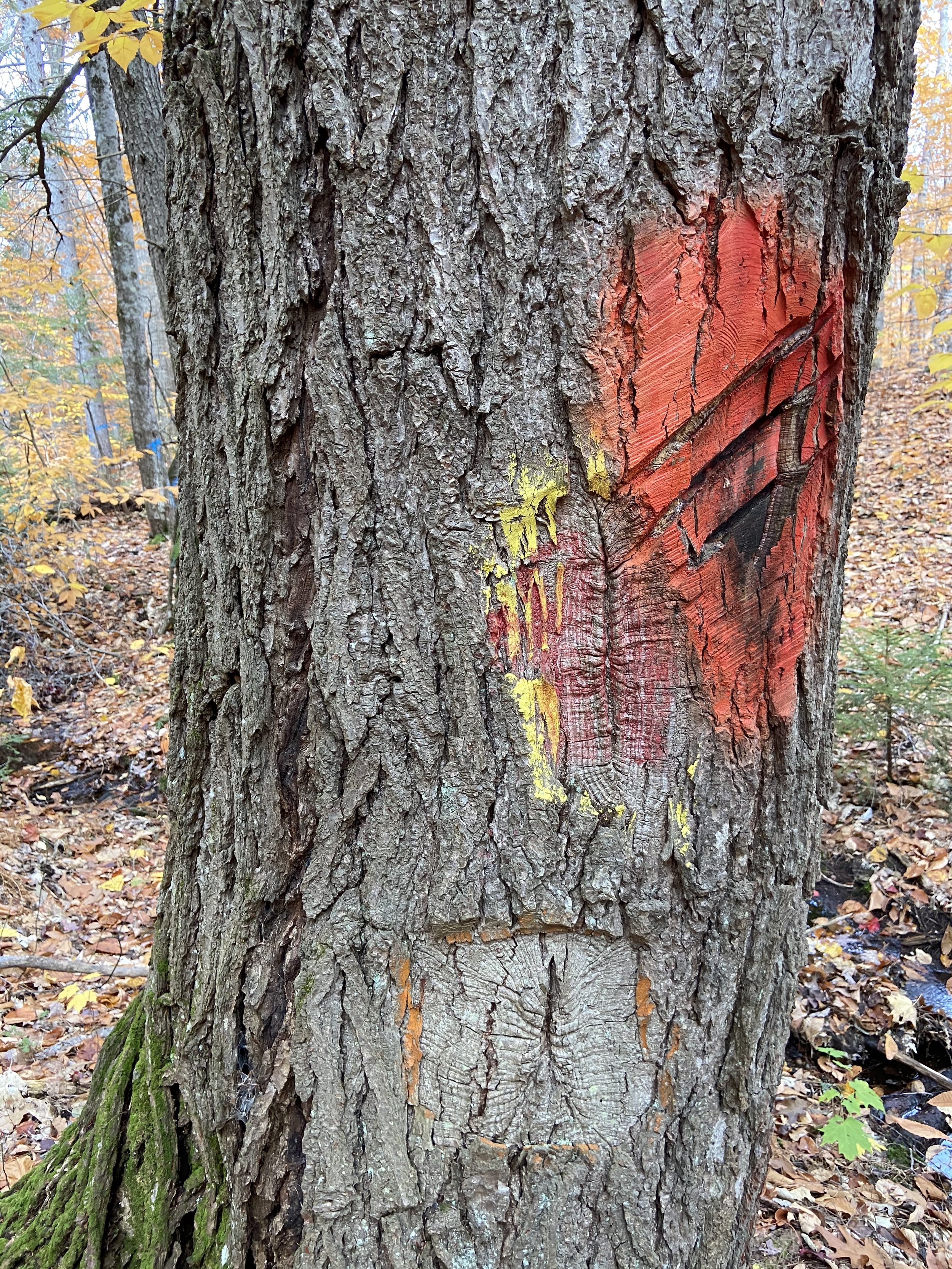
Multiple Old Centerline Blazes on Tree

Old Flagging
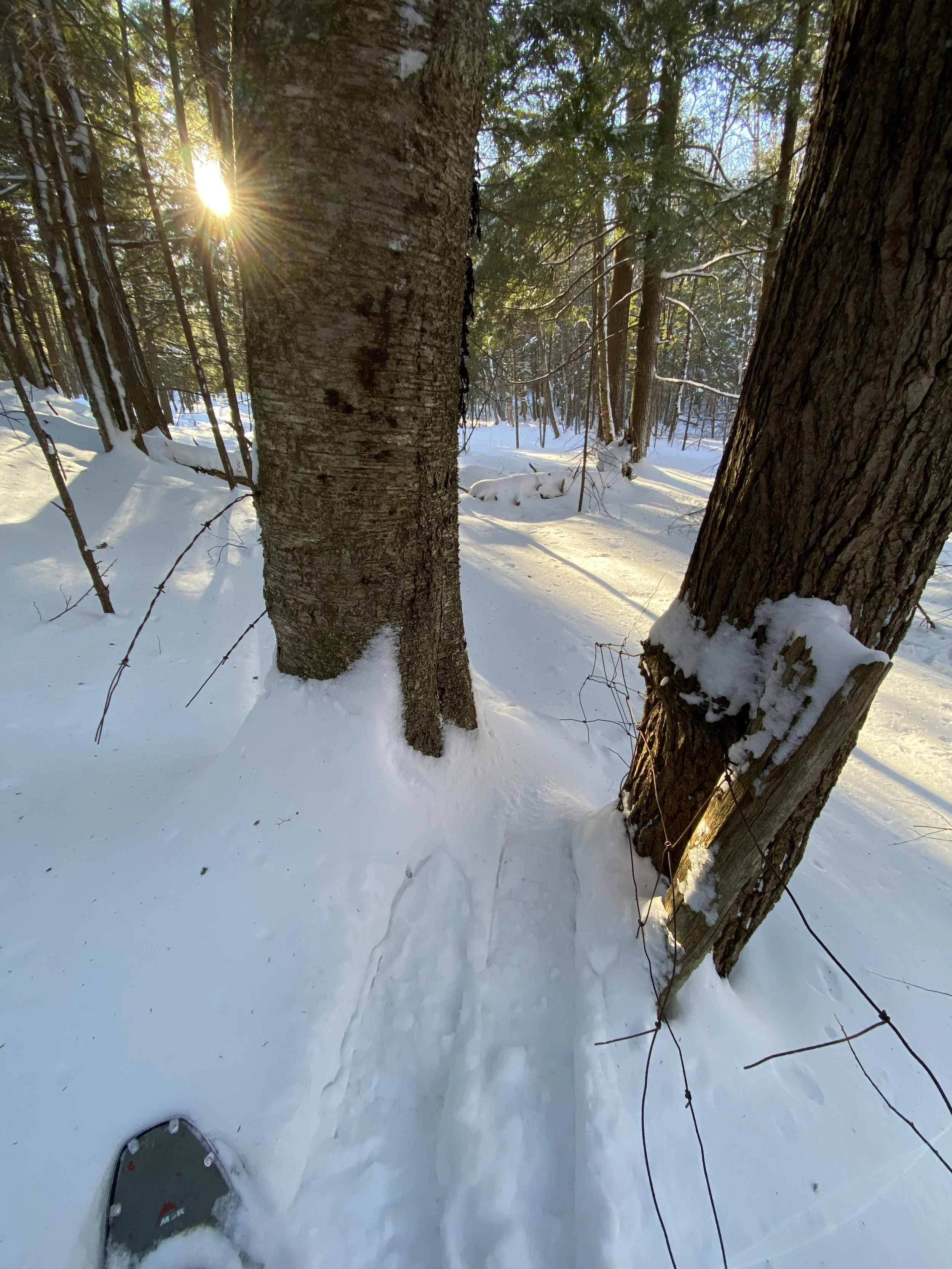
Old Barbed Wire Fencing in Trees
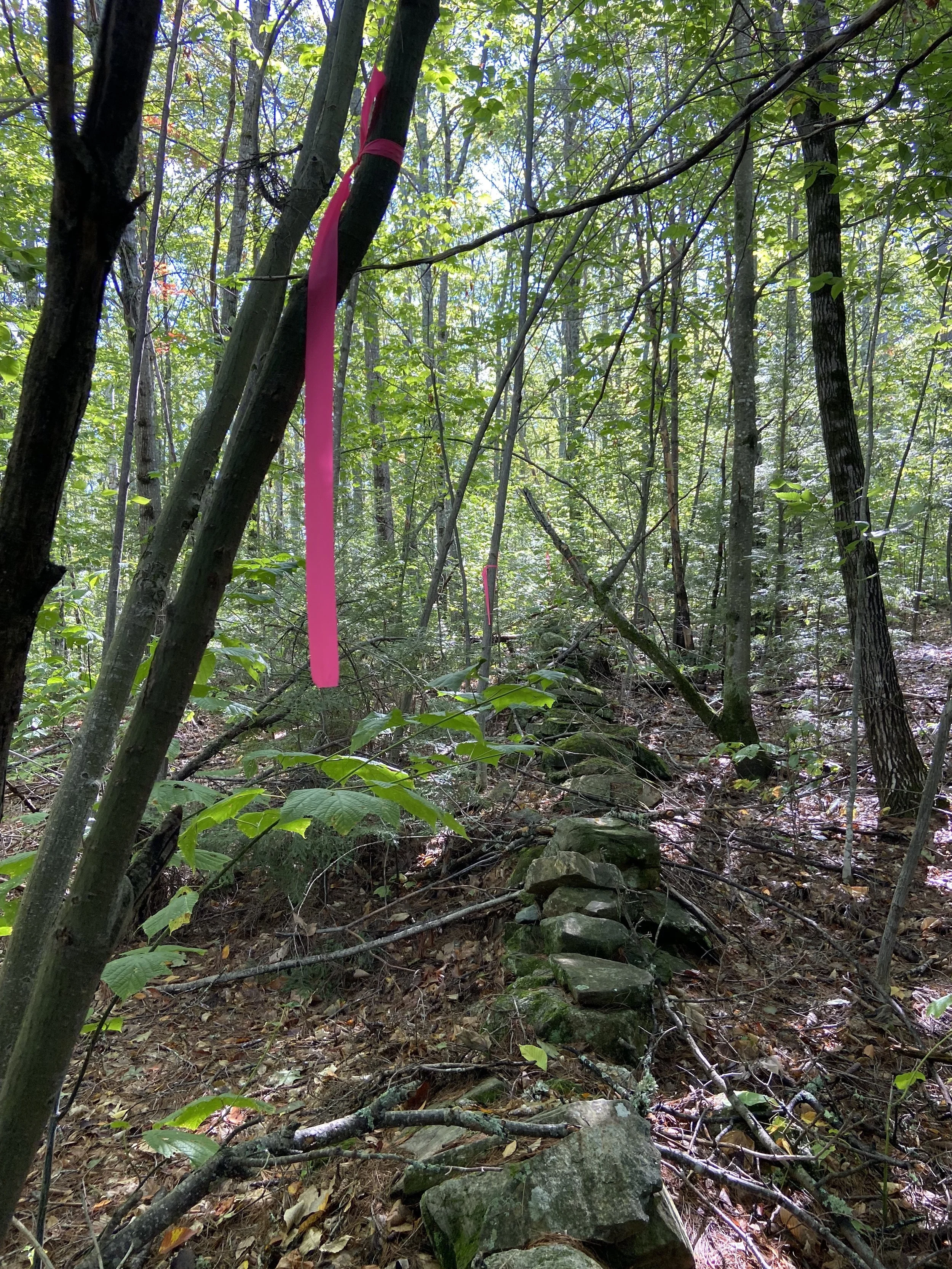
Stone Walls
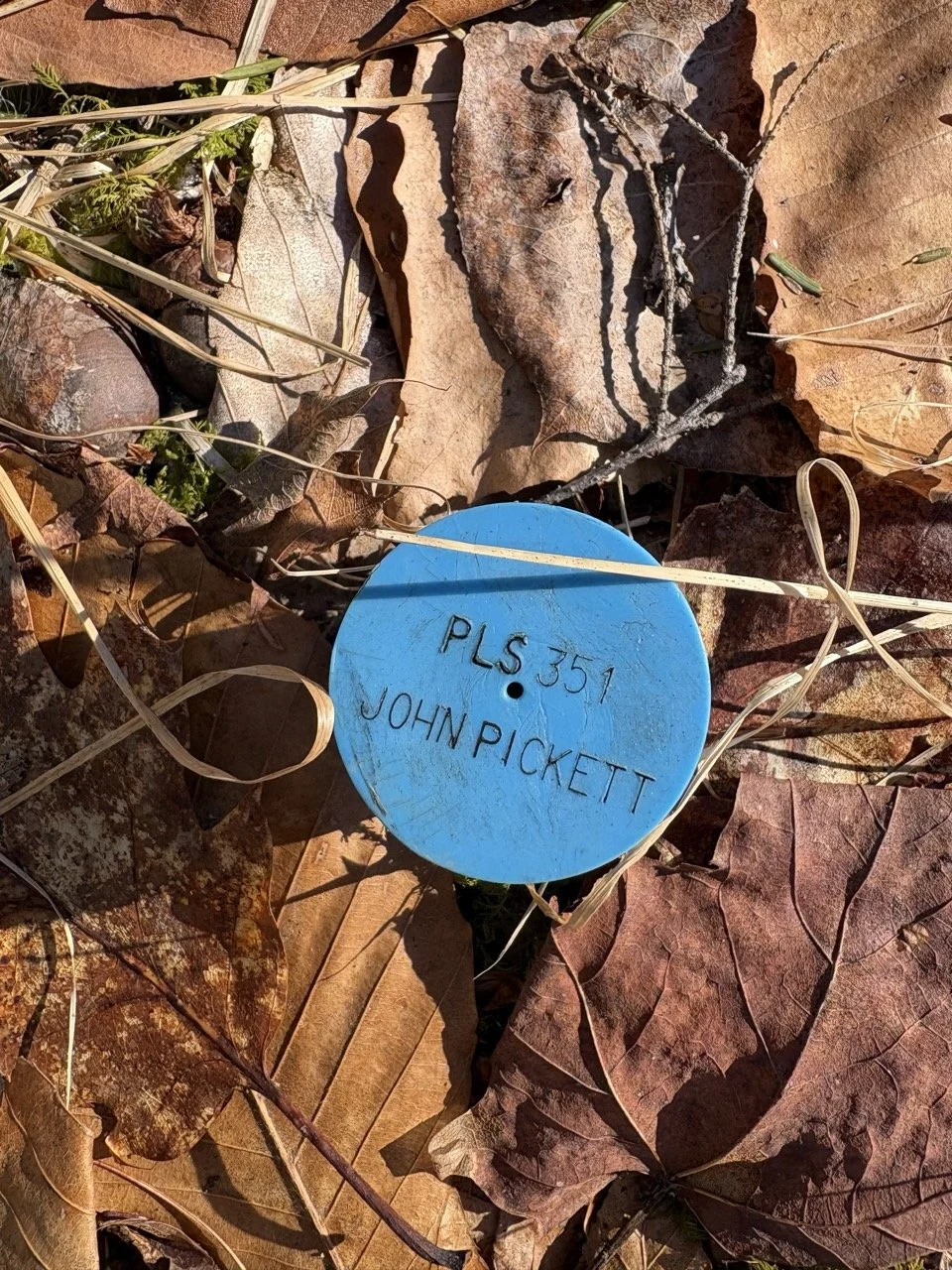
Survey Pins

Witness Trees to Boundary Line Corner

Old wooden corner posts labeled with lot and range lines and dated.
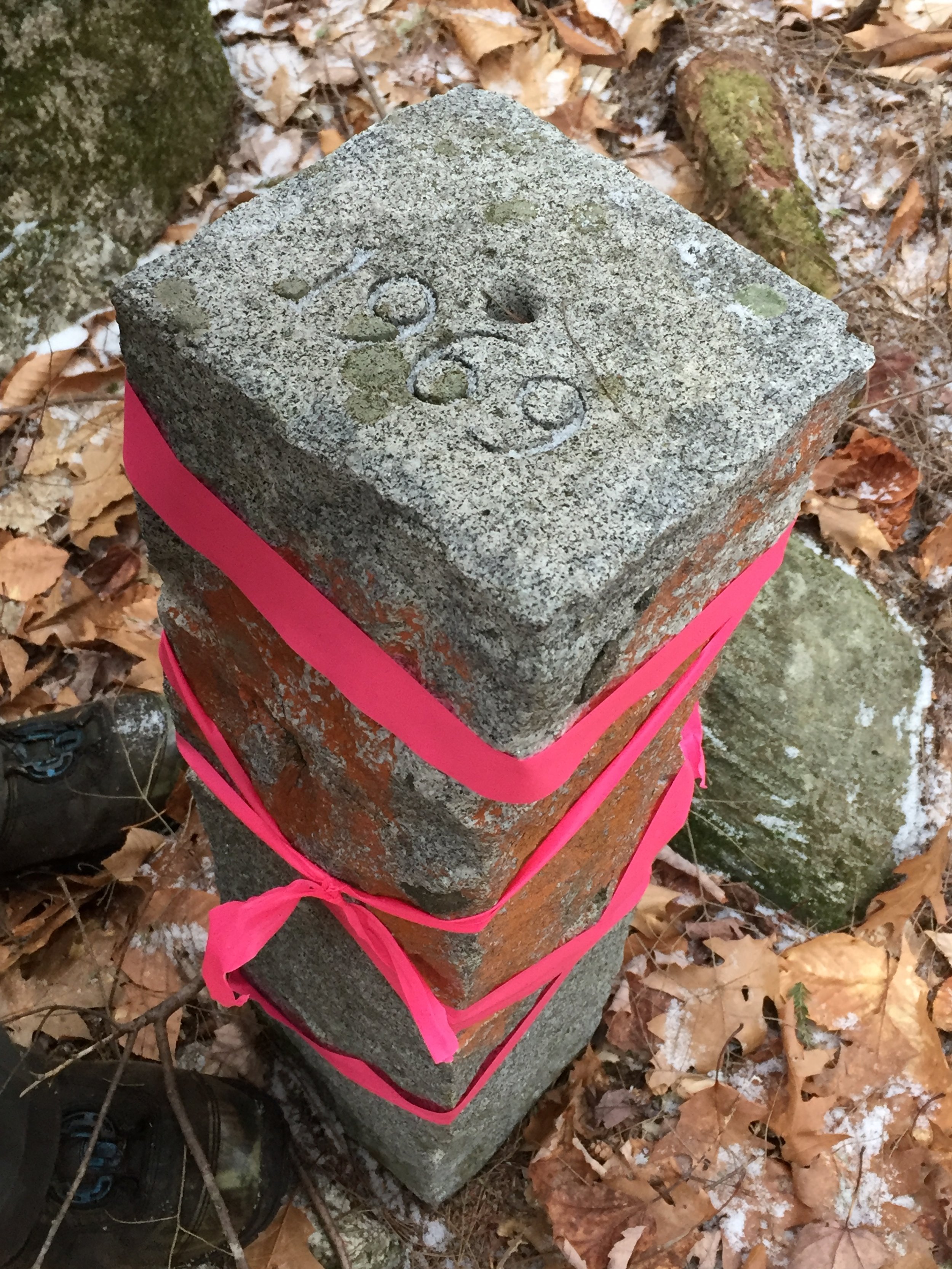
Stone Monuments
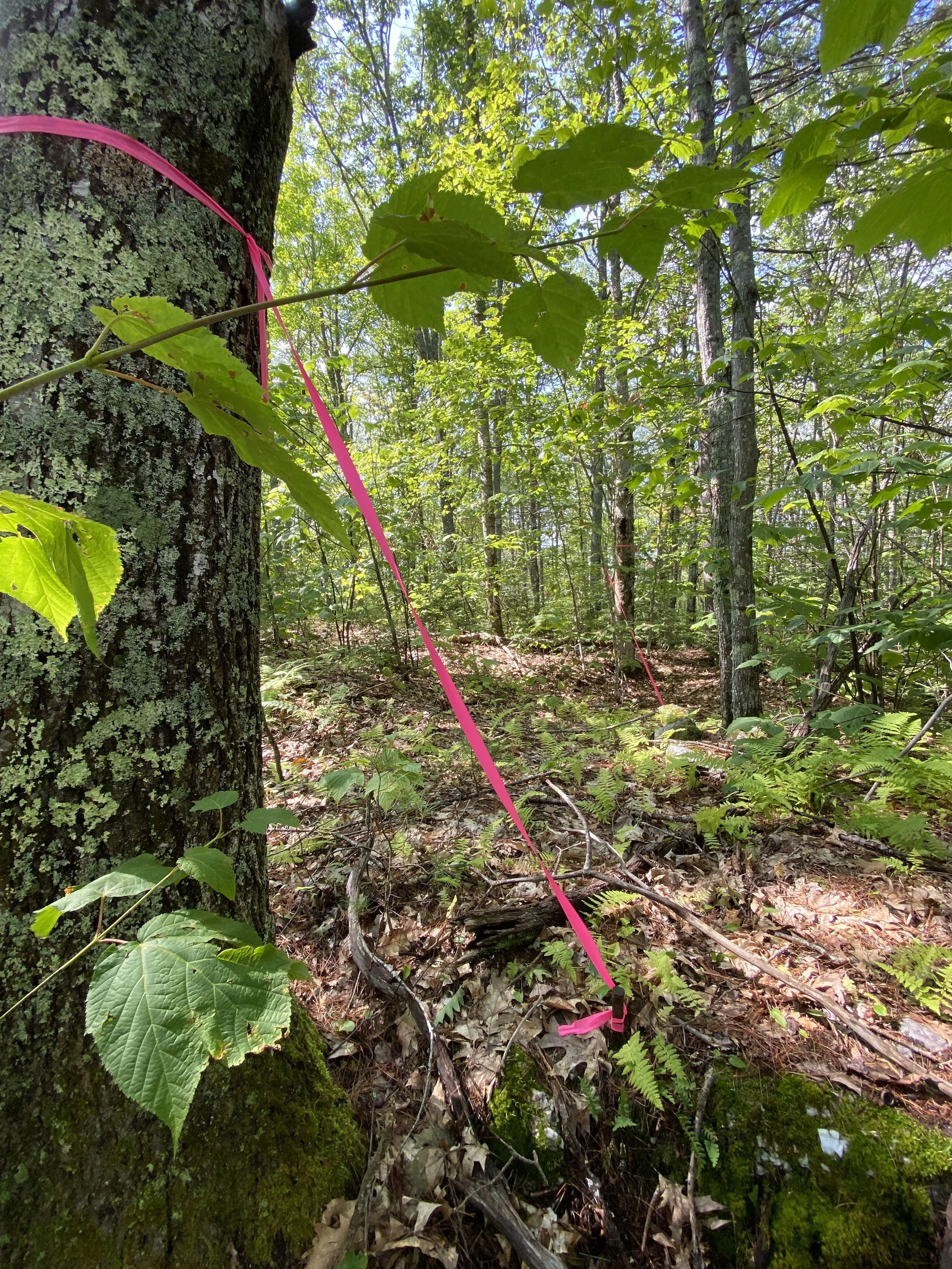
Iron Stakes Referencing Property Line
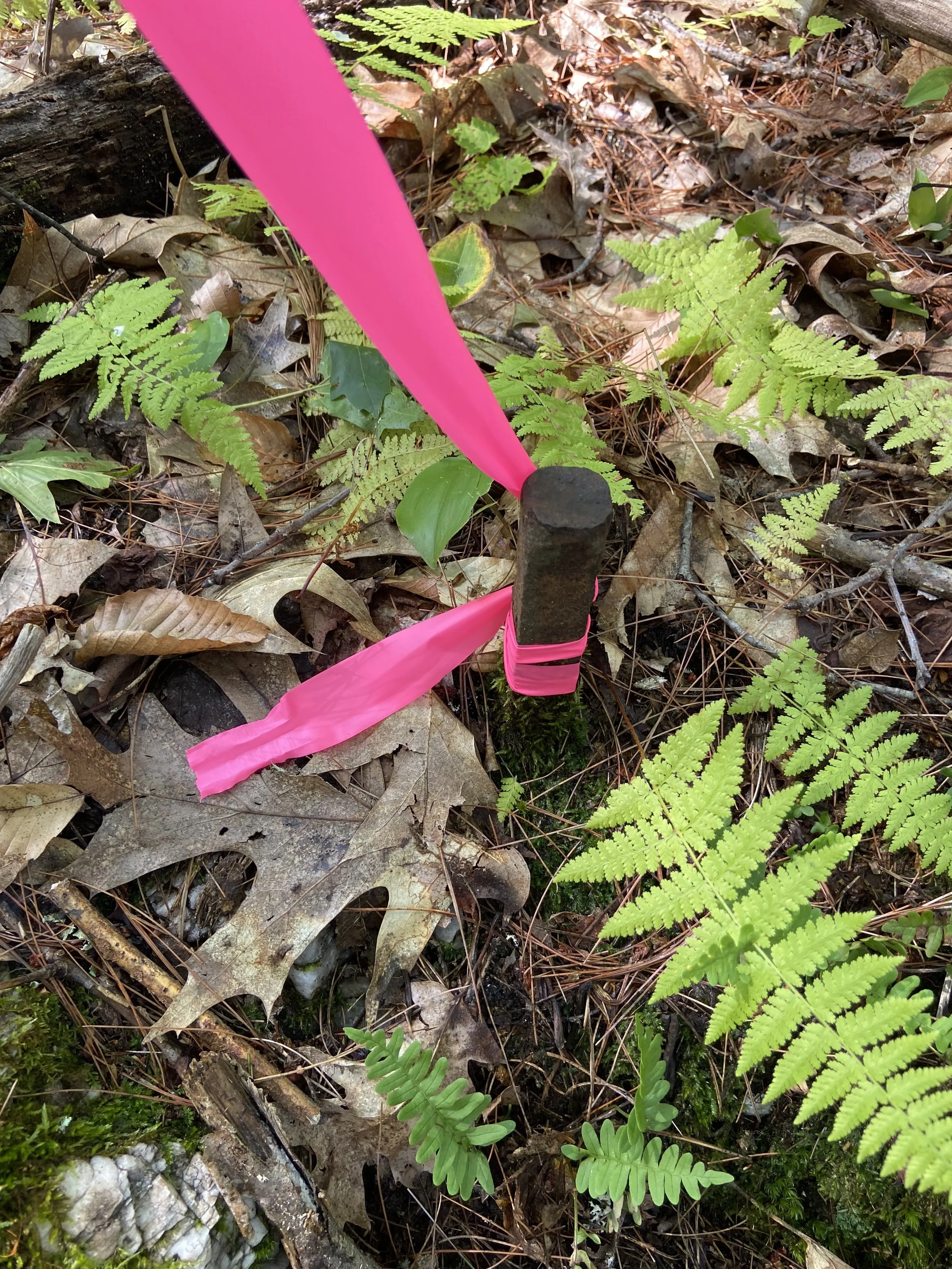
Iron Reference Points
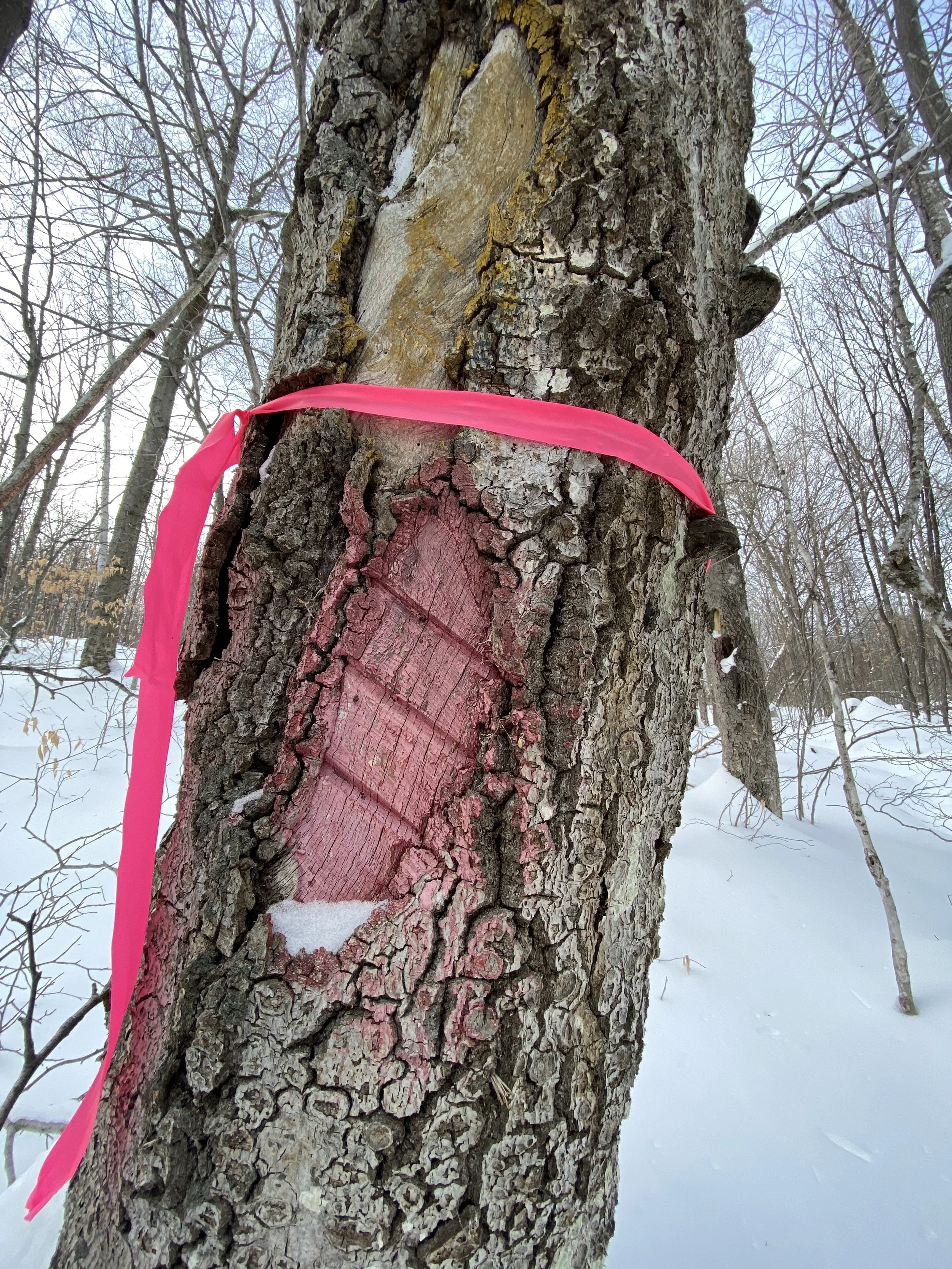
Old Painted Blazes

Old Outside Blazes Pointing to Boundary Line Center
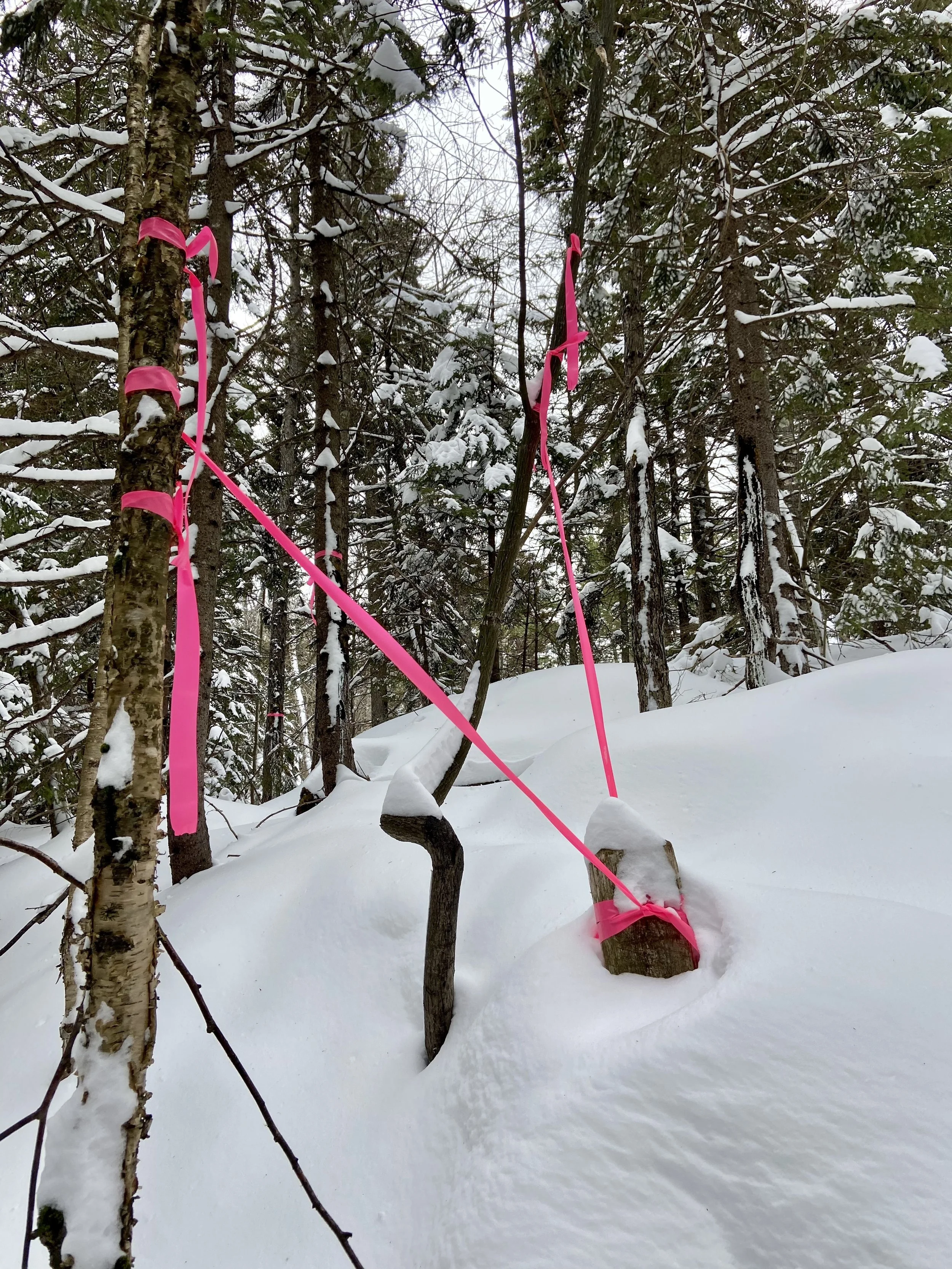
Corner Monuments and Blazes
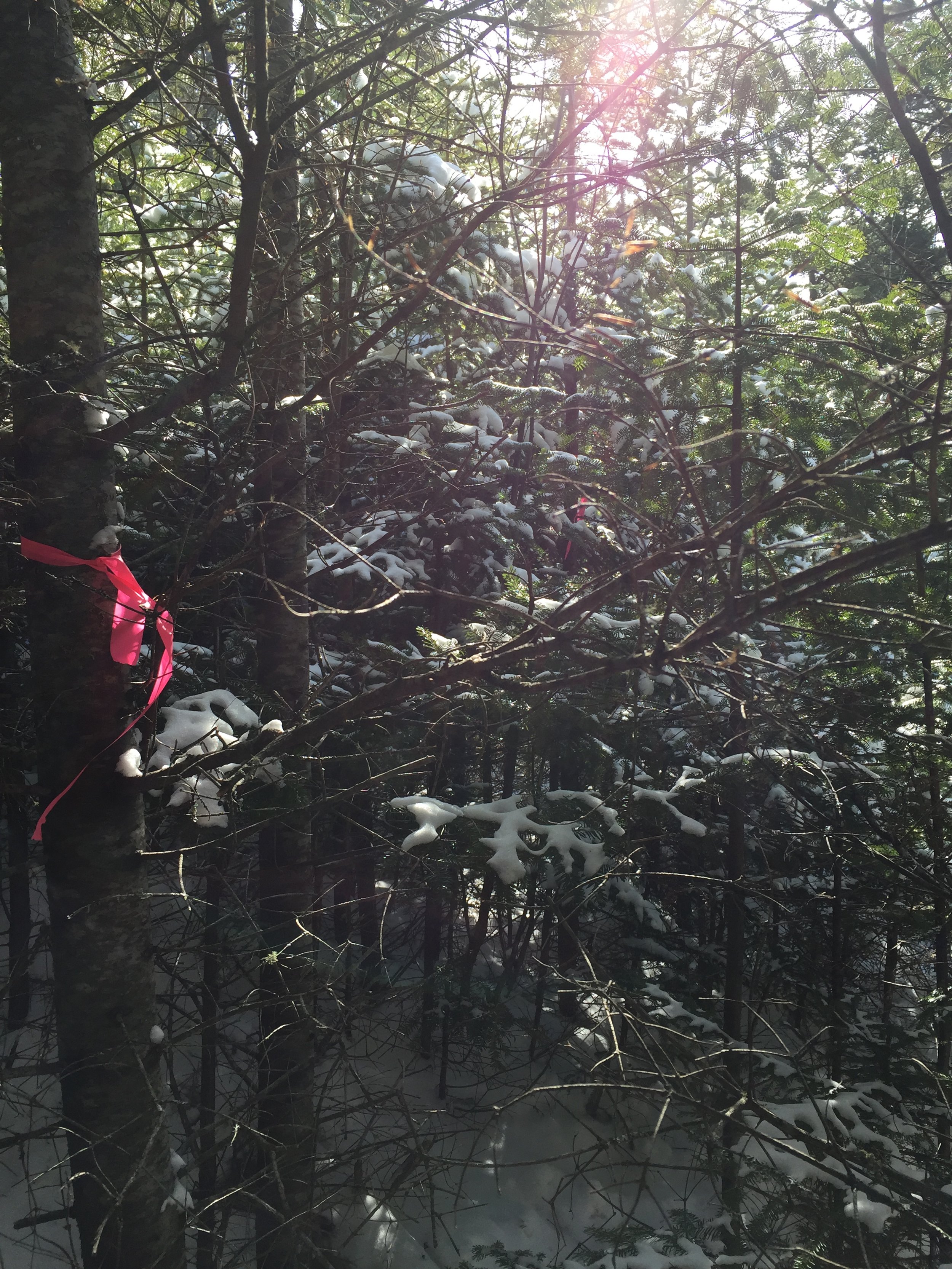
"The Jungle" in which there is no representation at all between any two recognizable points.
Step Two: Select Your Package
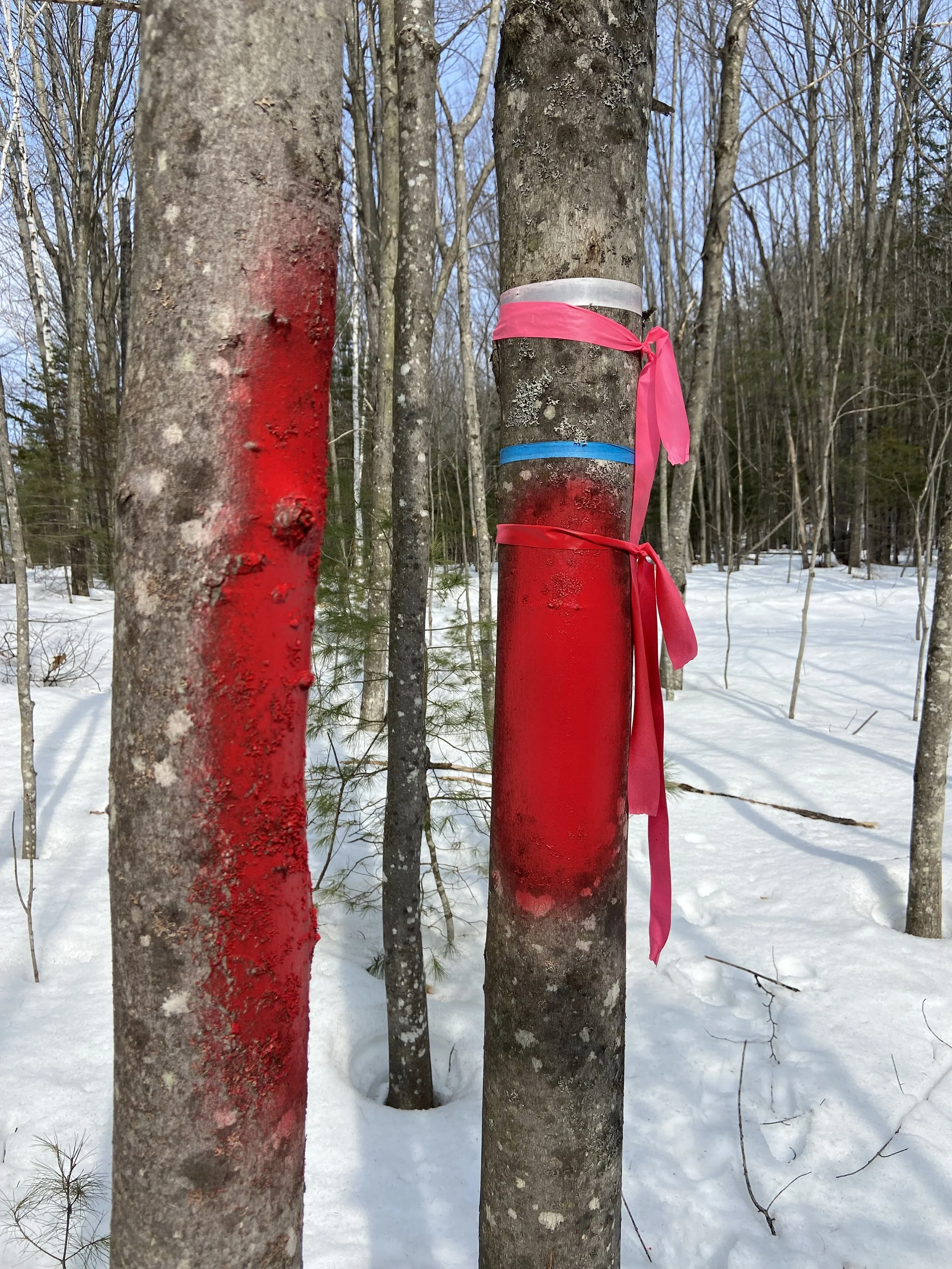
Low Budget Package
Only tree faces/bark painted
(No Blazes)
Existing line flagged
No clearing of brush

Base Package
Blaze cut into tree by hand using axe
Blazes painted
Existing line flagged
Brush Cleared
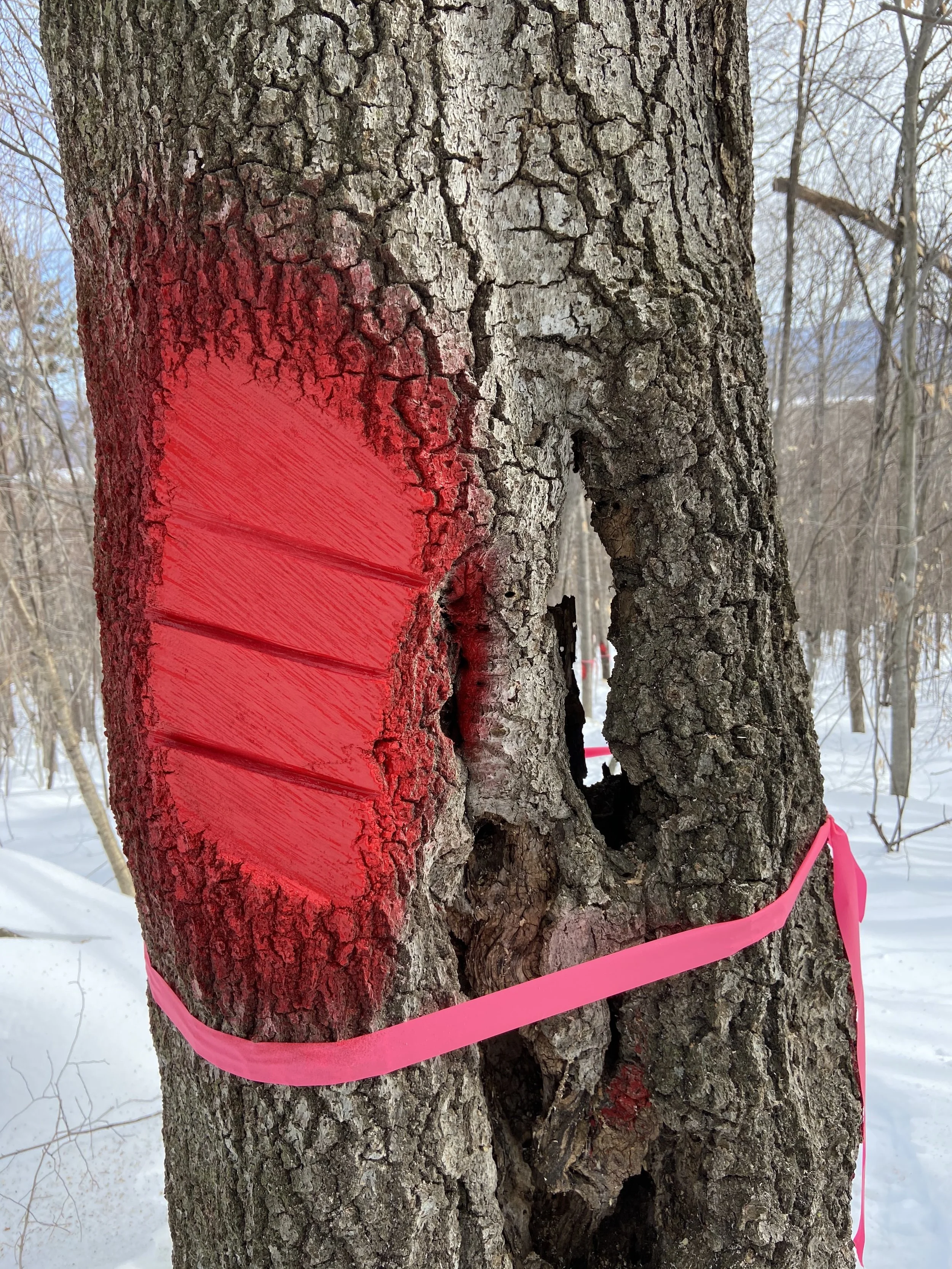
Long Term Package
Blaze cut into tree by hand using chainsaw
Blazes painted
Existing line flagged
Brush cleared/finish work using Swedish axe
Step Three: Maintain
Identify Previously Painted Blazes (Painted six-ten years ago)
Refresh with Two New Coats of Paint
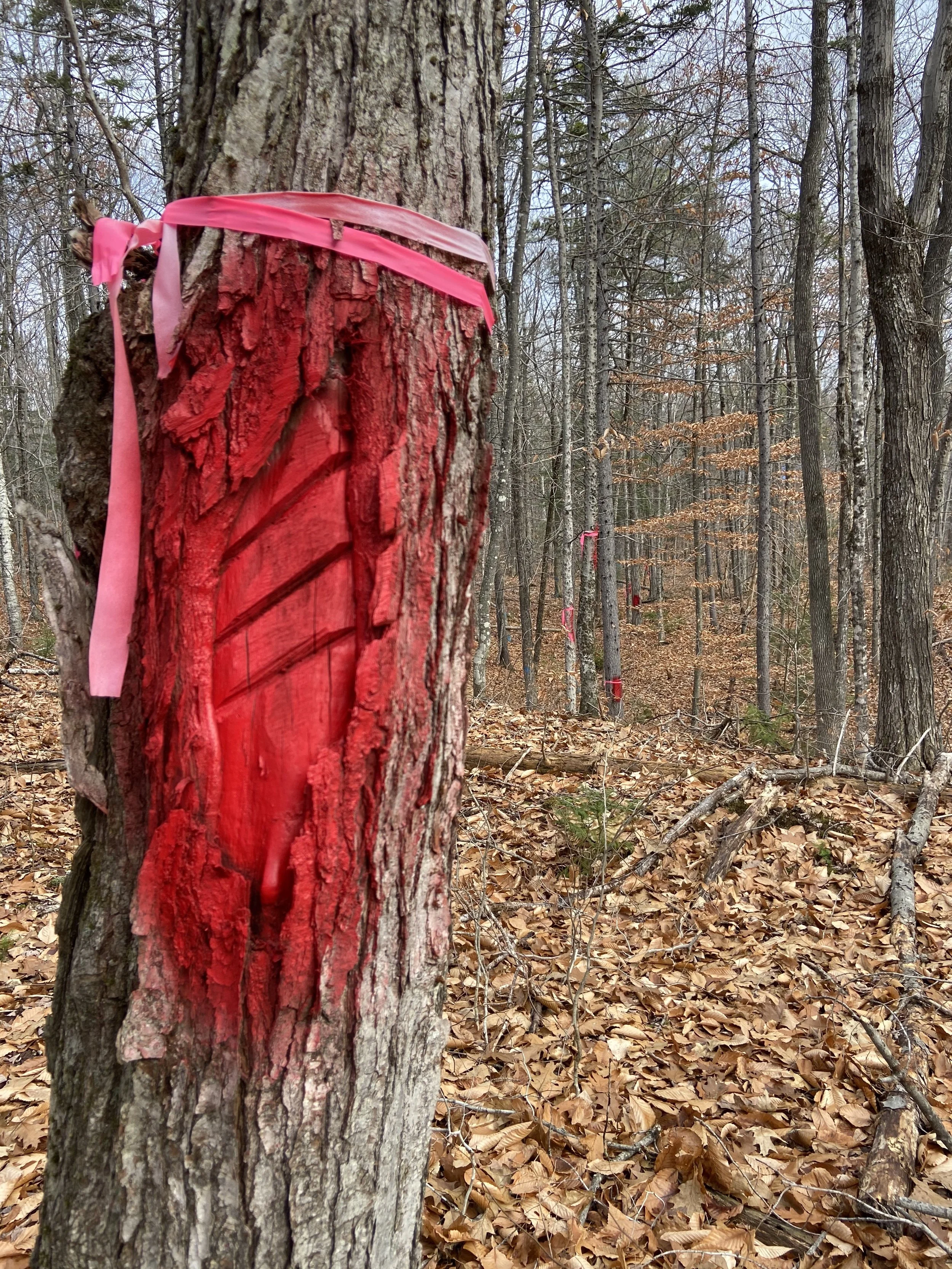
Observe the Growth Around the Blaze Here
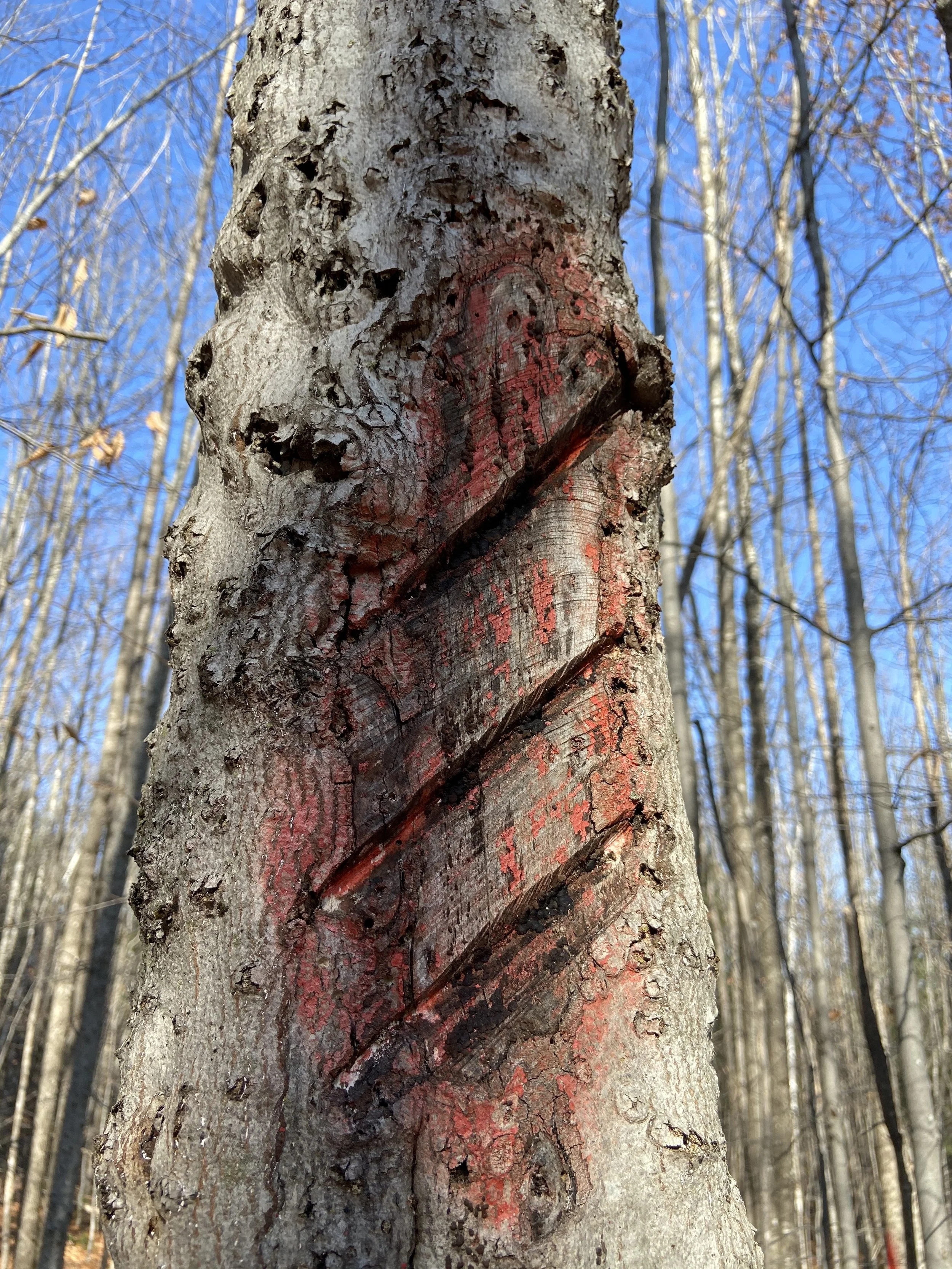
Even professional grade paint does not last forever. (Longevity is about eight years.)
What is the worth in investing in boundary line maintenance?

No matter how boundary lines are completed, whether by hand or with power tools, it is crucial that the blazes are numerous, spaced correctly and clearly visible in an identifying color. Clearing debris and excess trees to create the proper width will make the boundary line’s position obvious from the rest of your woodlot. Upkeep of your boundary lines is beneficial to you and your neighbors to prevent a timber harvest trespass and is great landowner stewardship.
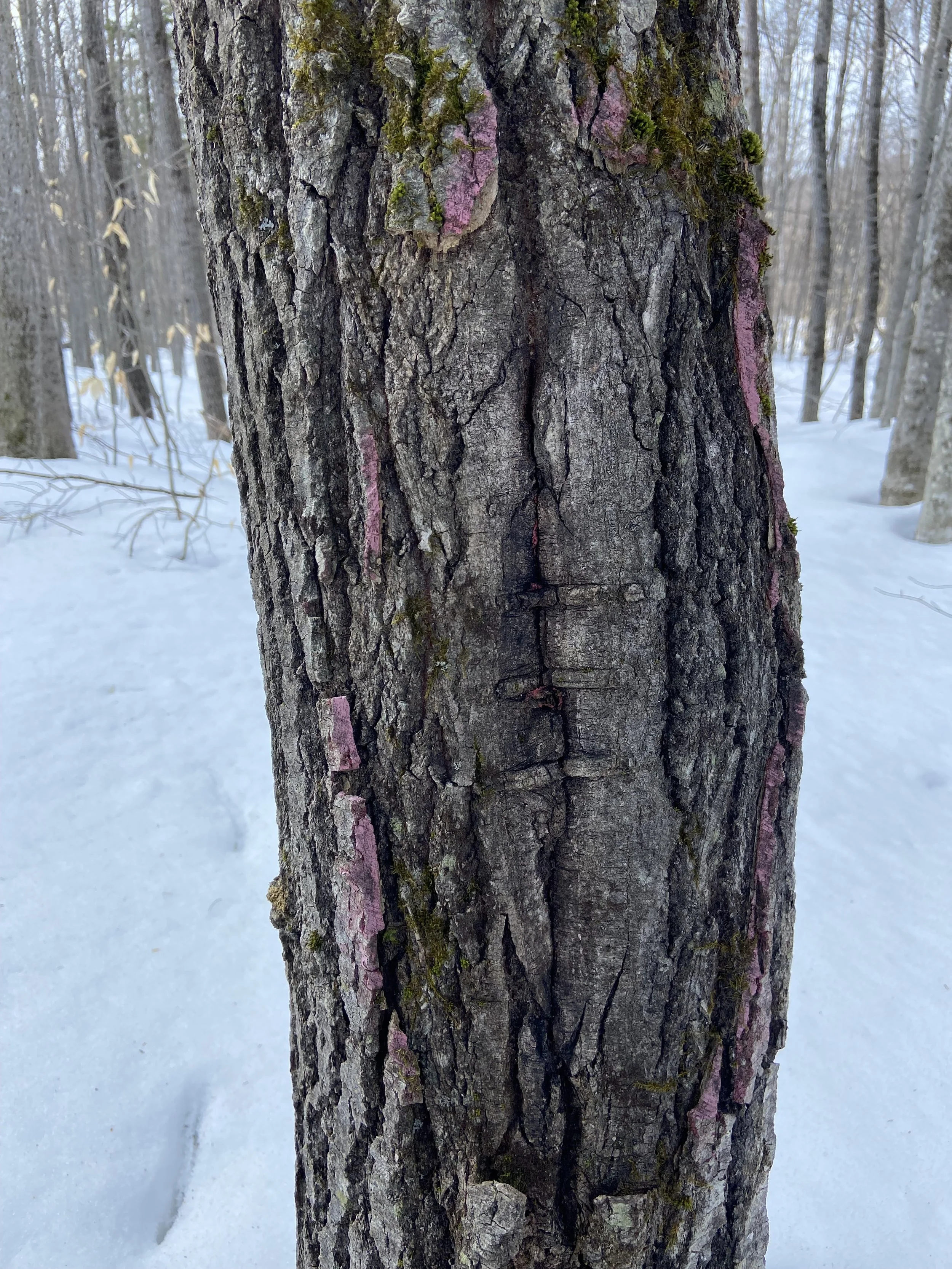
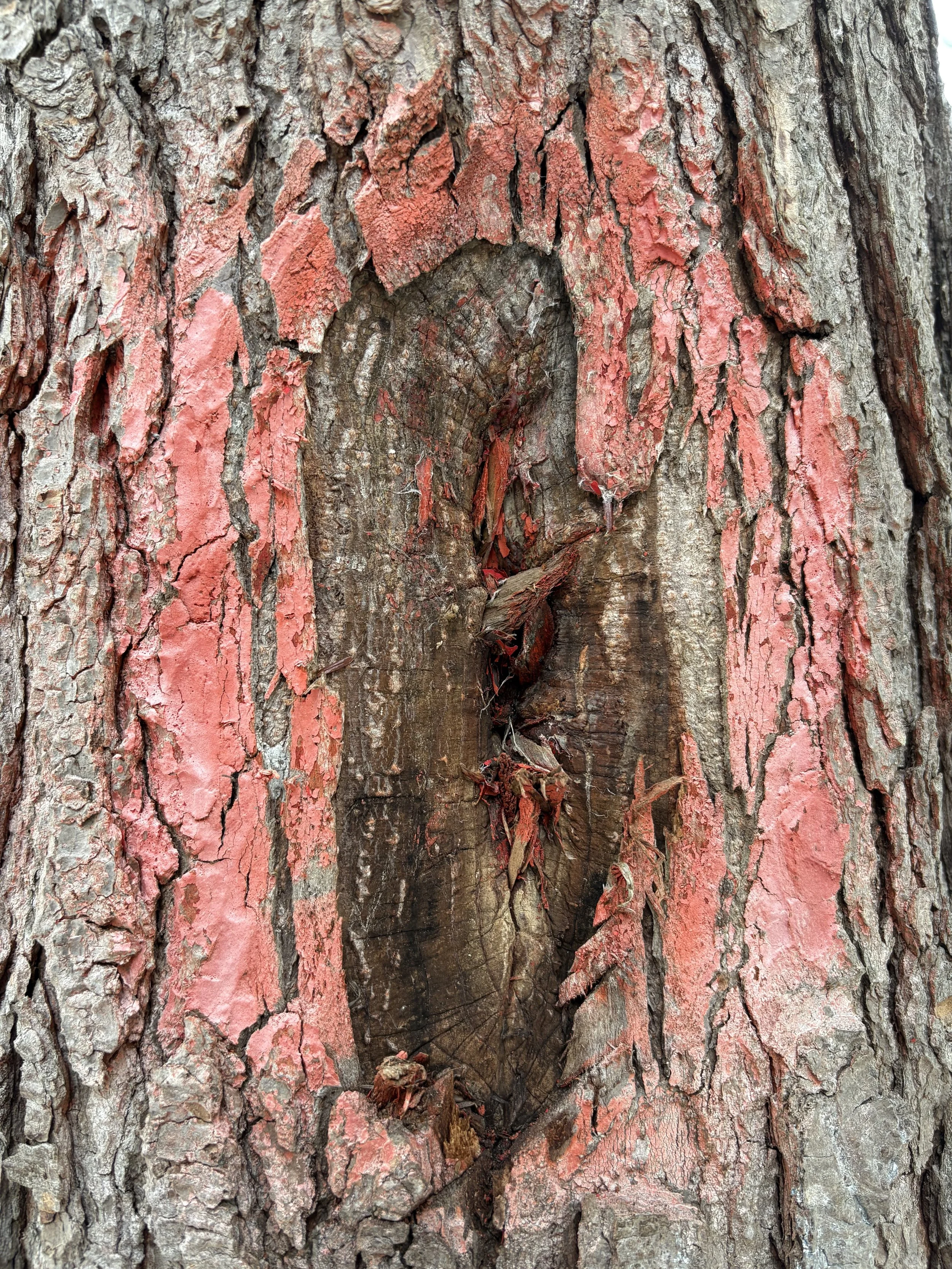
This blaze was recently discovered when investigating the boundary line of an old Timberland’s property in western Maine. The boundary line corner was relatively easy to find and thanks to the prior landowners maintenance of the boundary lines, the lines were able to be followed with ease! Due to the red paint and three abnormal lines observed in the middle of the tree this was without a doubt a blaze! To see a three lined blaze grow over like this is rare which means this blaze is close to 40 years old. Nothing grows on a tree like that naturally but an overgrown blaze. If the three lines hadn’t been there it wouldn’t have been so distinct!
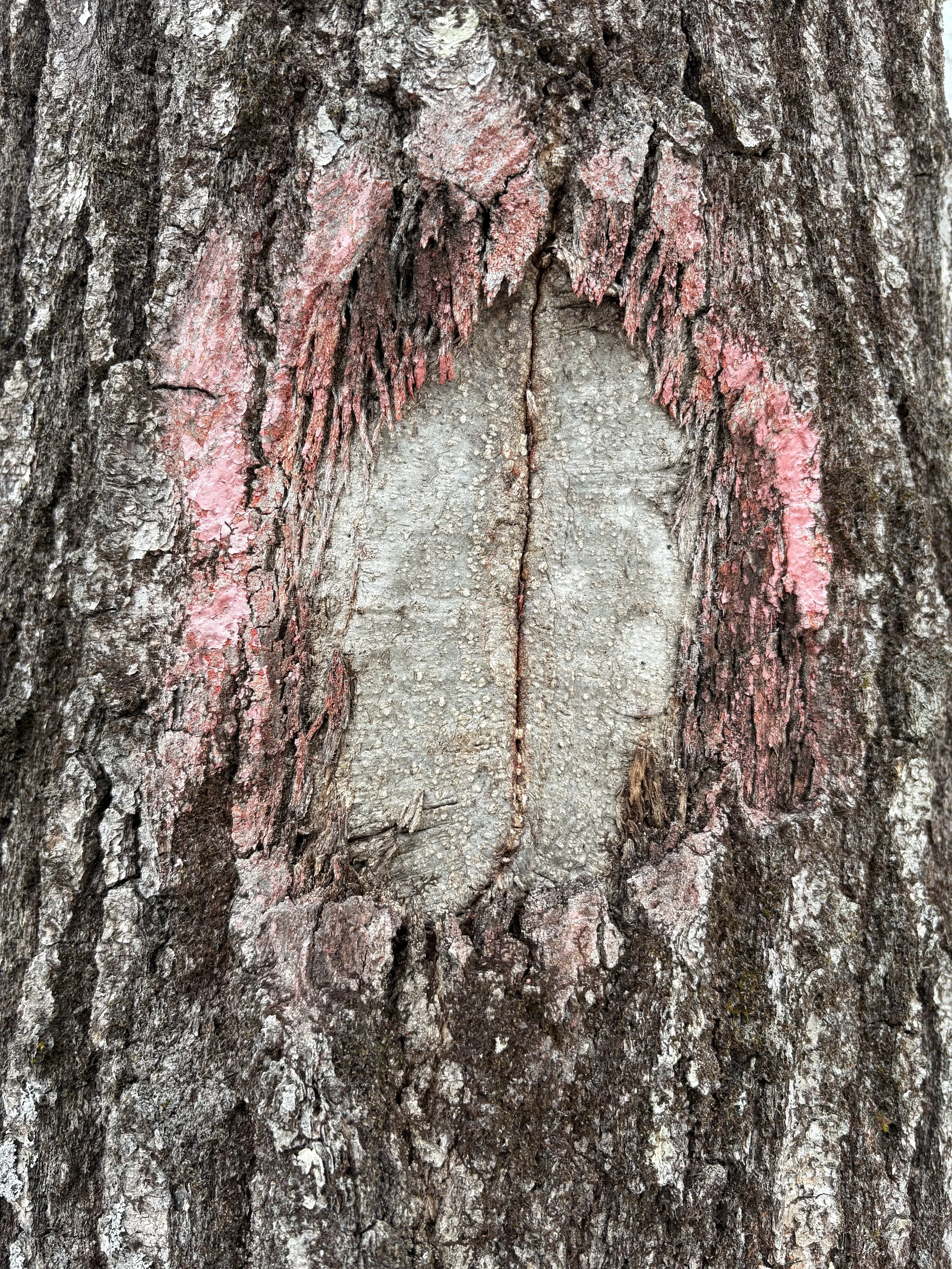
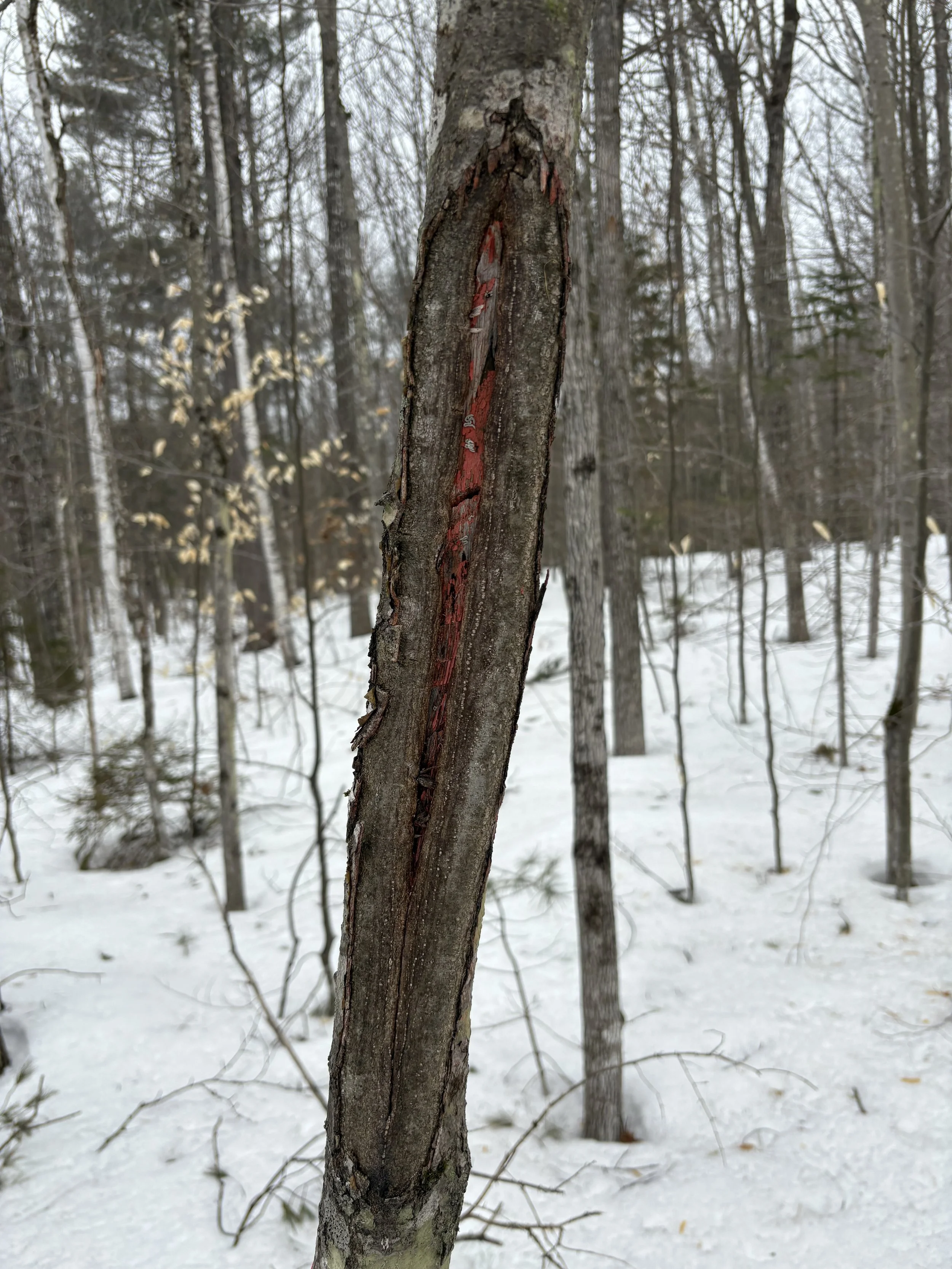
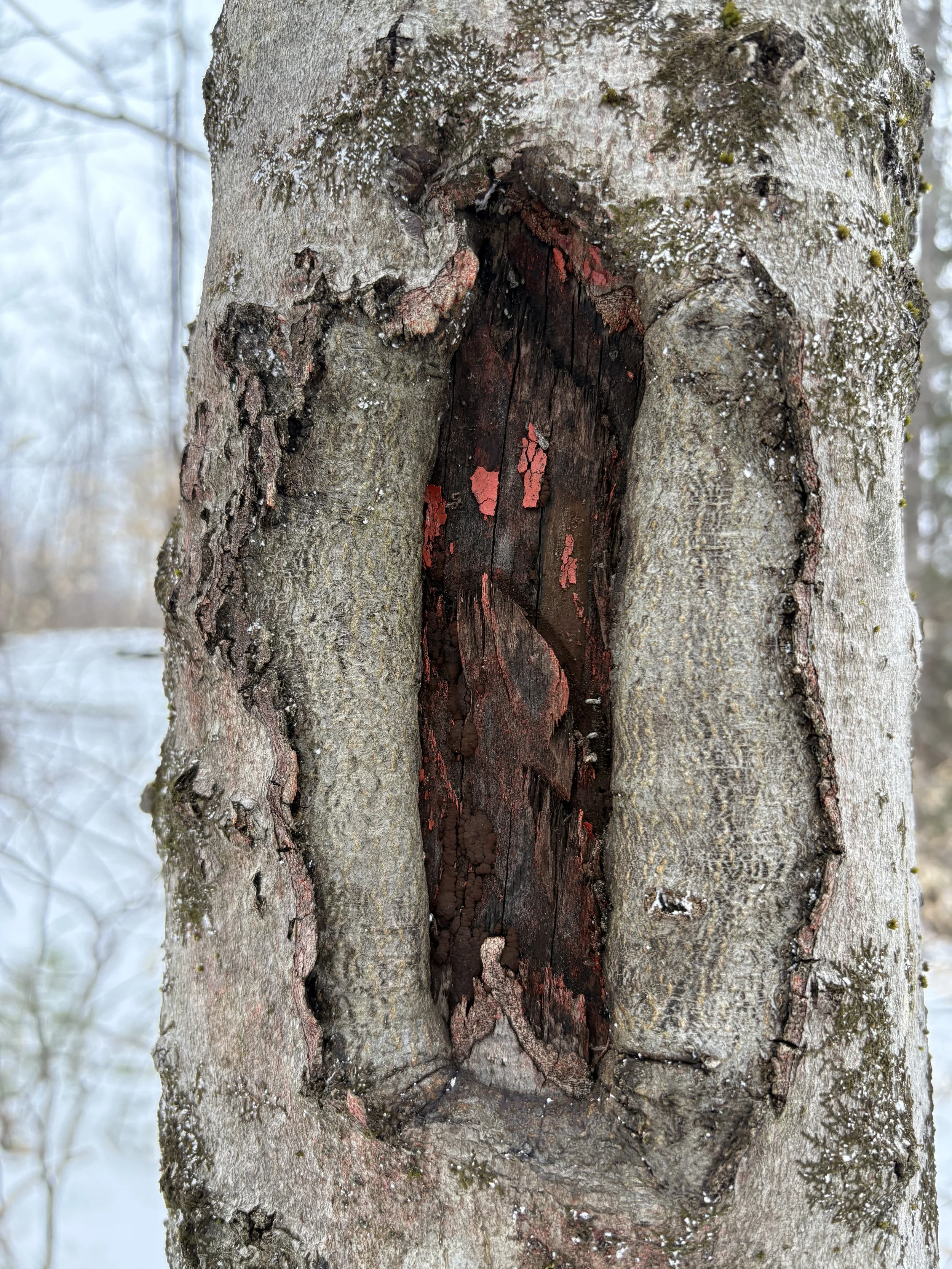
This boundary line was blazed and painted in January of 2017. Returning to this boundary line in March of 2025, eight years later, the rate at which paint fades and trees heal over time shows us just how crucial re-blazing and painting lines is for future identification of property lines. We recommend lines be done repetitively every 8-10 years.
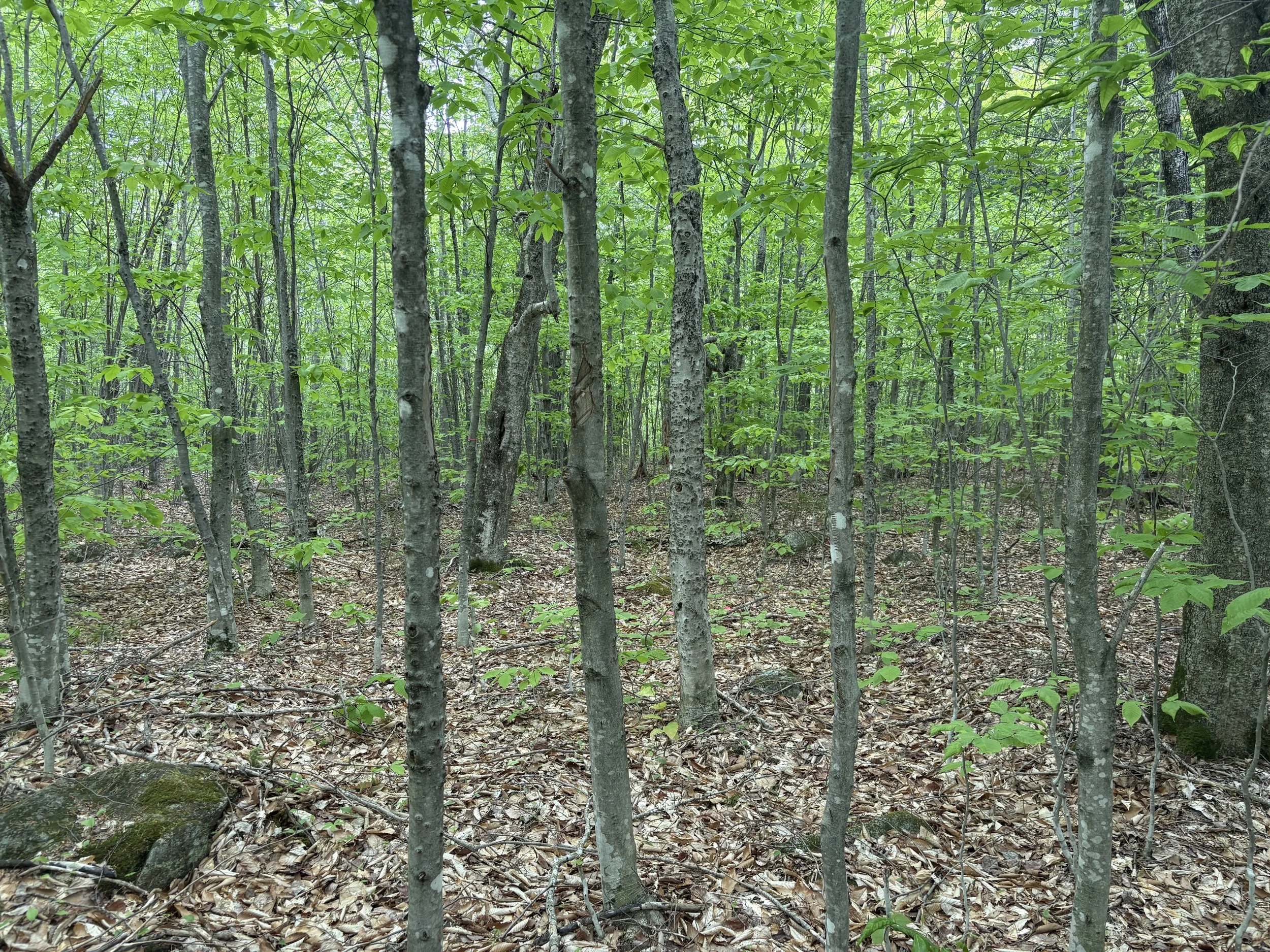
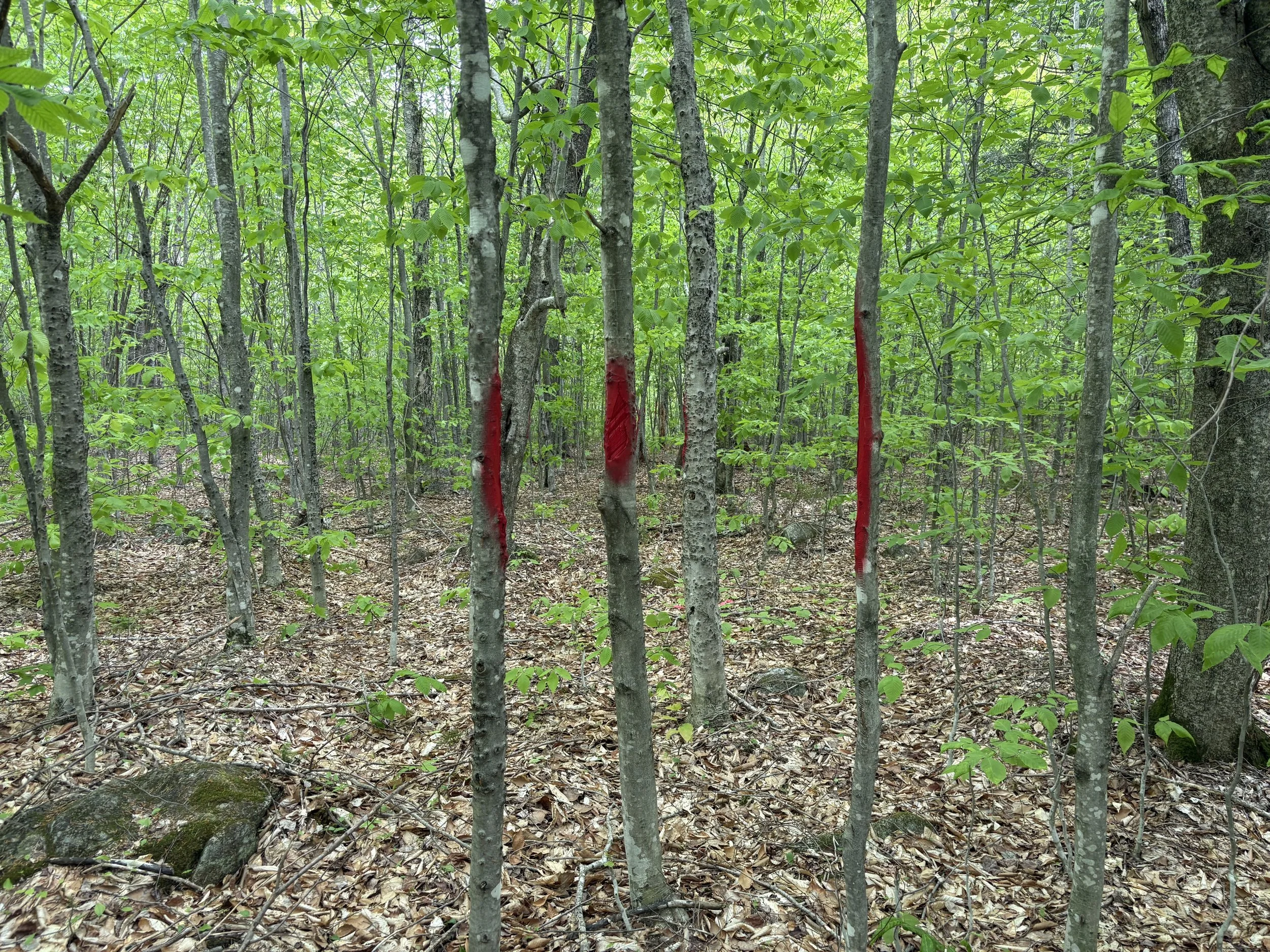
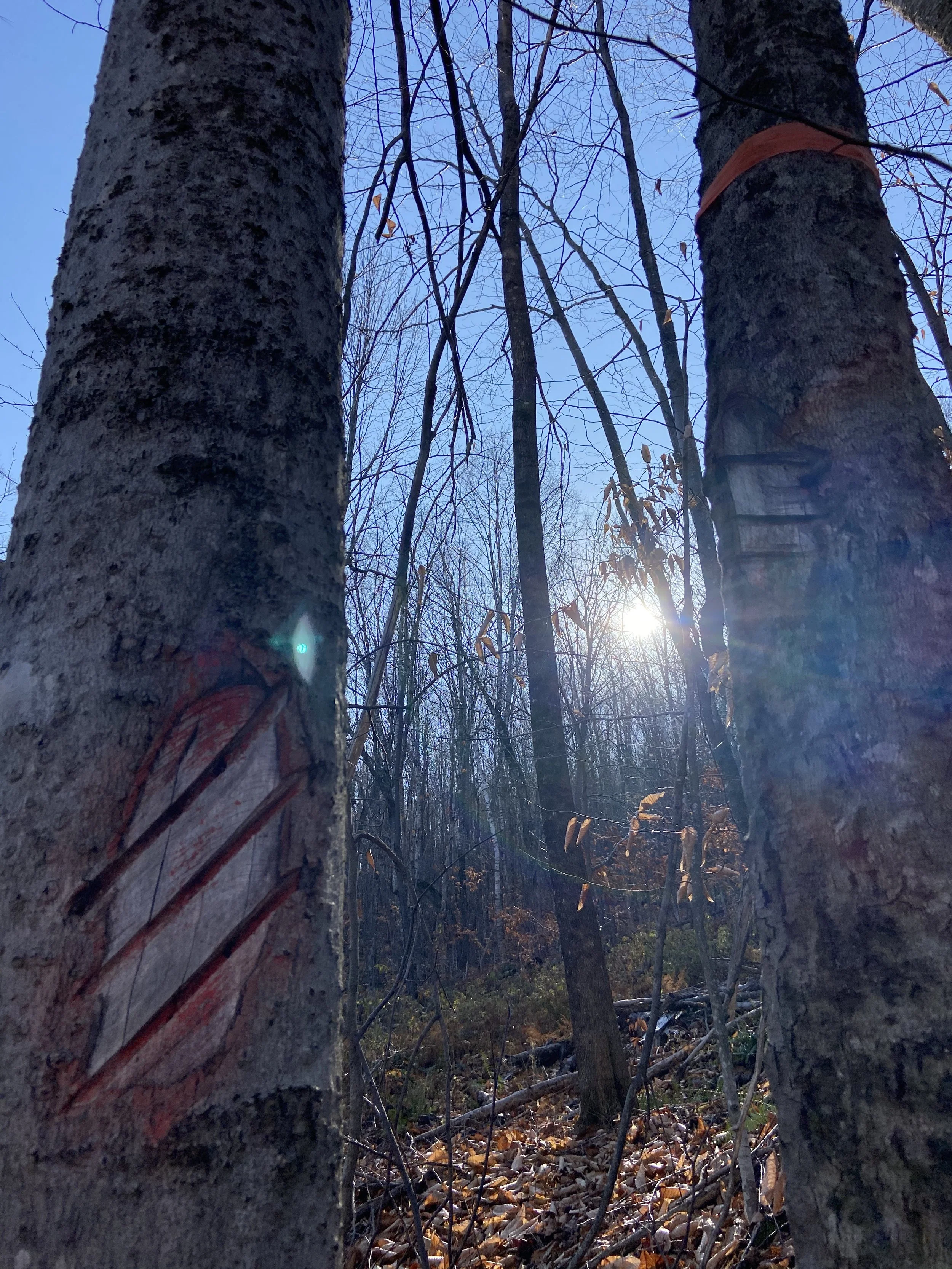
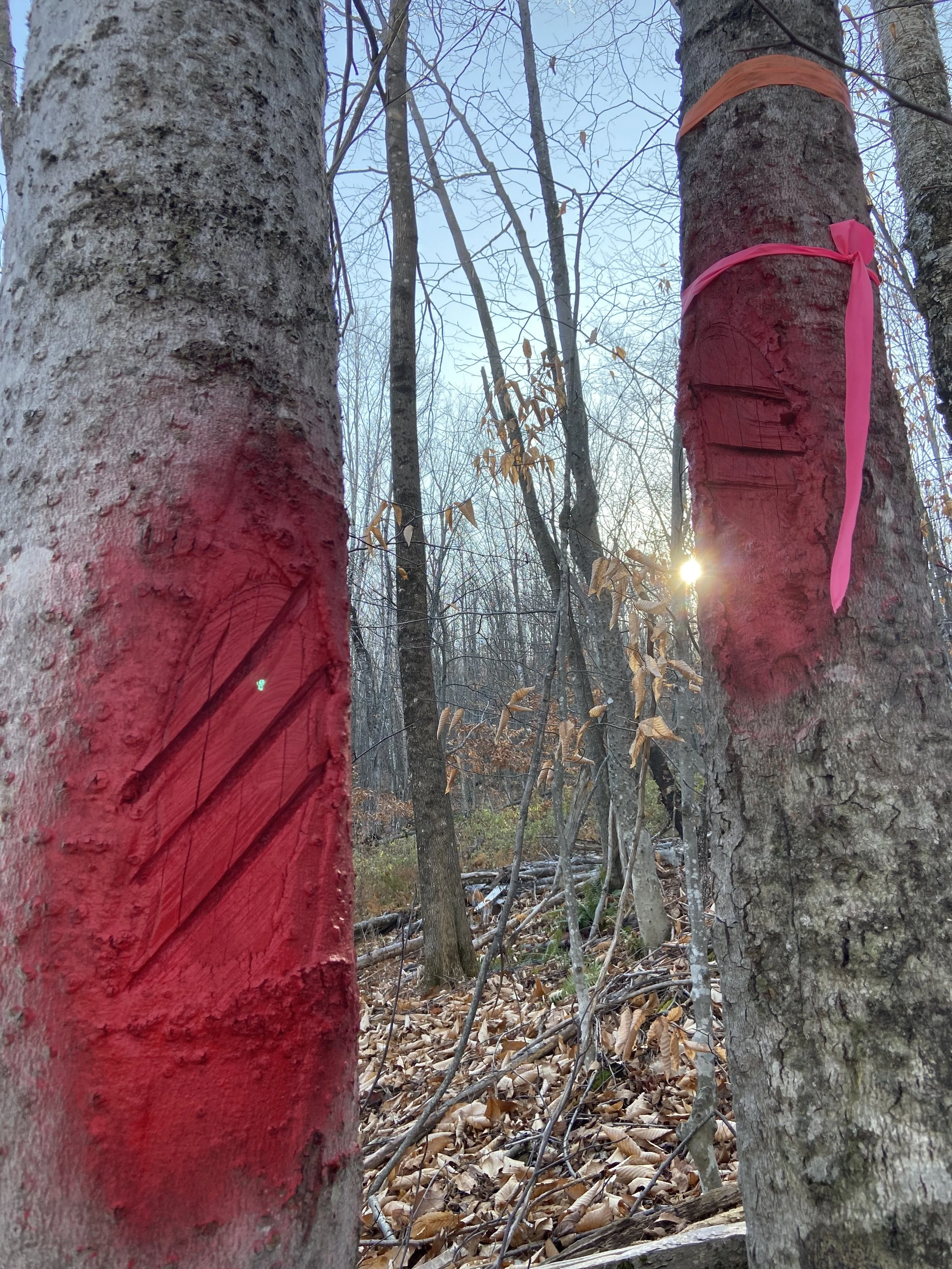
In the photo on the left, can you locate the boundary line? In the foreground and center of the image you will see one center blaze on an American beech. Looking to the left of that blaze you will see another beech with an evident side blaze facing the line and to the right another blaze on a more distant beech facing the line in the opposite direction. Just think how much more difficult in a young hardwood forest that line would be to identify if there were no new blazes. Can you spot the old blaze in the middle ground? Now look at the image to the right and immediately you will observe the same line clearly visible in an identifying color. Without the upkeep of that property line you would have walked right by it.
Understanding Boundary Lines
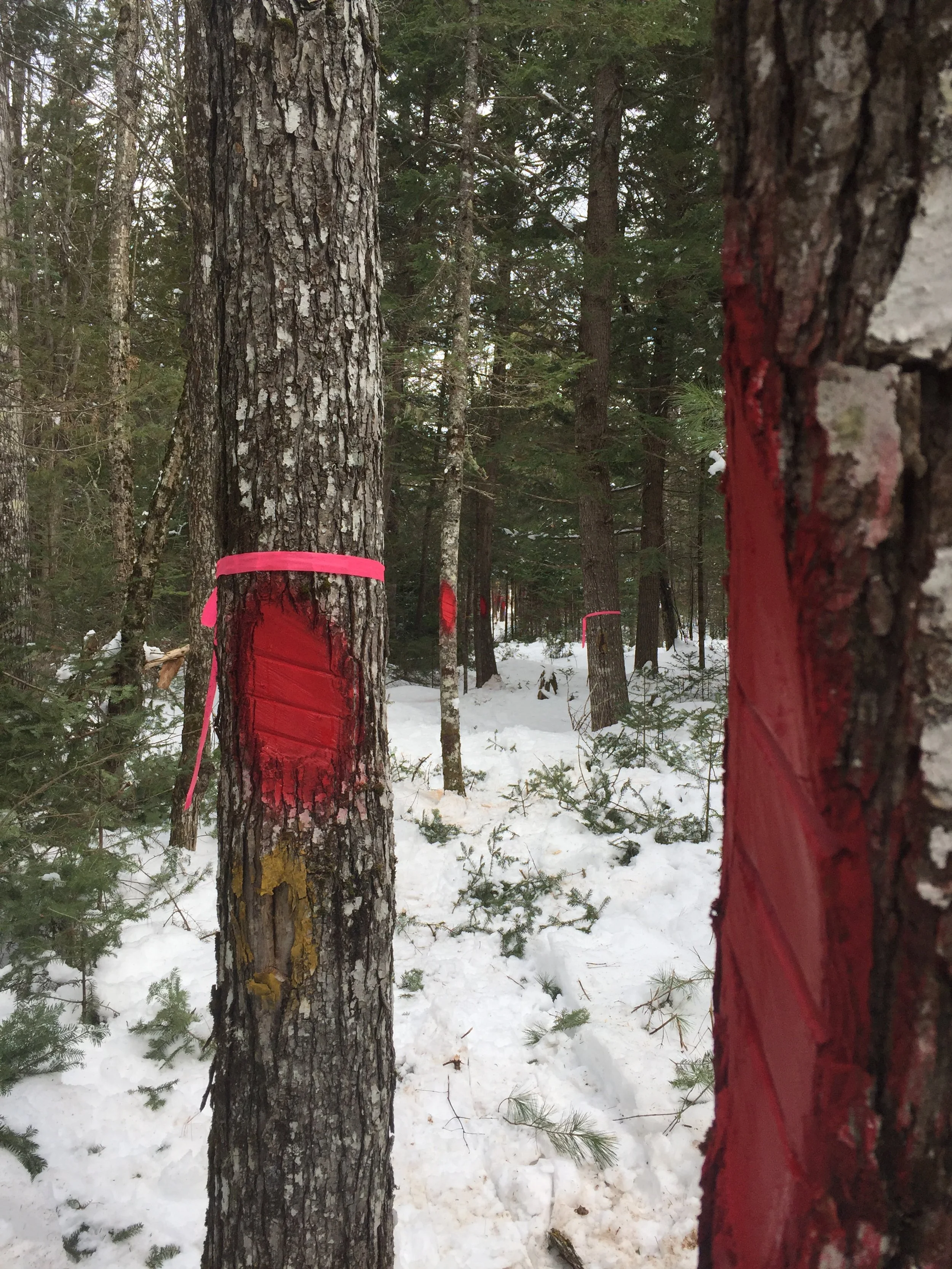
If you’re a neighbor and you see one of those bright red blazes out your kitchen window, no need to be alarmed. Chances are, if it is directly facing you, then that is the neighbor’s tree pointing to the boundary line center that runs perpendicular to you. That painted tree as well as some on your property facing the line in opposite direction that you may not be able to see are called witness trees. The single blaze on those trees are called side blazes, as seen on image right, and should not be much further than shoulder width apart. Whereas center blazes are directly on the line, as seen on image left, and blazed in the direction of the line on both sides of the tree. There is careful consideration when blazing a line to avoid blazing high quality trees, unless in years prior those trees were previously blazed.
Mowing & Prunning
Timber Harvest Landings, Logging Roads, Fields & Wildlife Areas, & Gravel Road Shoulders
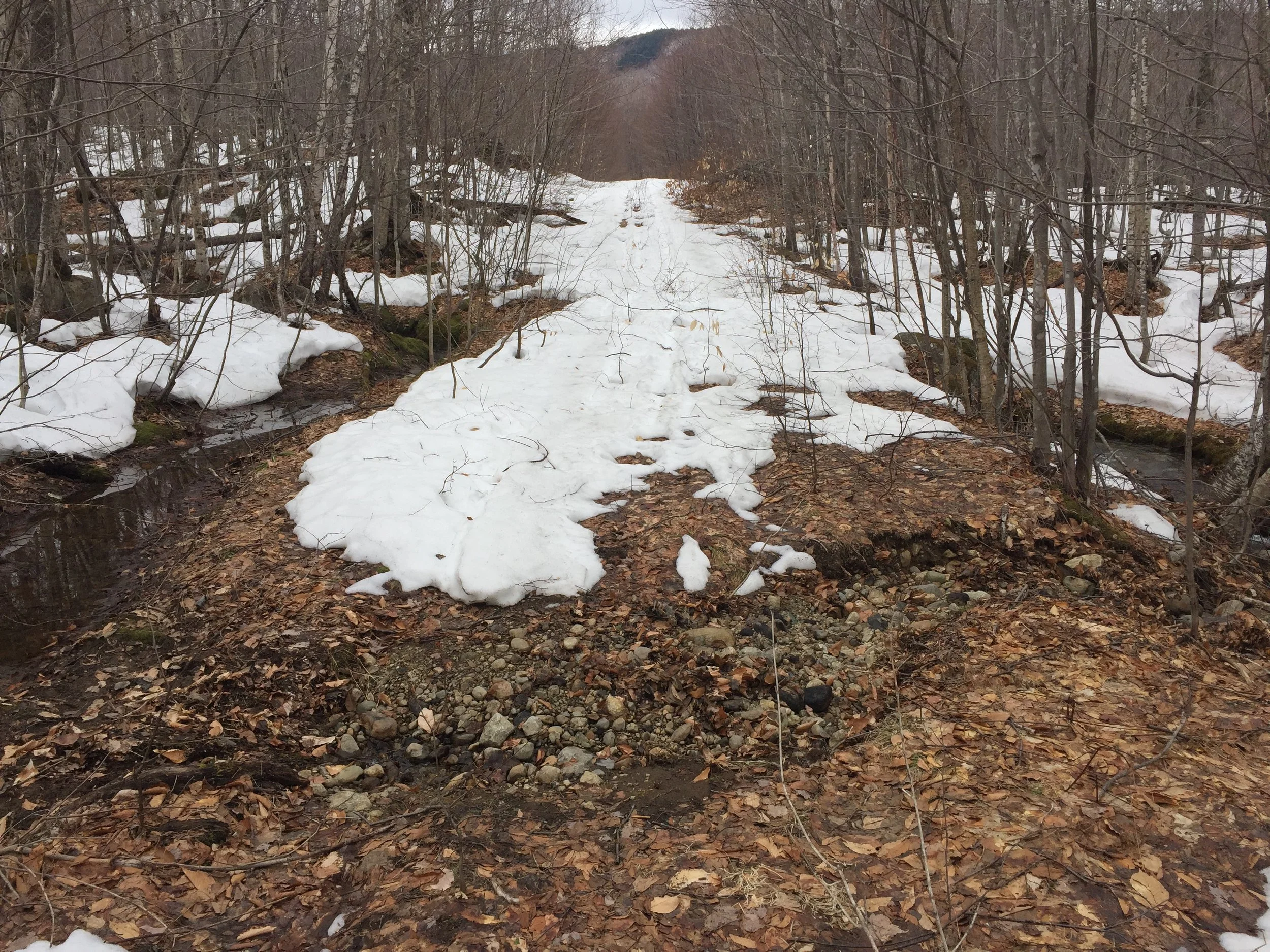
All logging roads start somewhere…
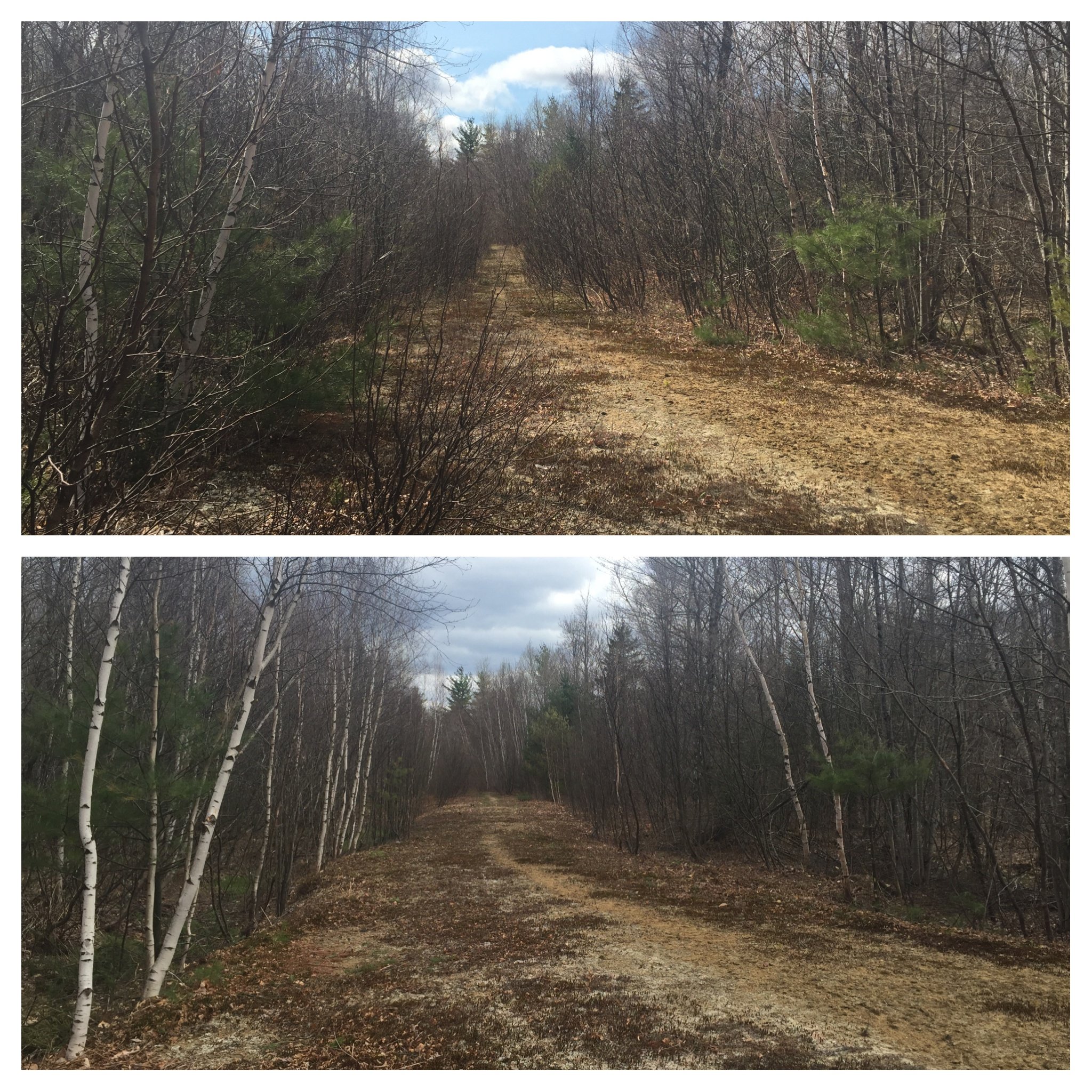
Before roads can be easily maintained and mowed, some are too overgrown and first need to opened by hand while others with large machinery.

From start... (Overgrown Inaccessible Logging Road)
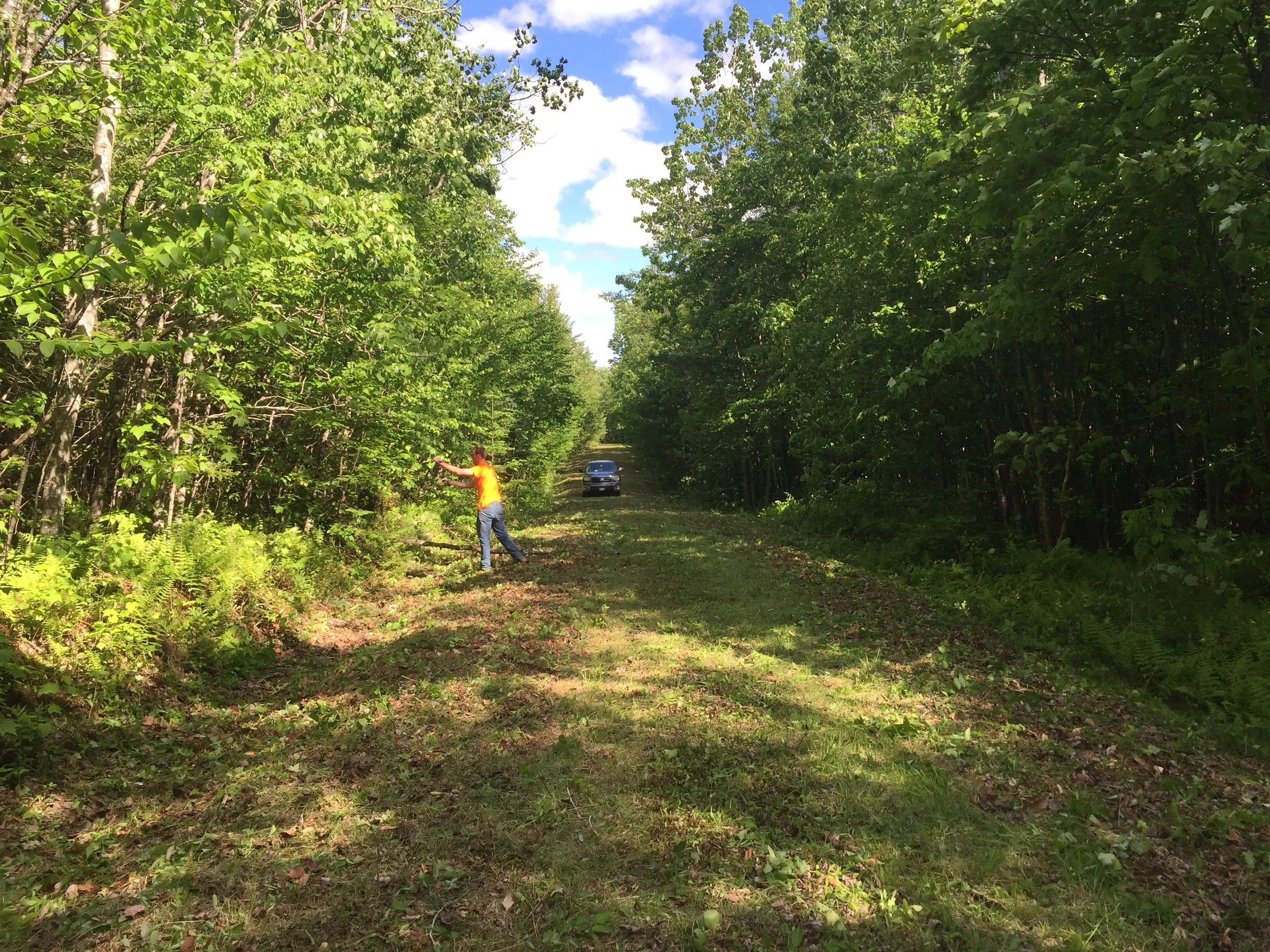
...to finish. (Usable Logging Road)
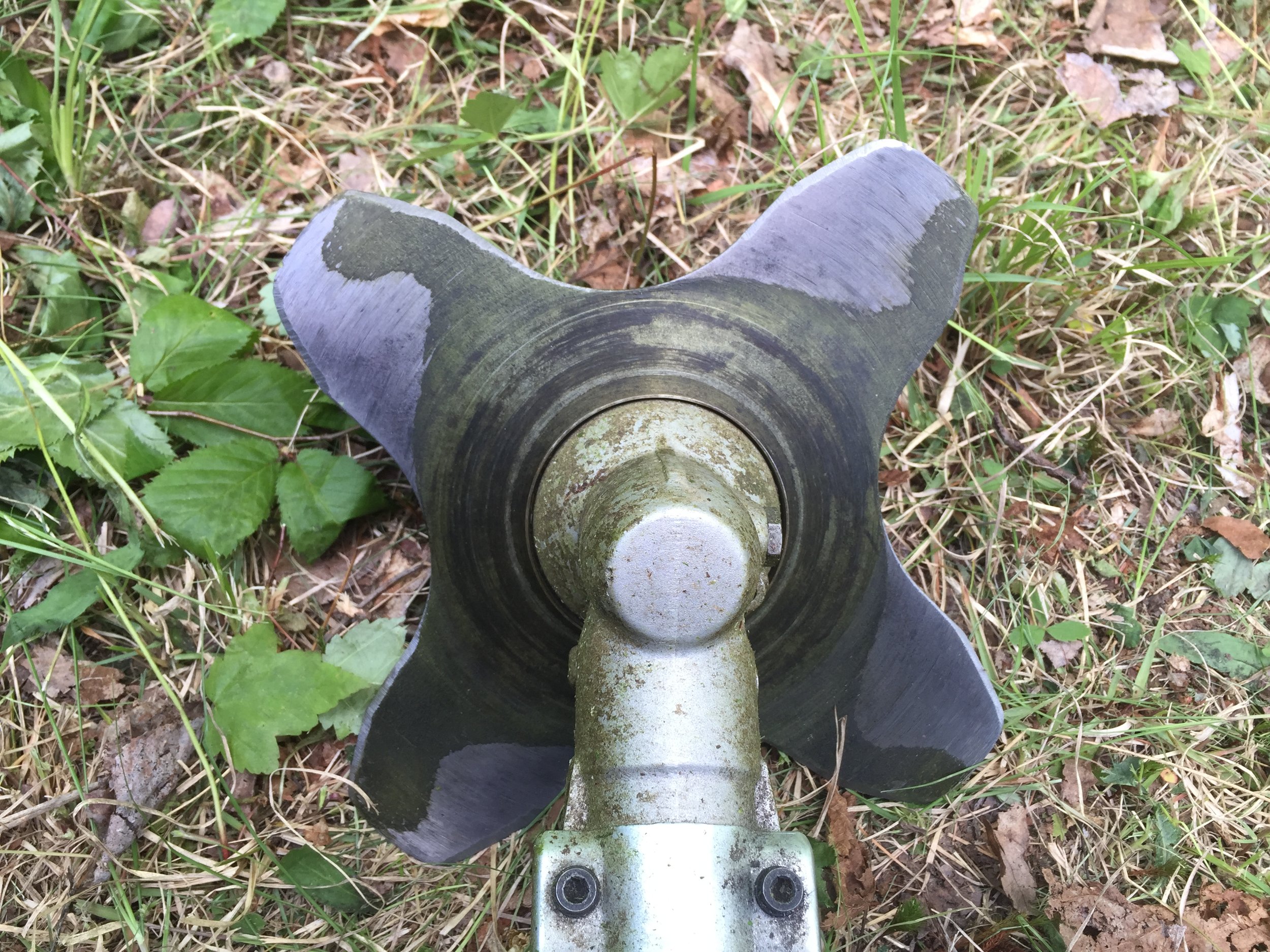
Equipment Here: Strictly Brushsaws

From start... (Overgrown Logging Road)
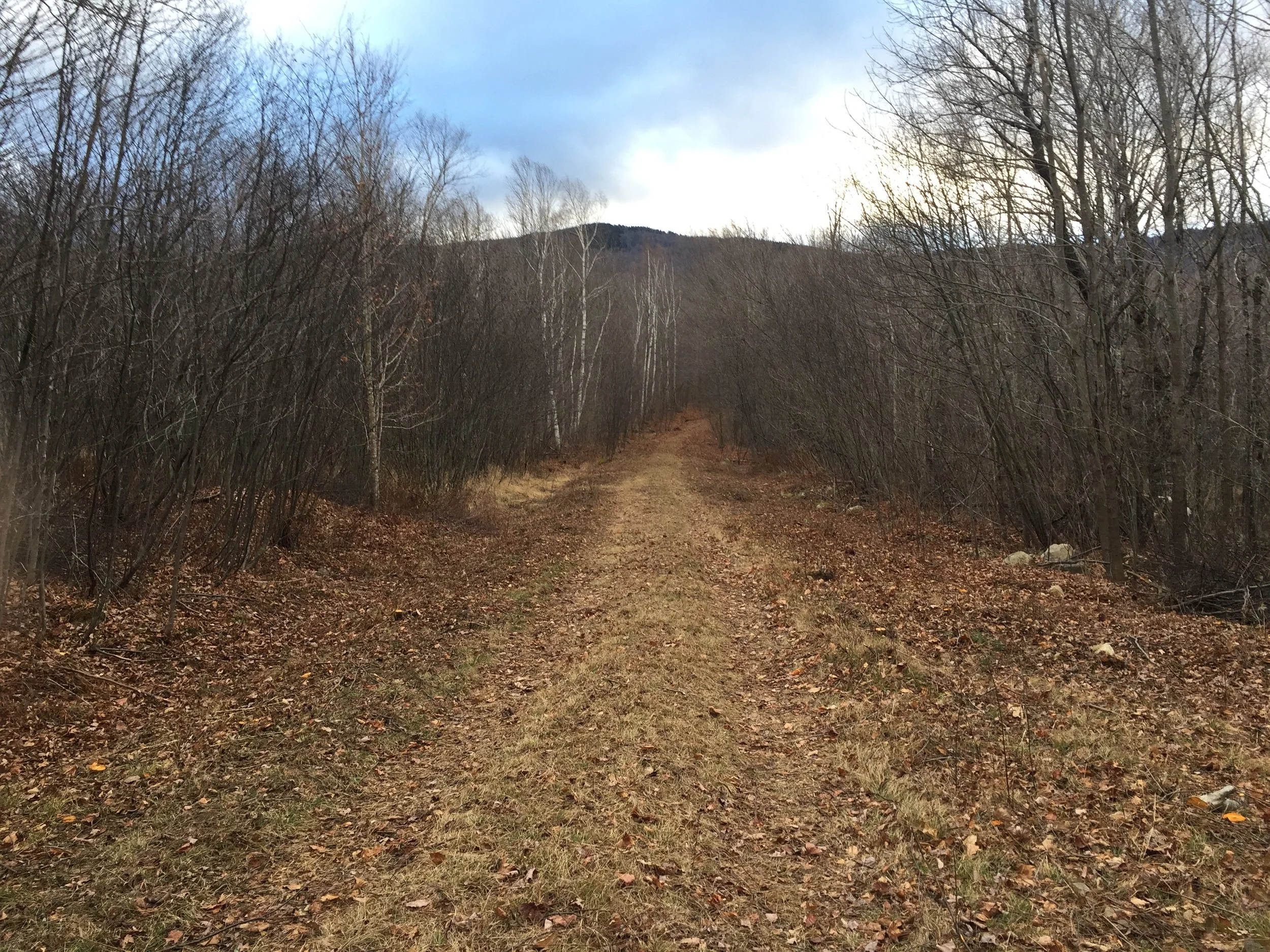
...to finish. (Cleared Back at Least 8 Feet on Either Side)
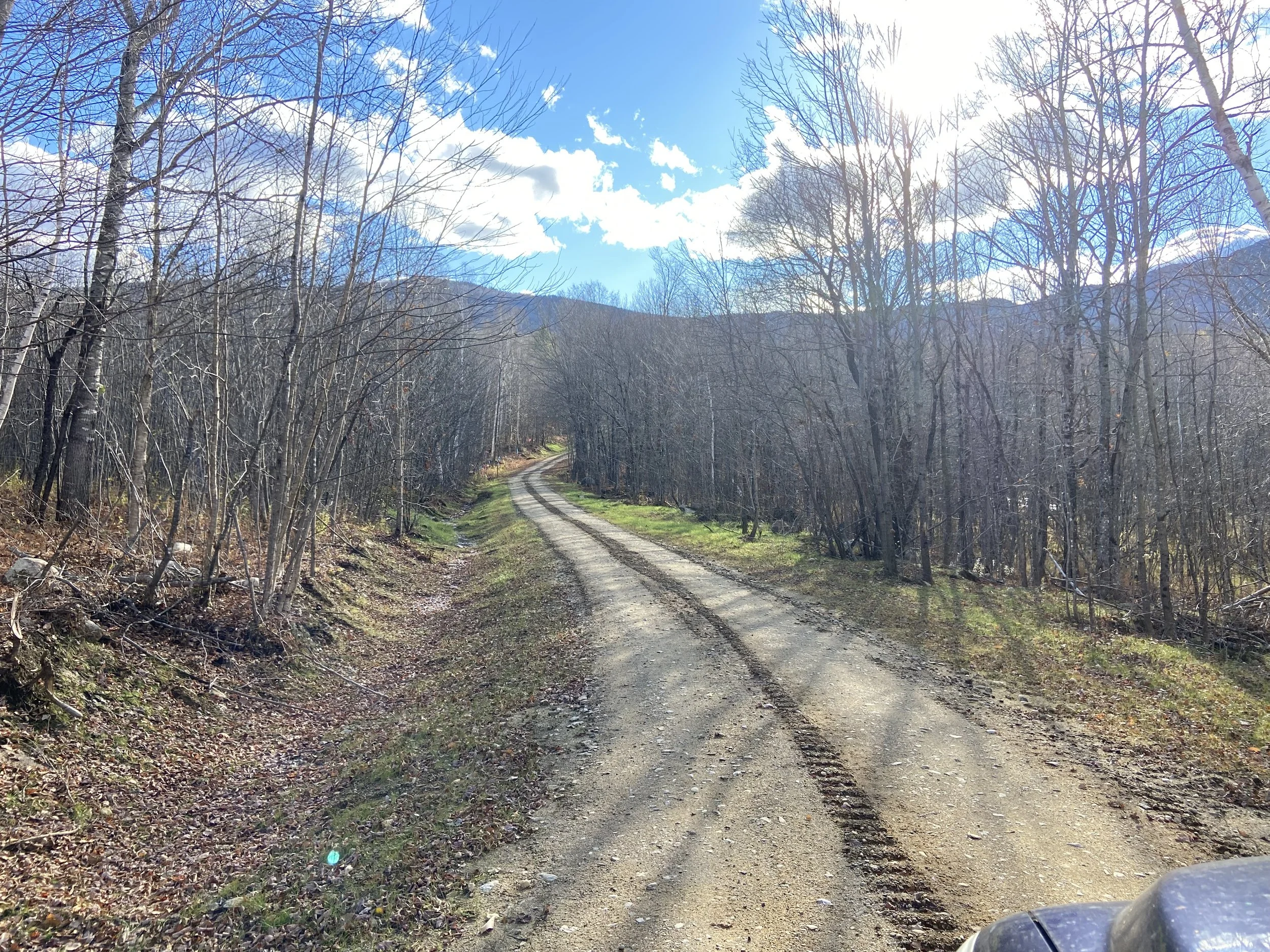
**End Goal: Re-ditched, re-sloped, re-surfaced and seeded.
Opening Logging Roads By Hand With
Brushsaws, Weedwackers & Chainsaws
Before & After

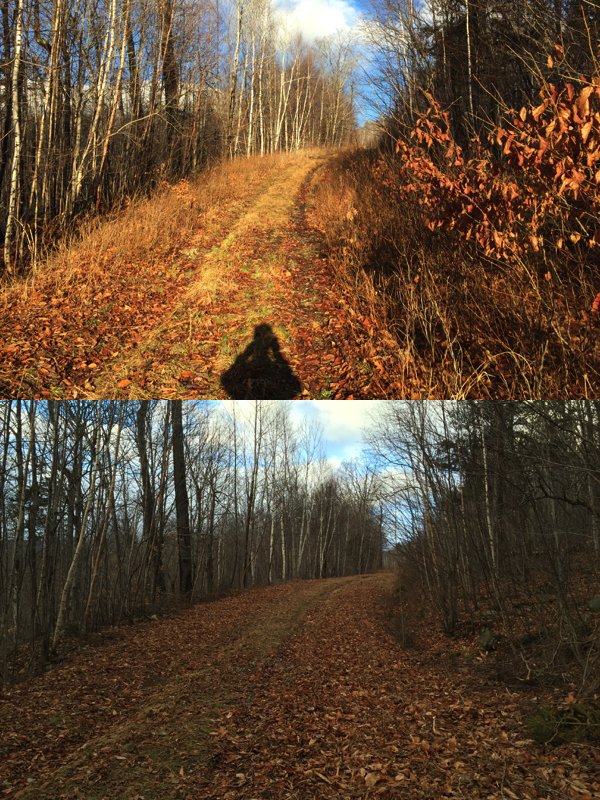

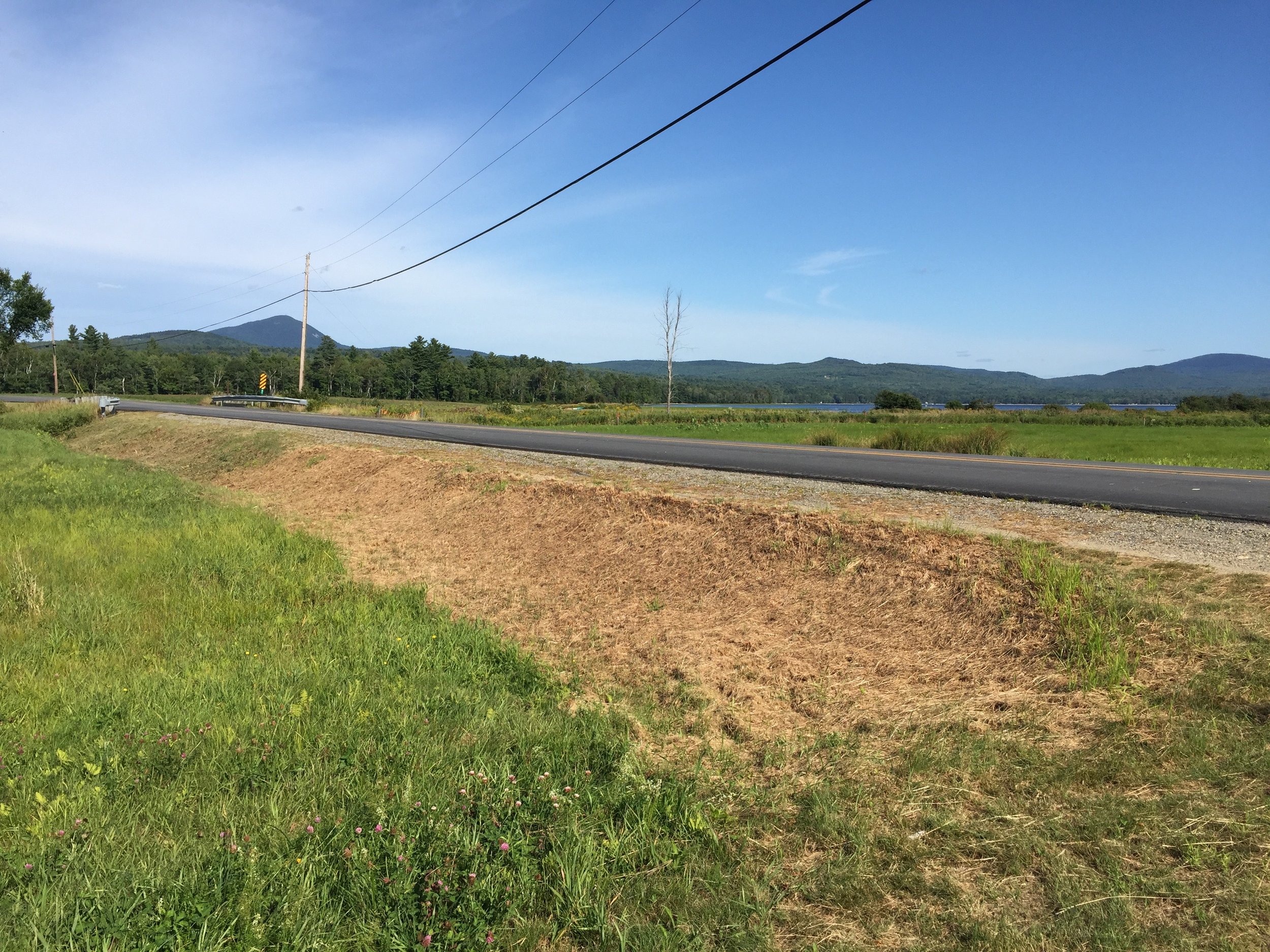
Steep Aesthetic Roadside Weedwacking

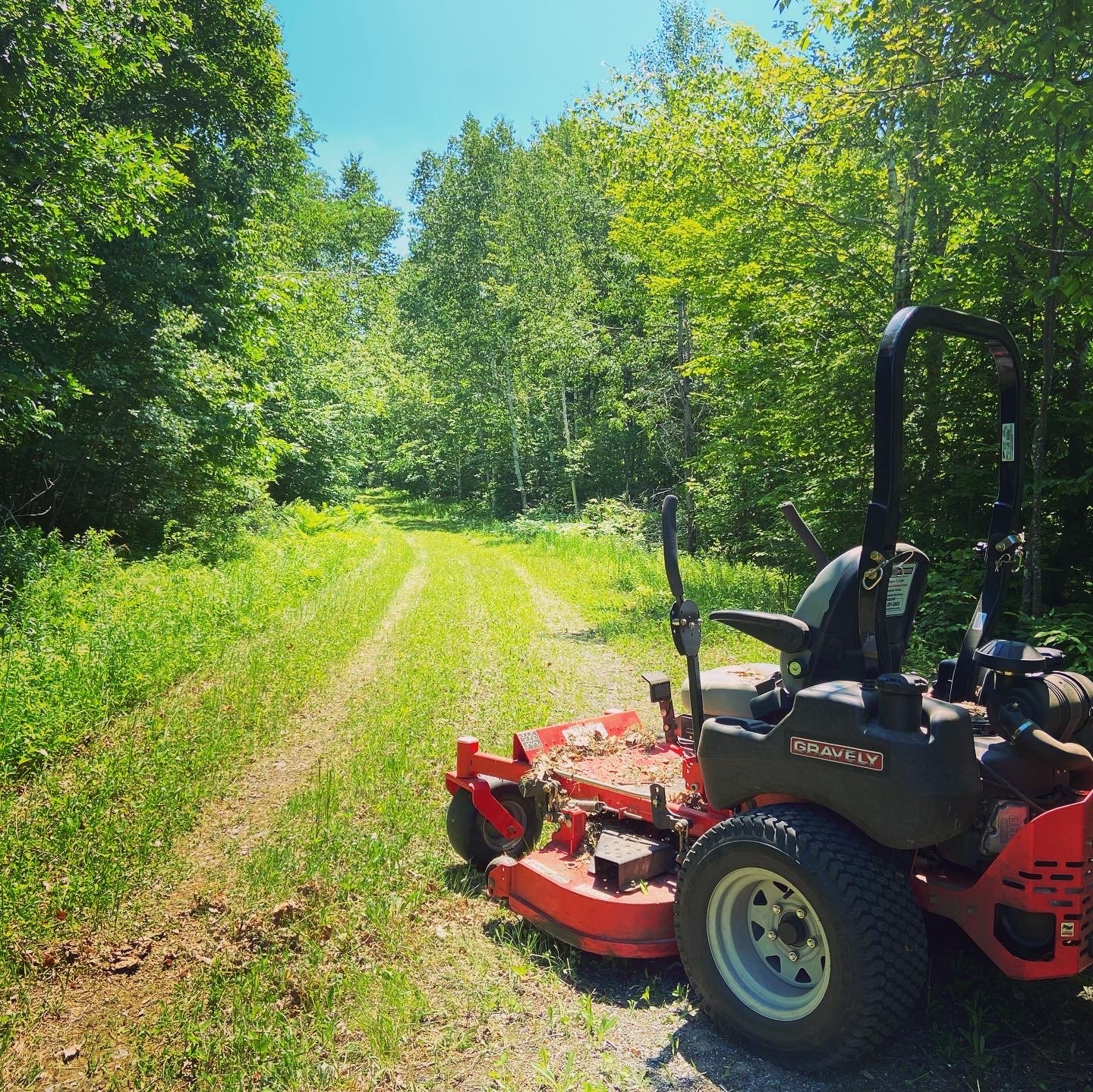
Mowing Logging Roads Via Zero Turn
Before & After
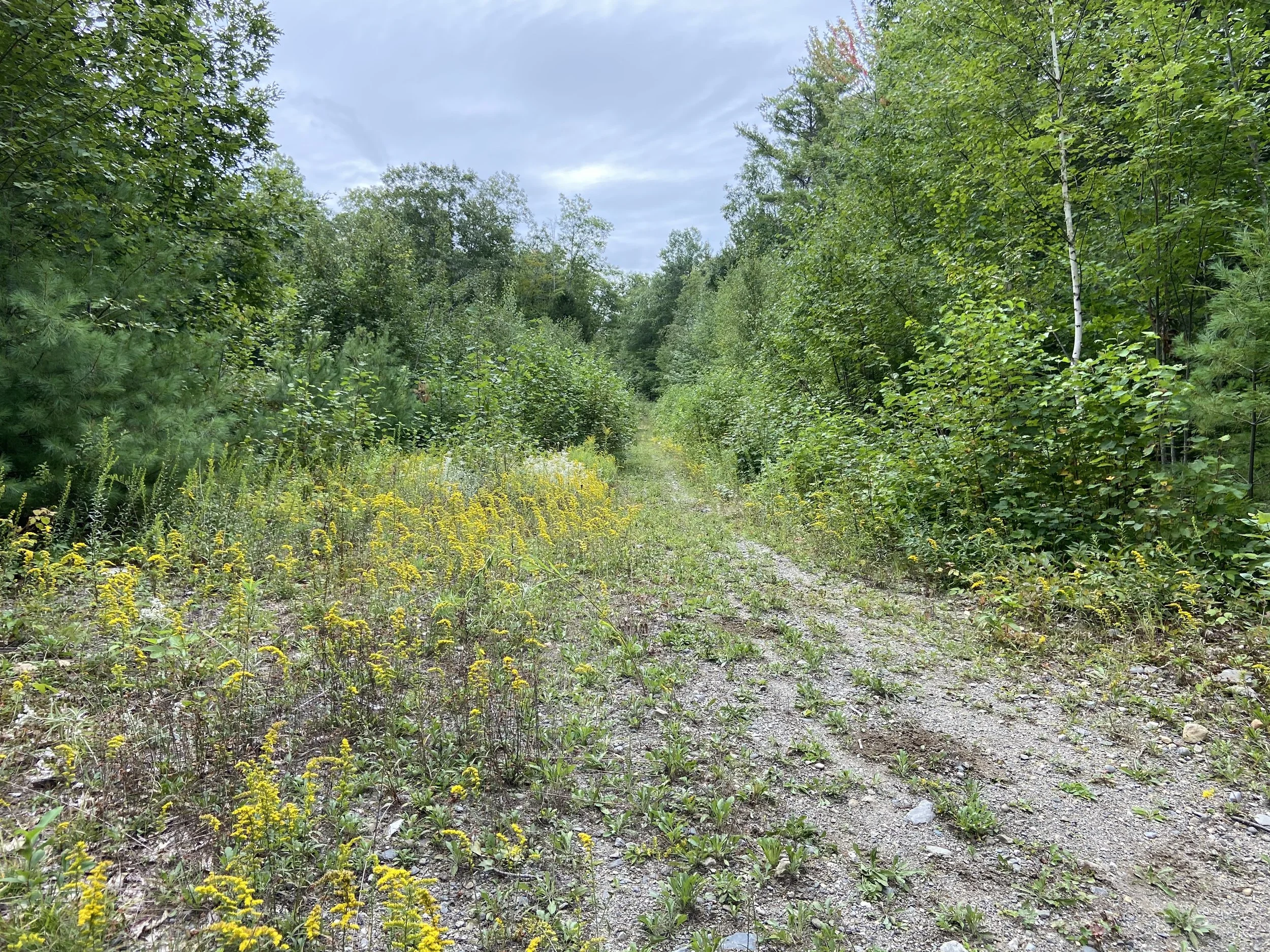
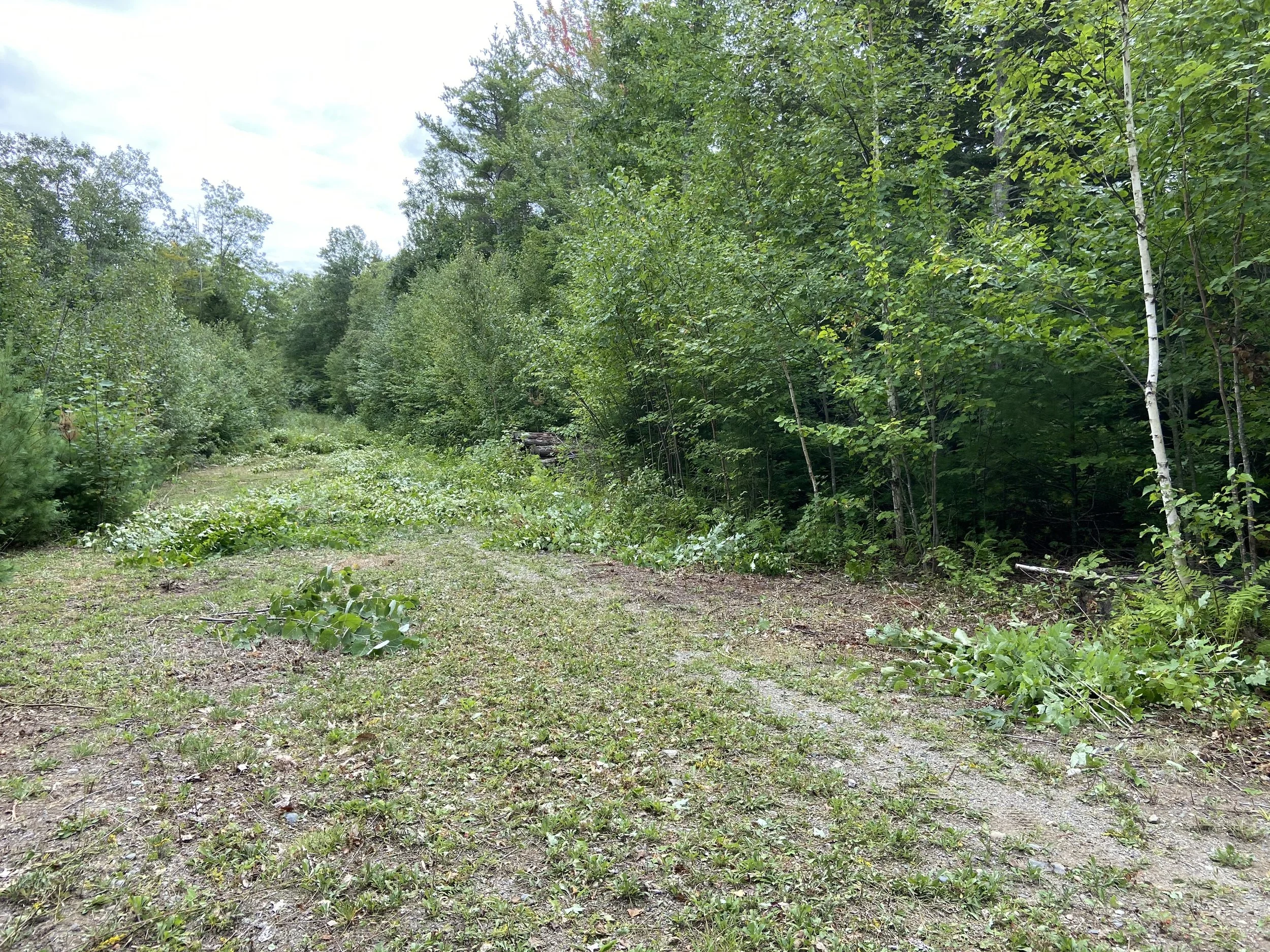

A logging road before it was mowed with a zero-turn. Alders are two to five feet tall and beginning to crowd the road.

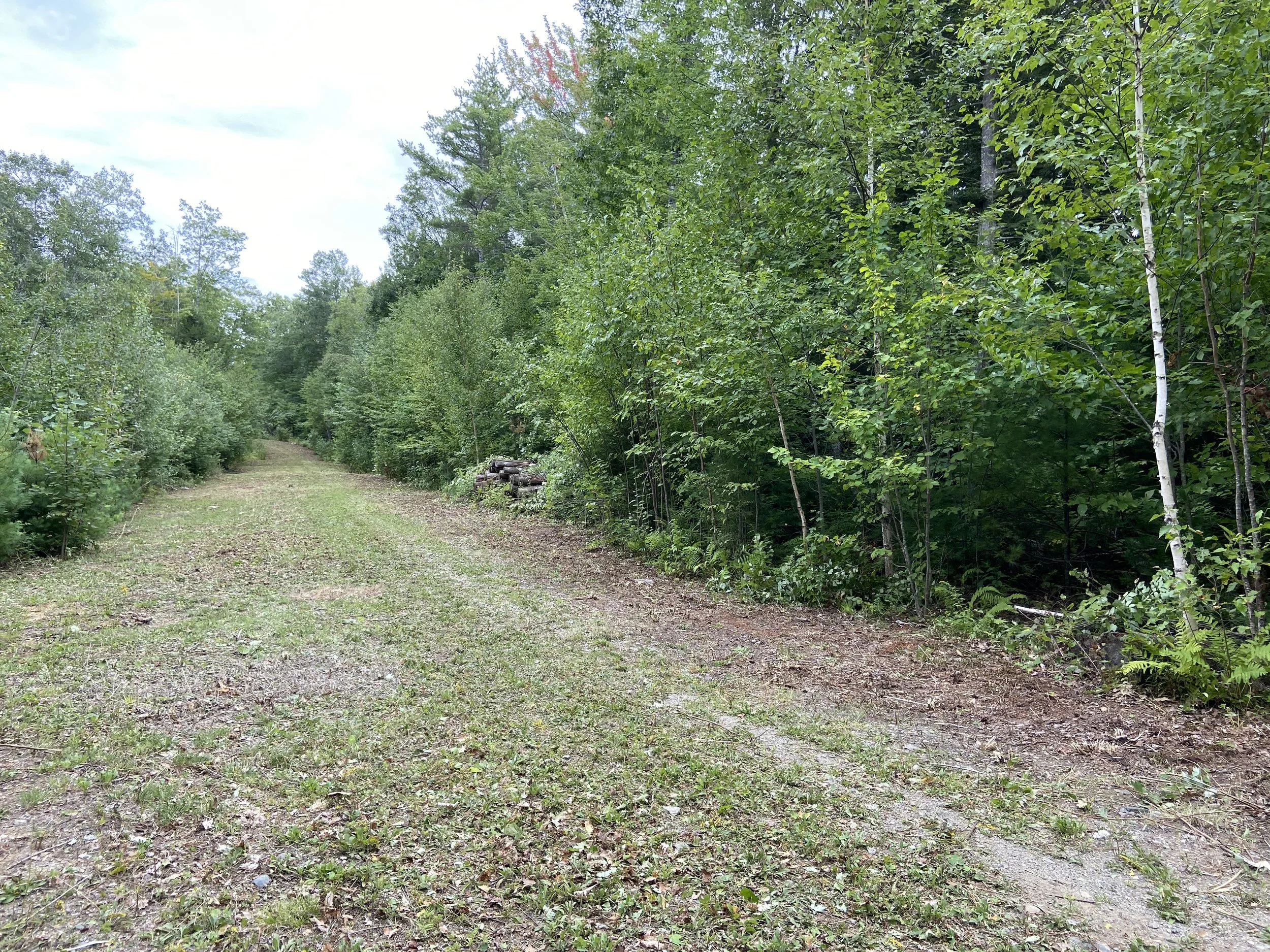
A logging road after it was mowed with a zero-turn. Alders are are cut down six to eight feet out from the road edge enocuraging long term grass growth and a faster cut next time.

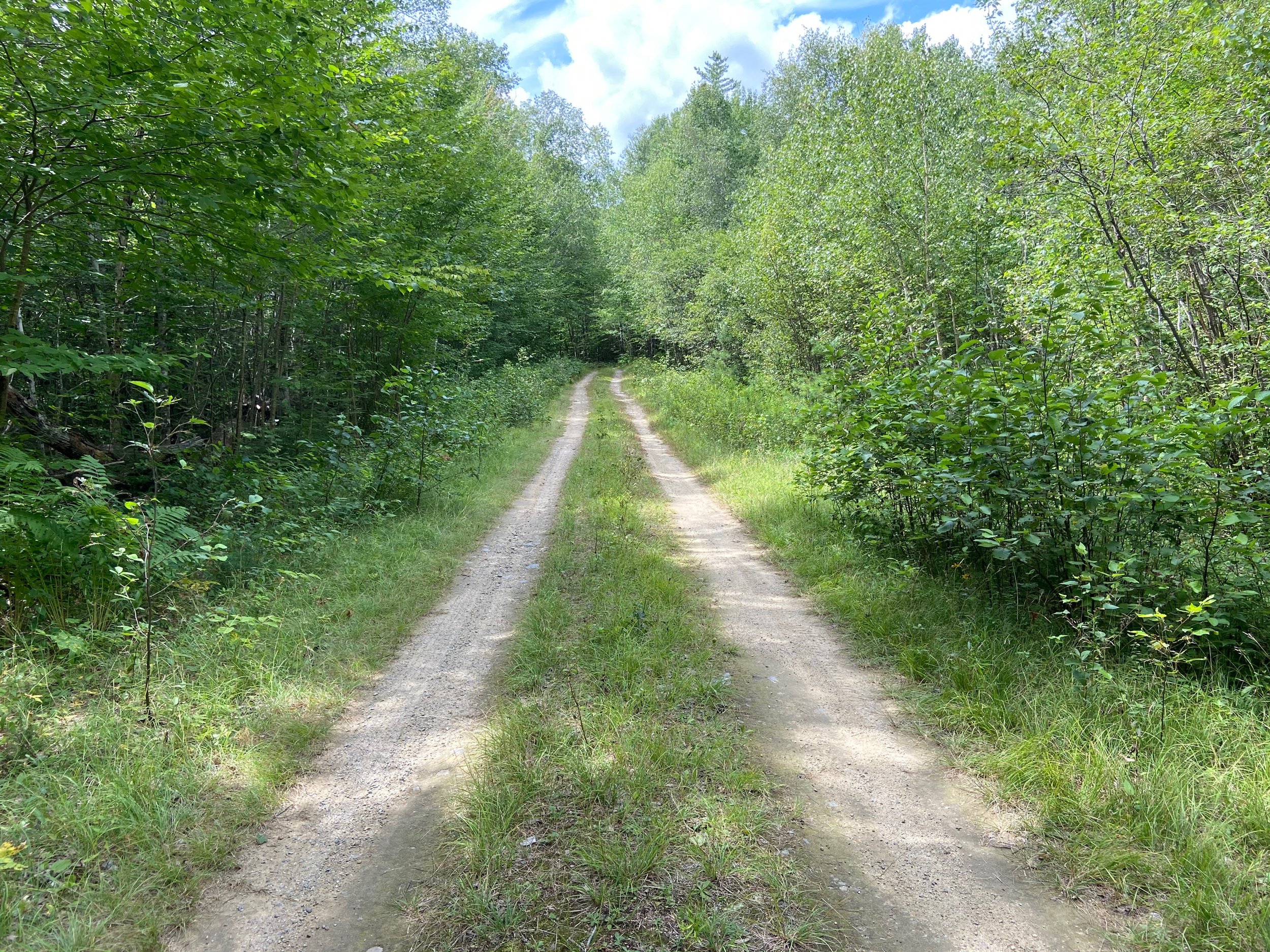
Finished access road to landing. Road surface and shoulders mowed with zero turn and ditches weedwacked up to six feet off the shoulder. As you can see this also makes your road ascetically pleasing to the eye as well.
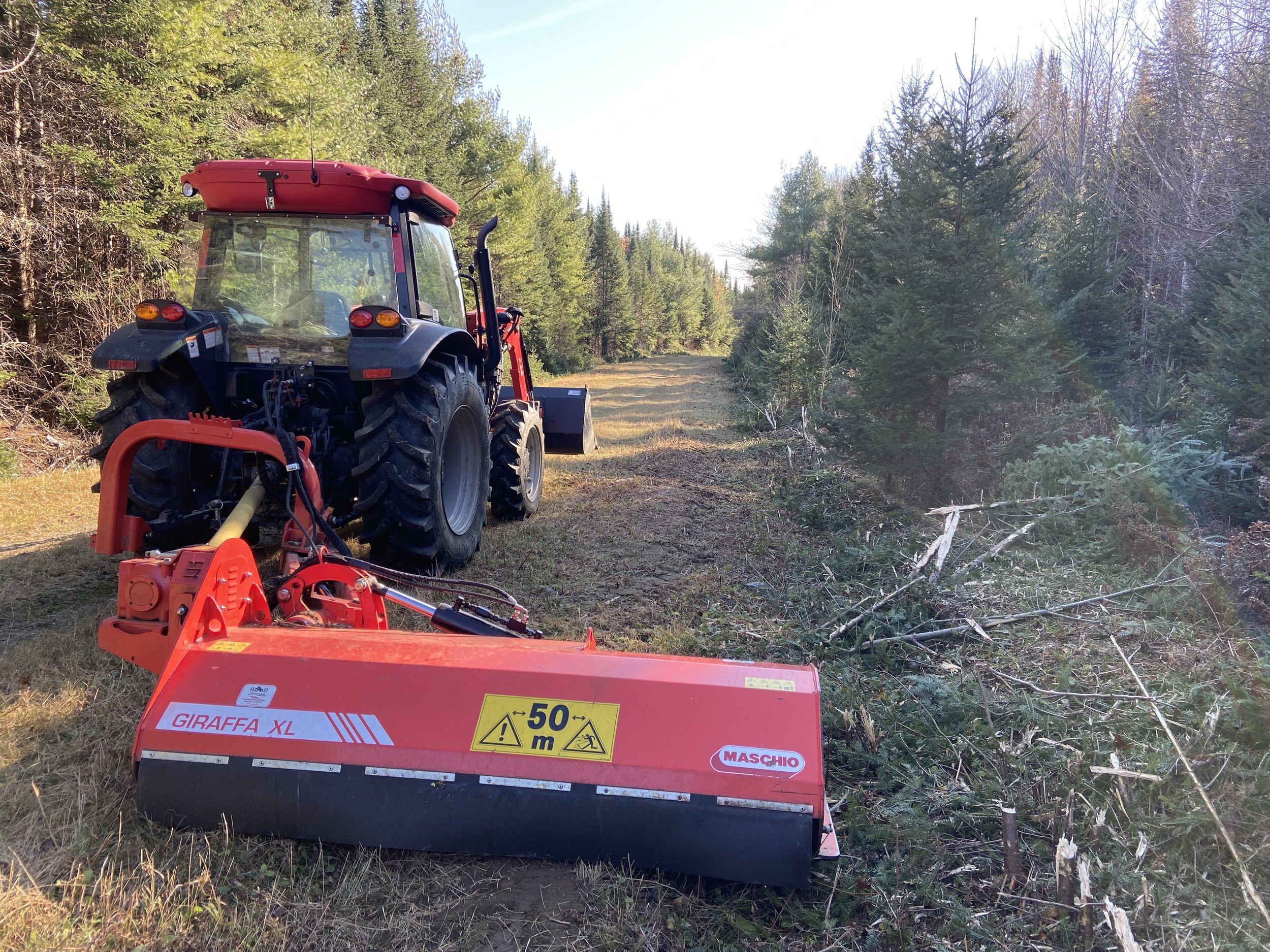
Mowing Logging Roads Via Maschio Mower
Equipment
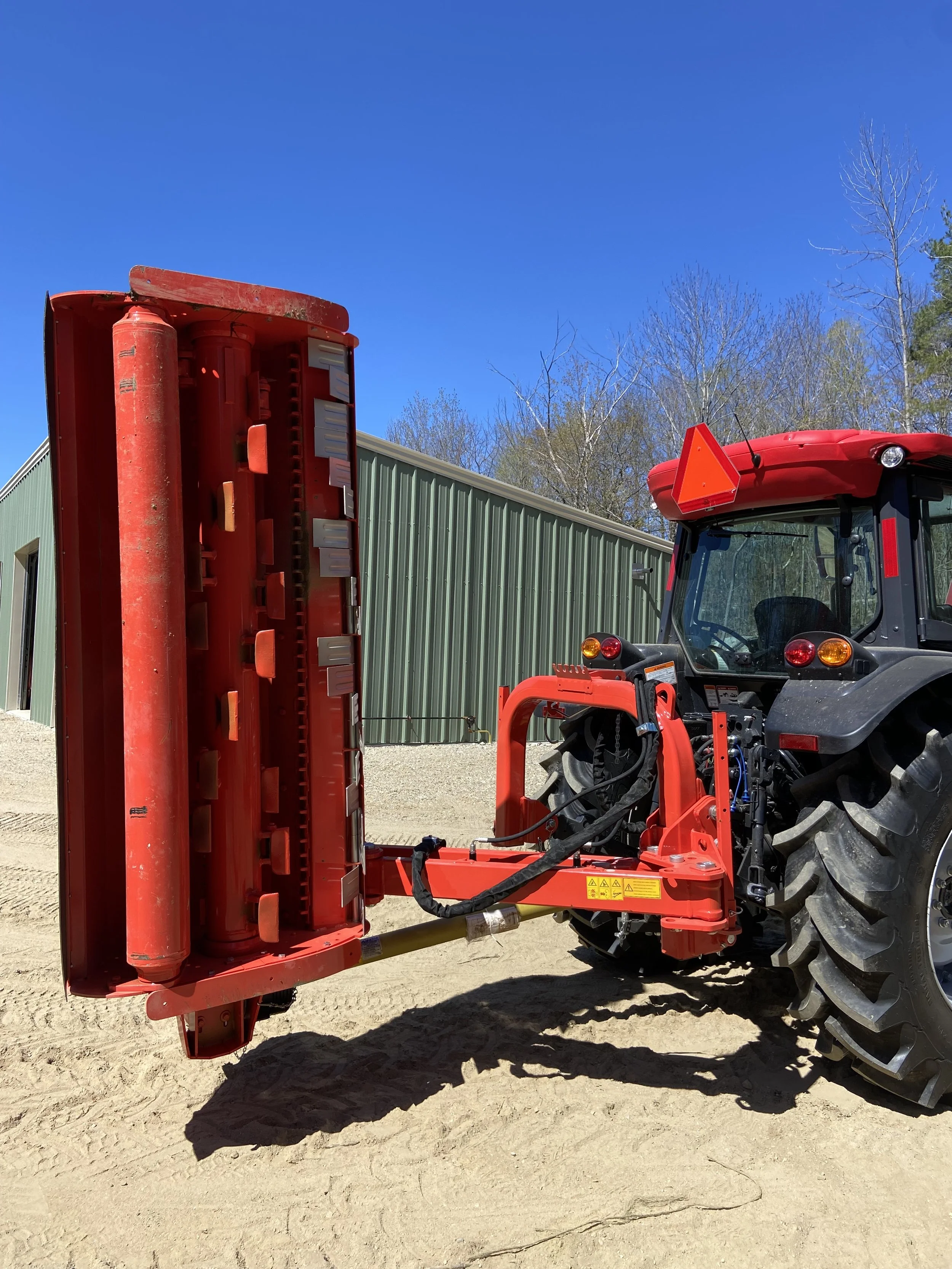
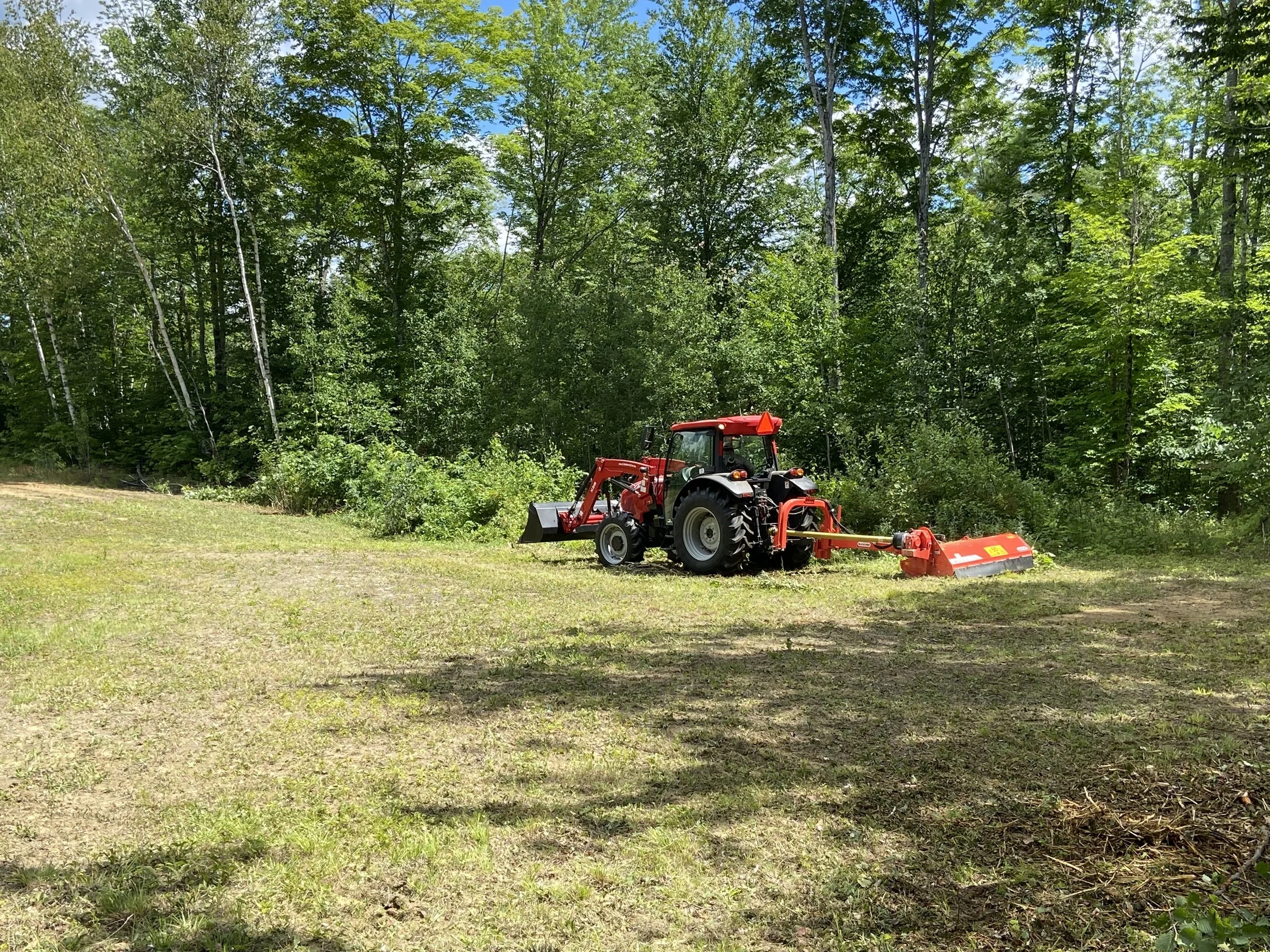
Six foot flail mower with twenty independent hammers capable of cutting softwood up to three inches in diameter and hardwood up to two inches in diameter.
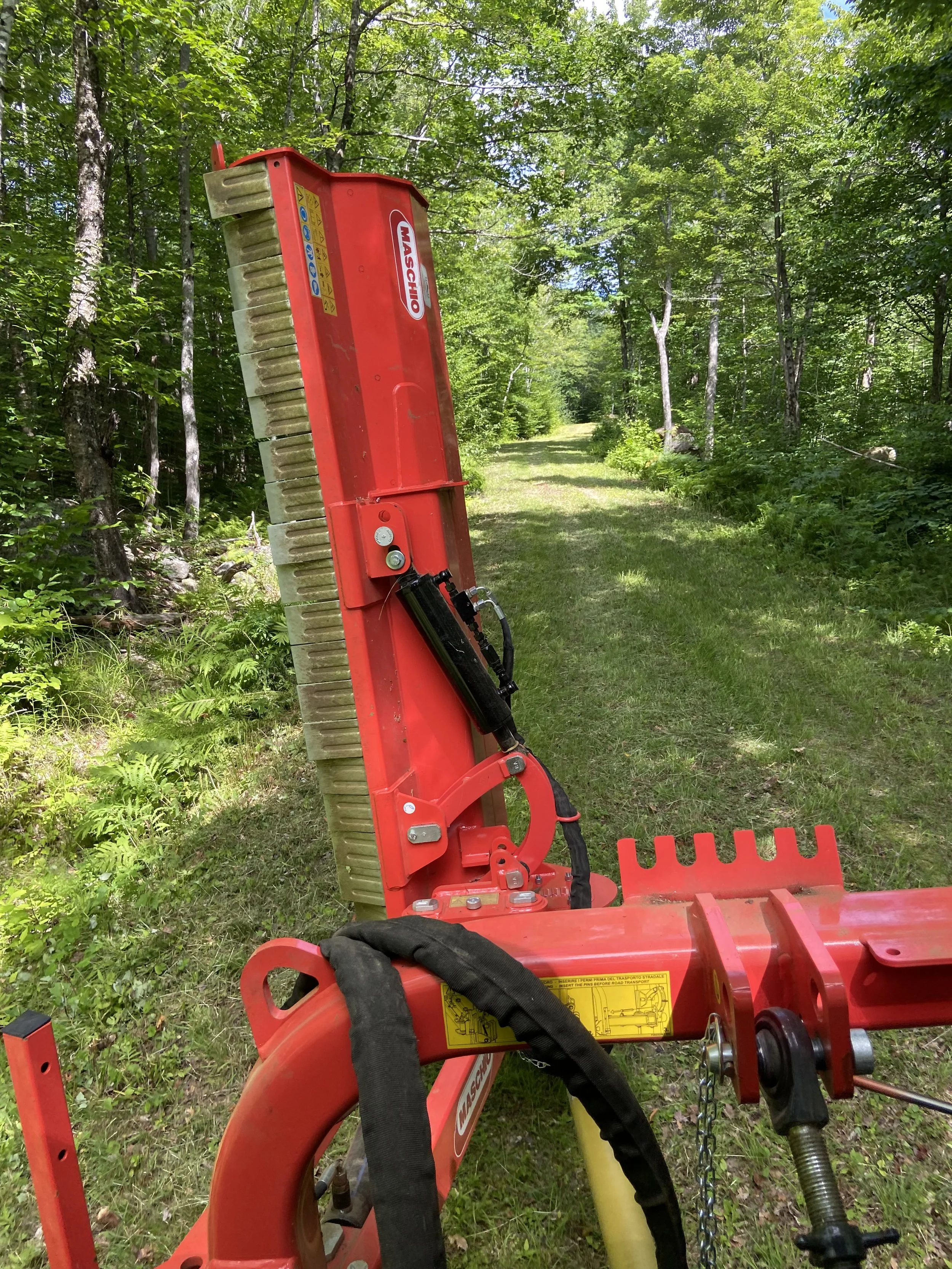
The angled mower allows for the mower to mow a variety of slopes all while remaining safely on the road surface.

Mowing softwood along a steep rocky embankment. This will make the road more accessible in the long term and faster to mow the next time.

Mowing hardwood along an upward slope above the rocks.

Mowing the shoulder level with the road.

When fully extended the hydraulic boom arm allows for the mower to mow ditches where zero-turns and fixed mowers directly behind a machine can not mow.
Mowing Before & After
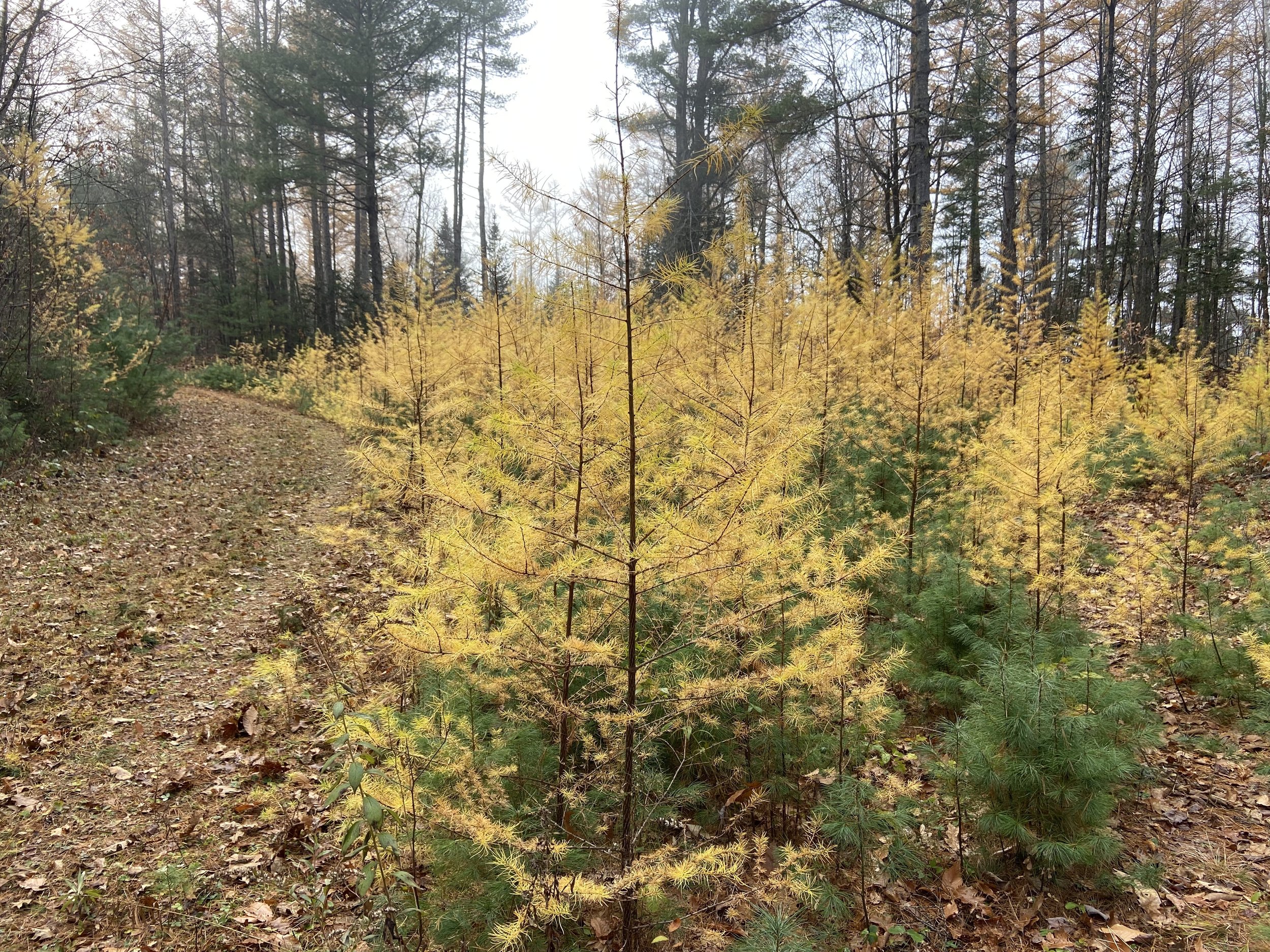

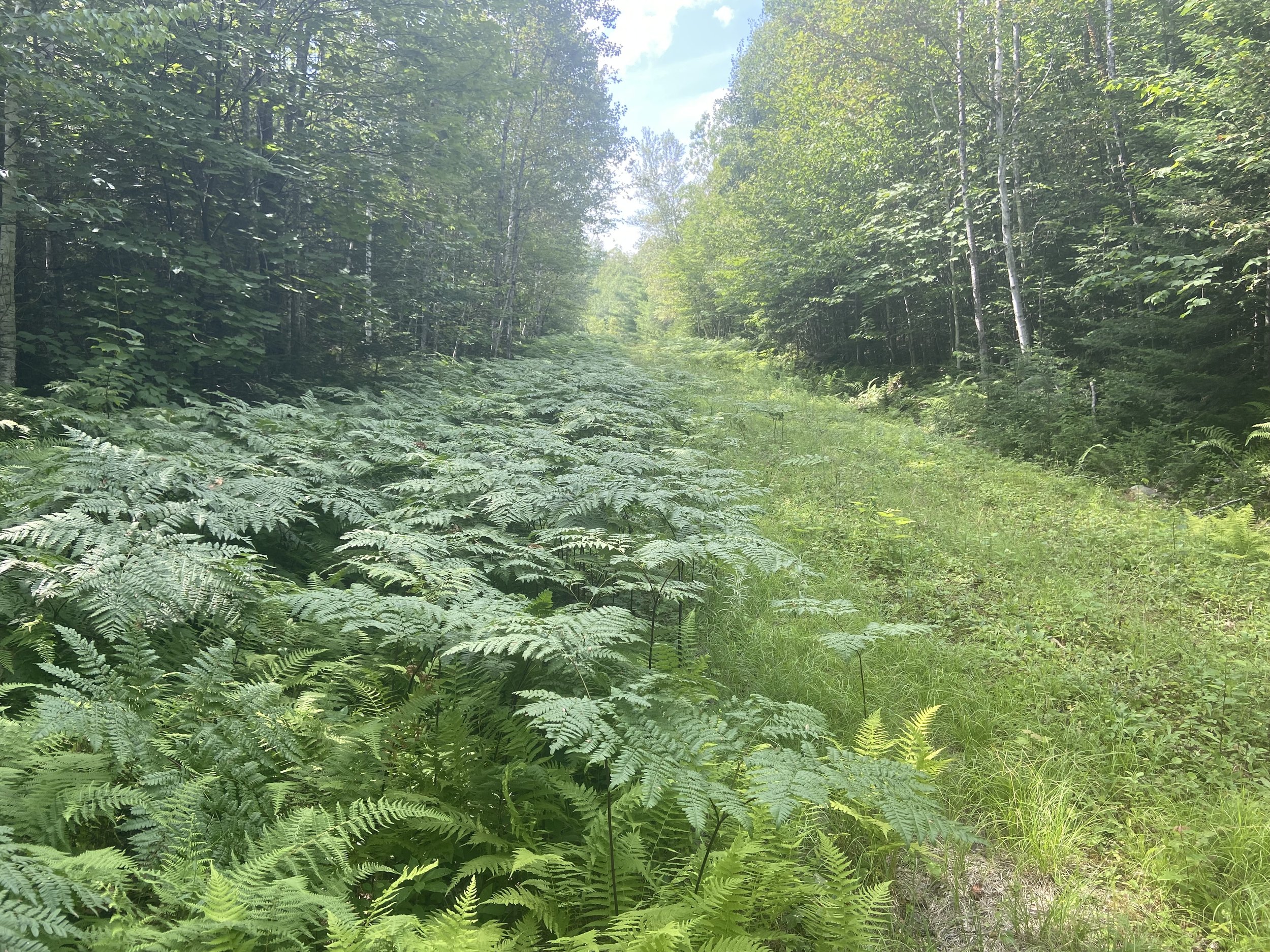
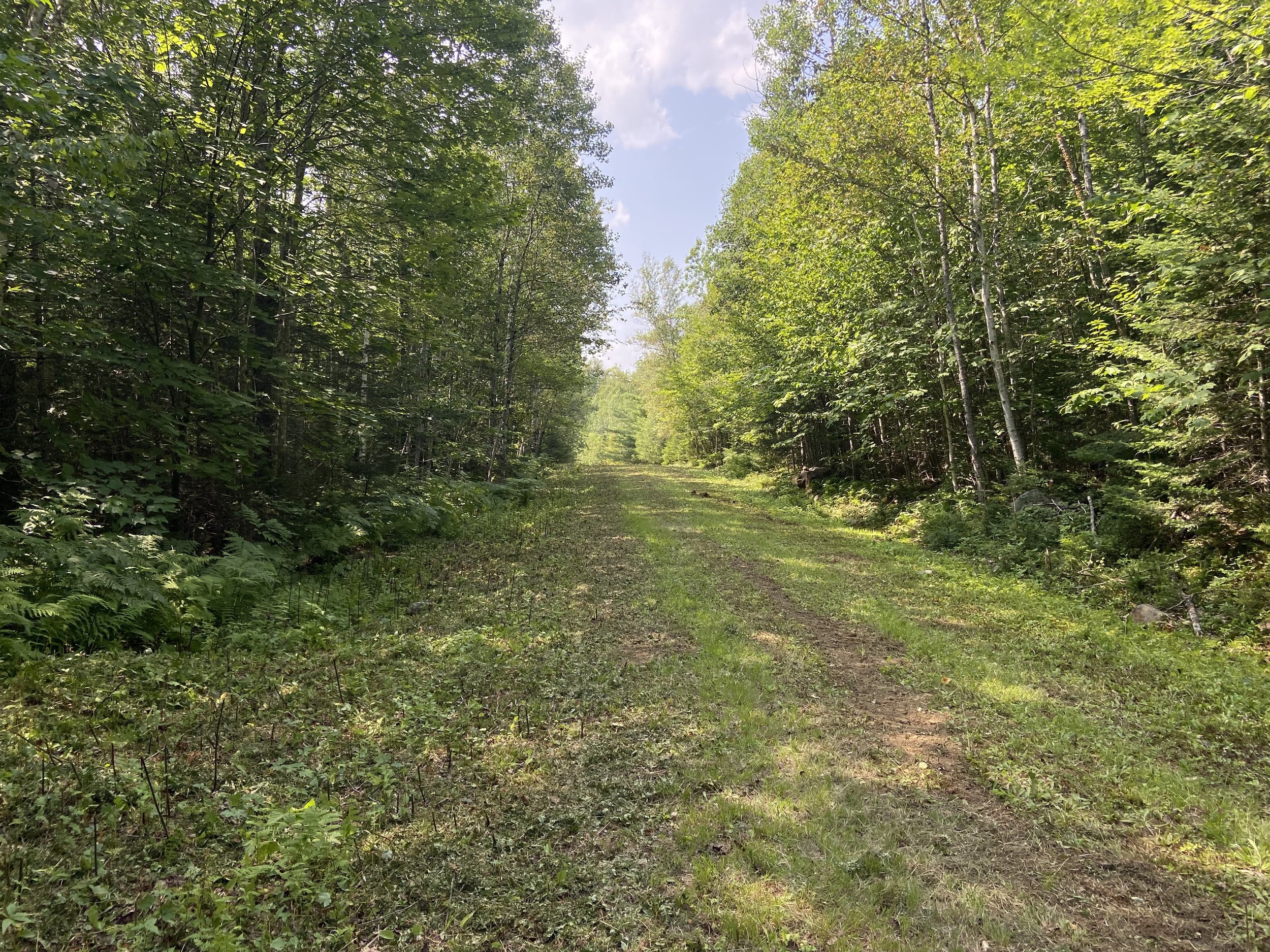
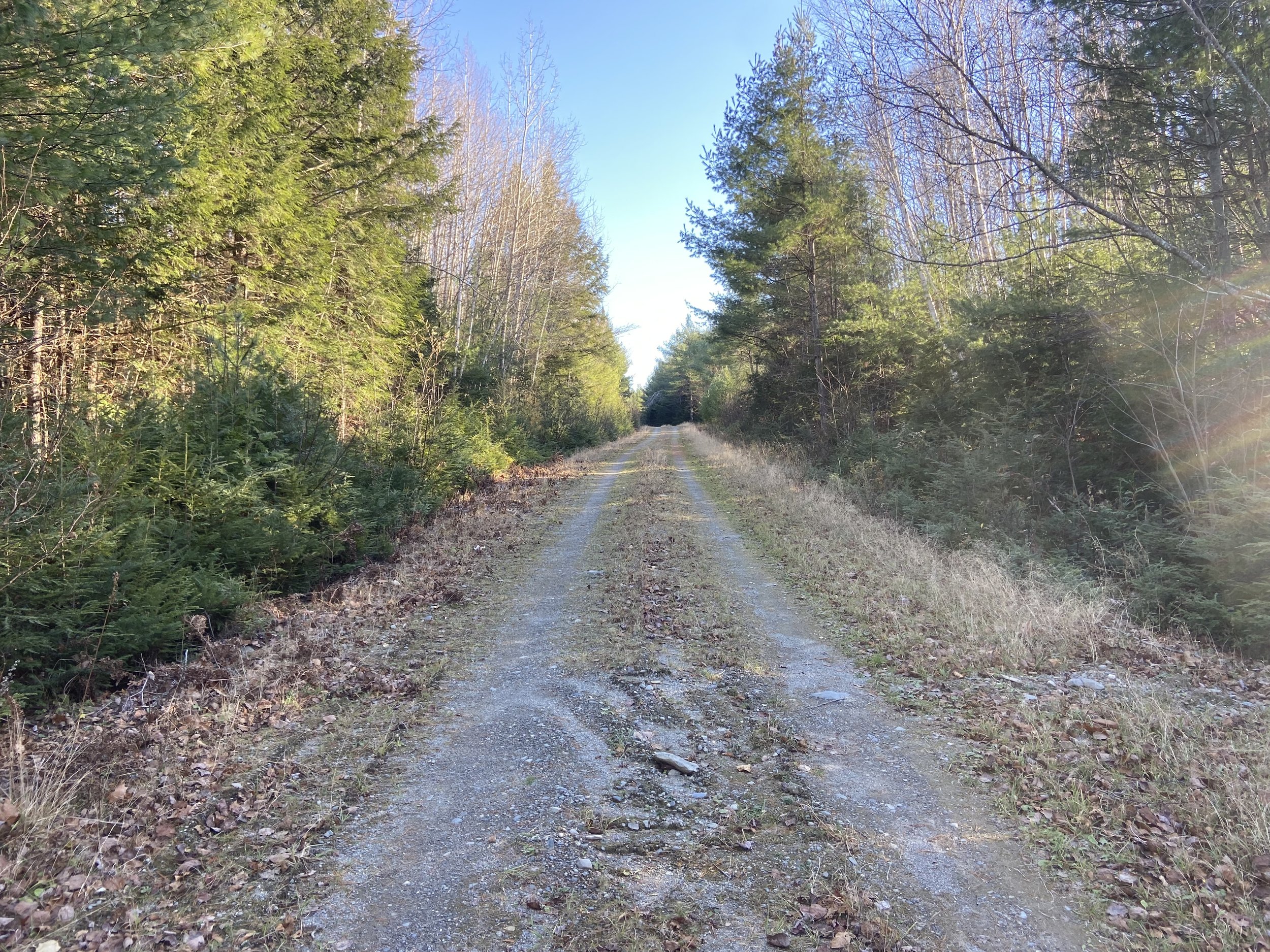
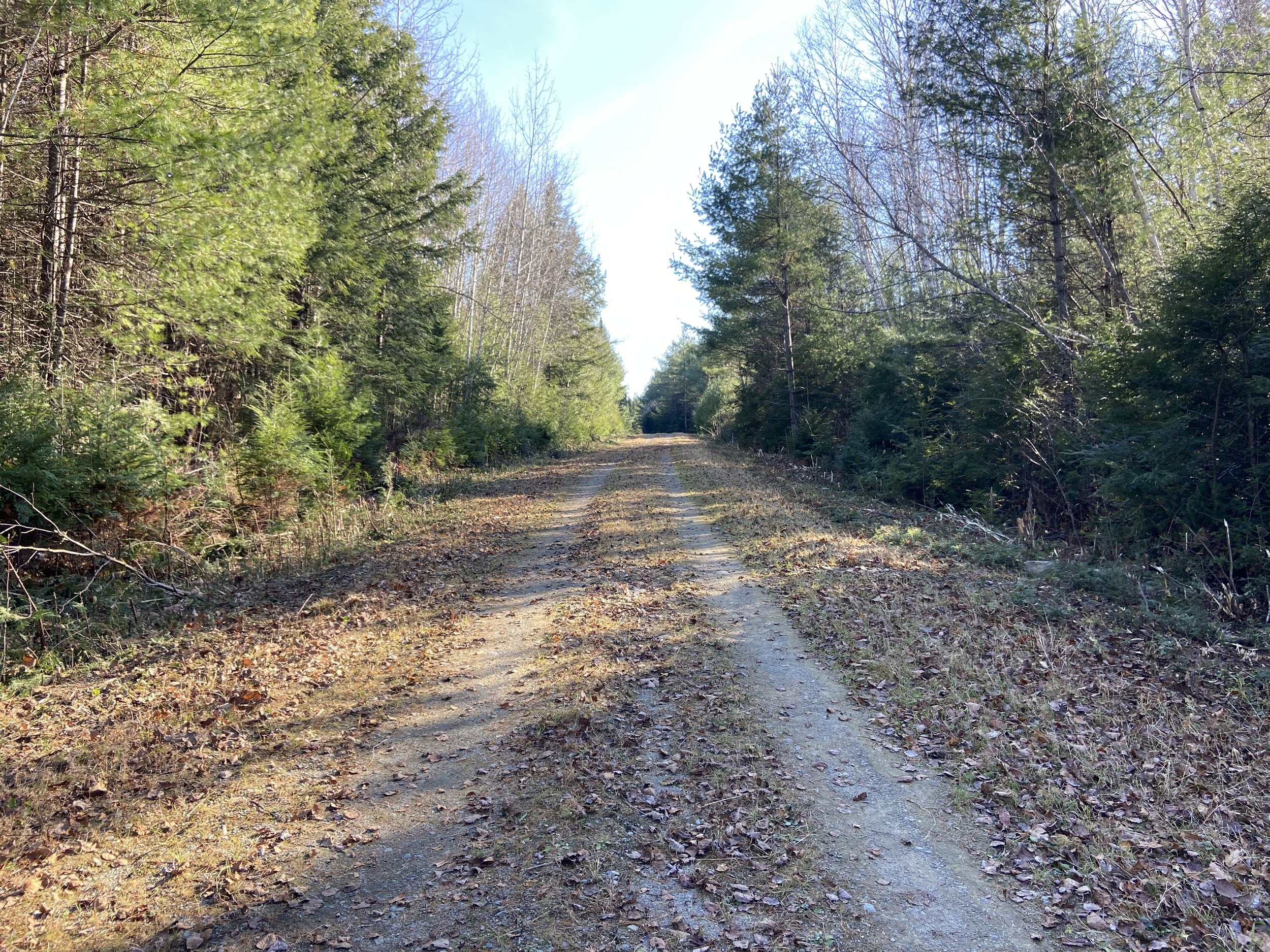
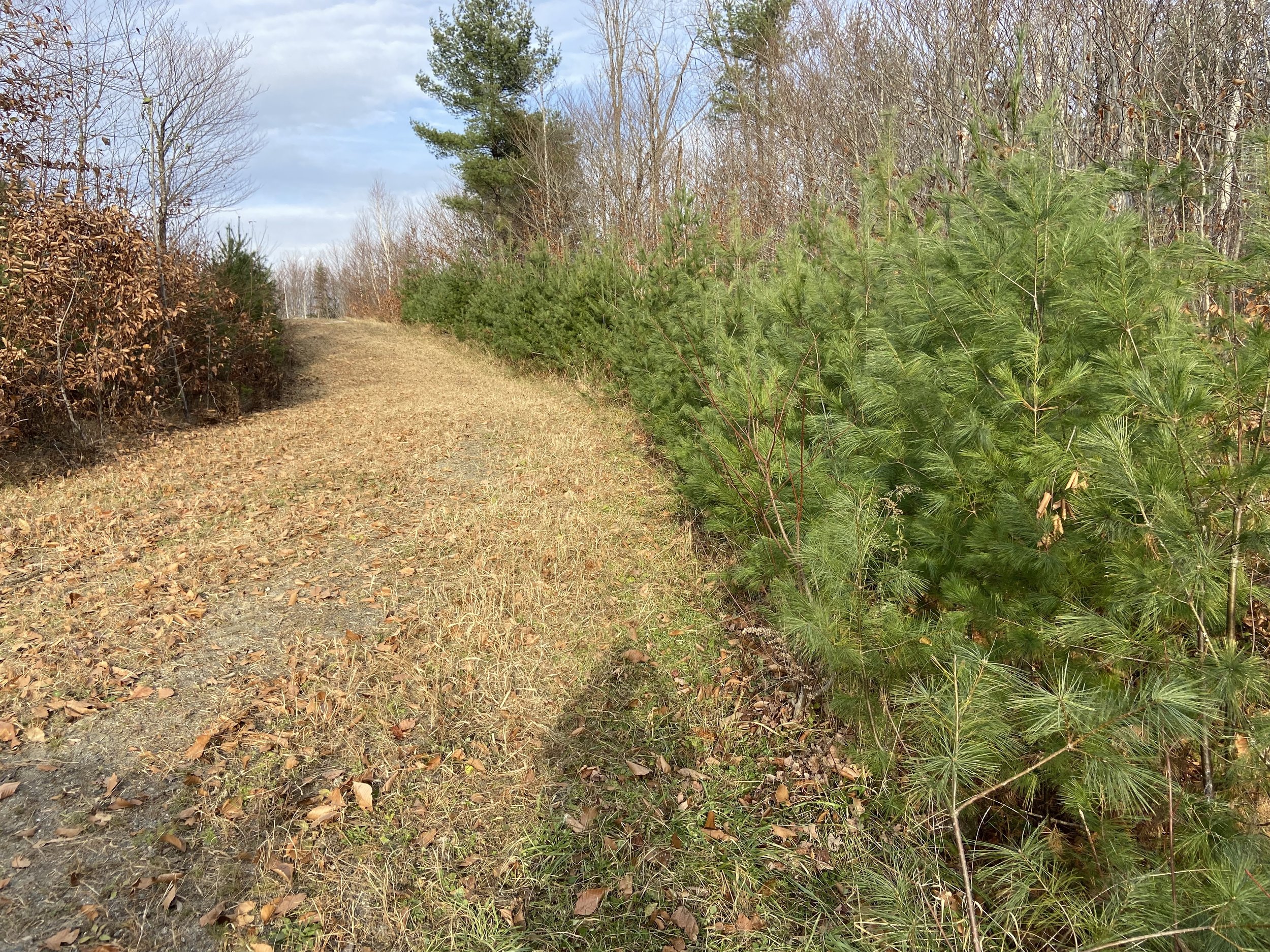
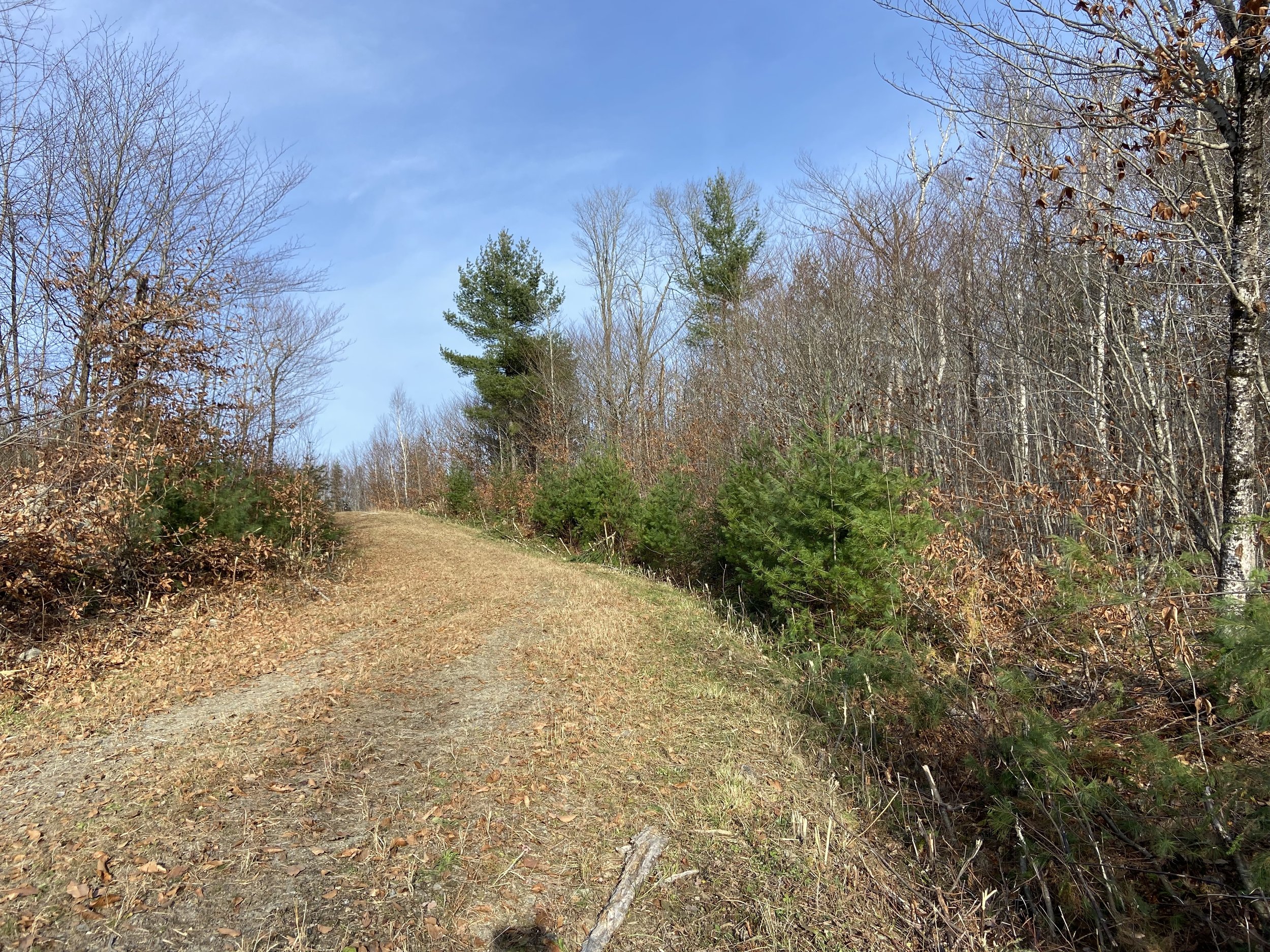

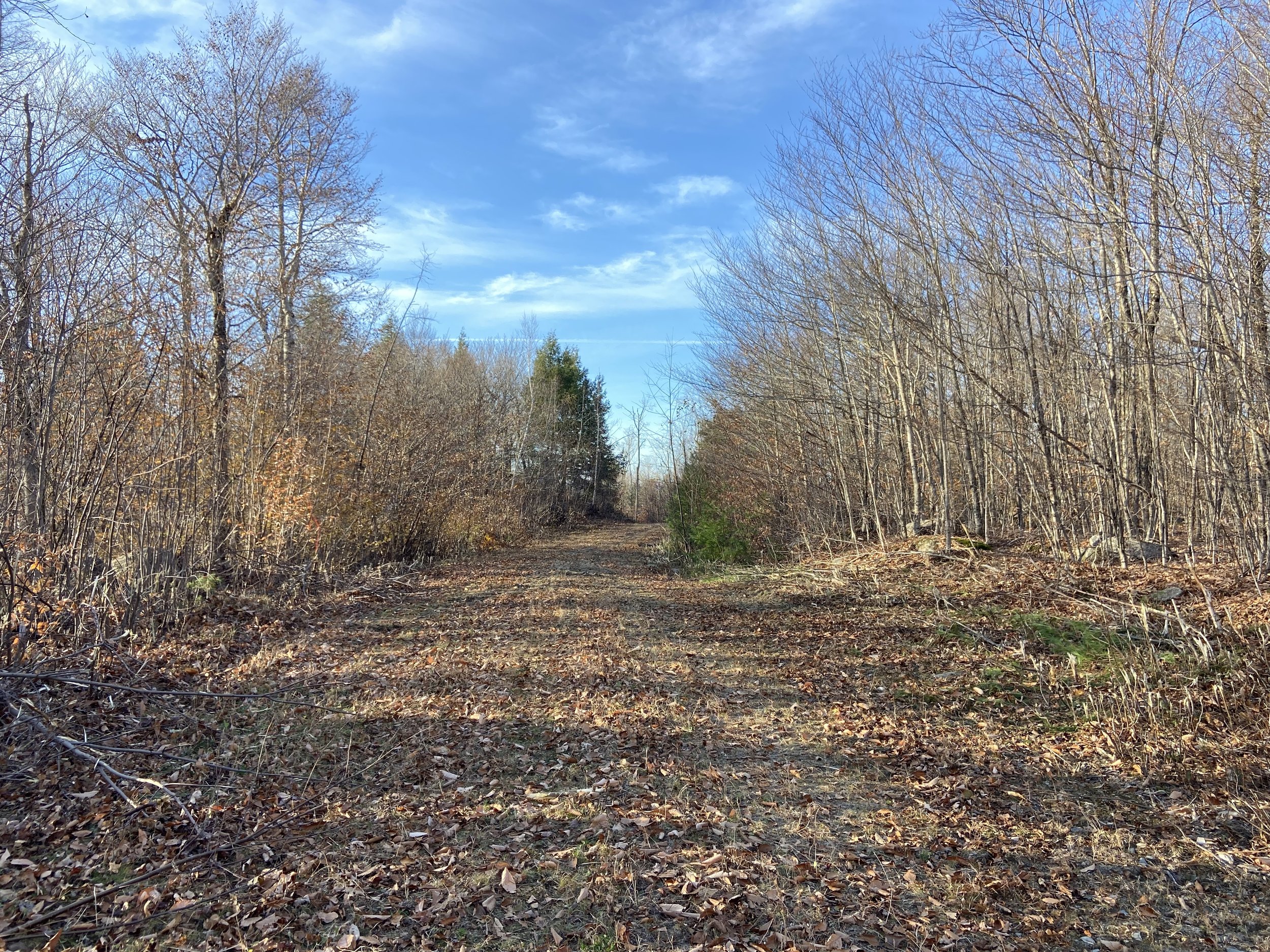
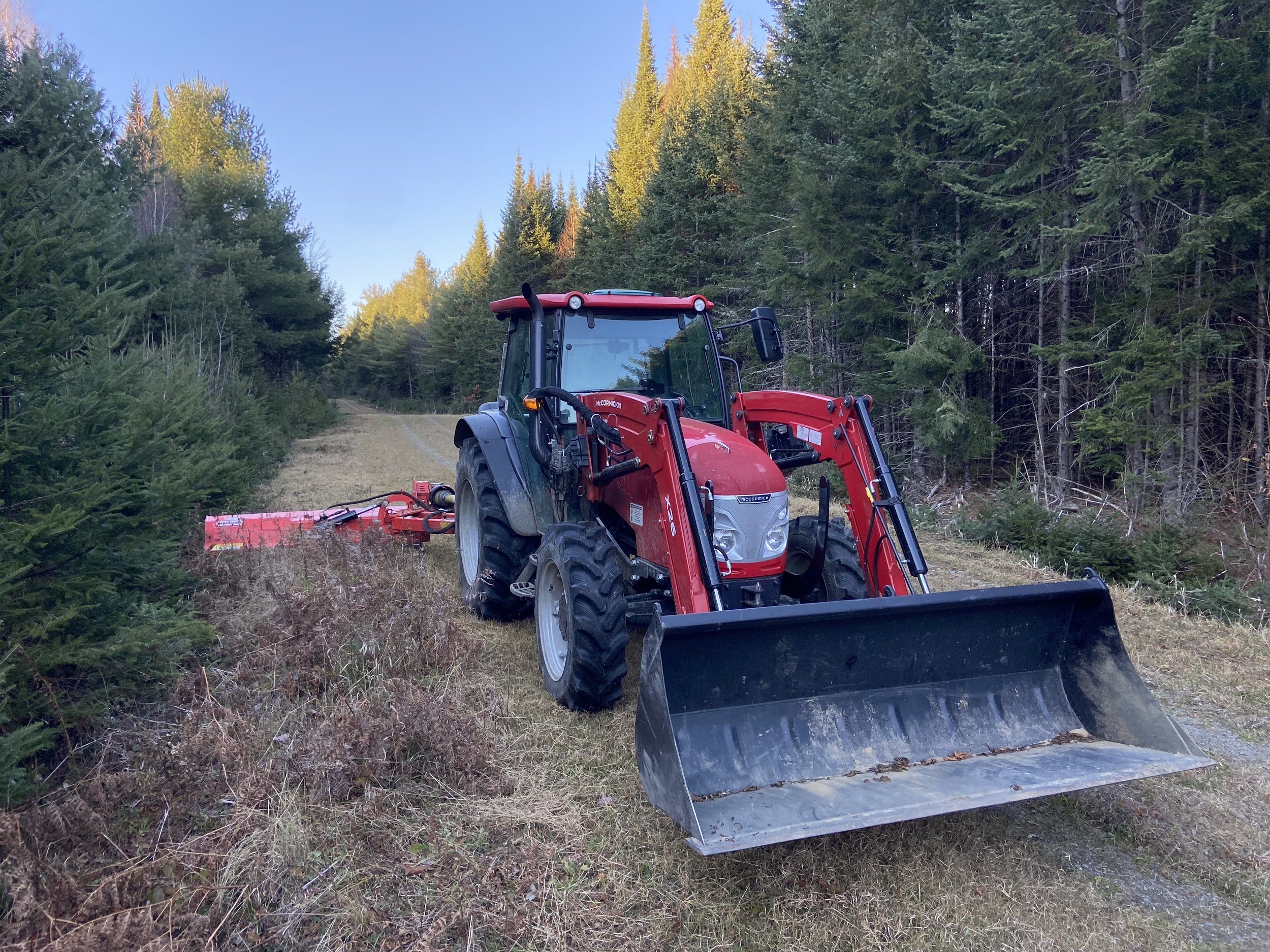

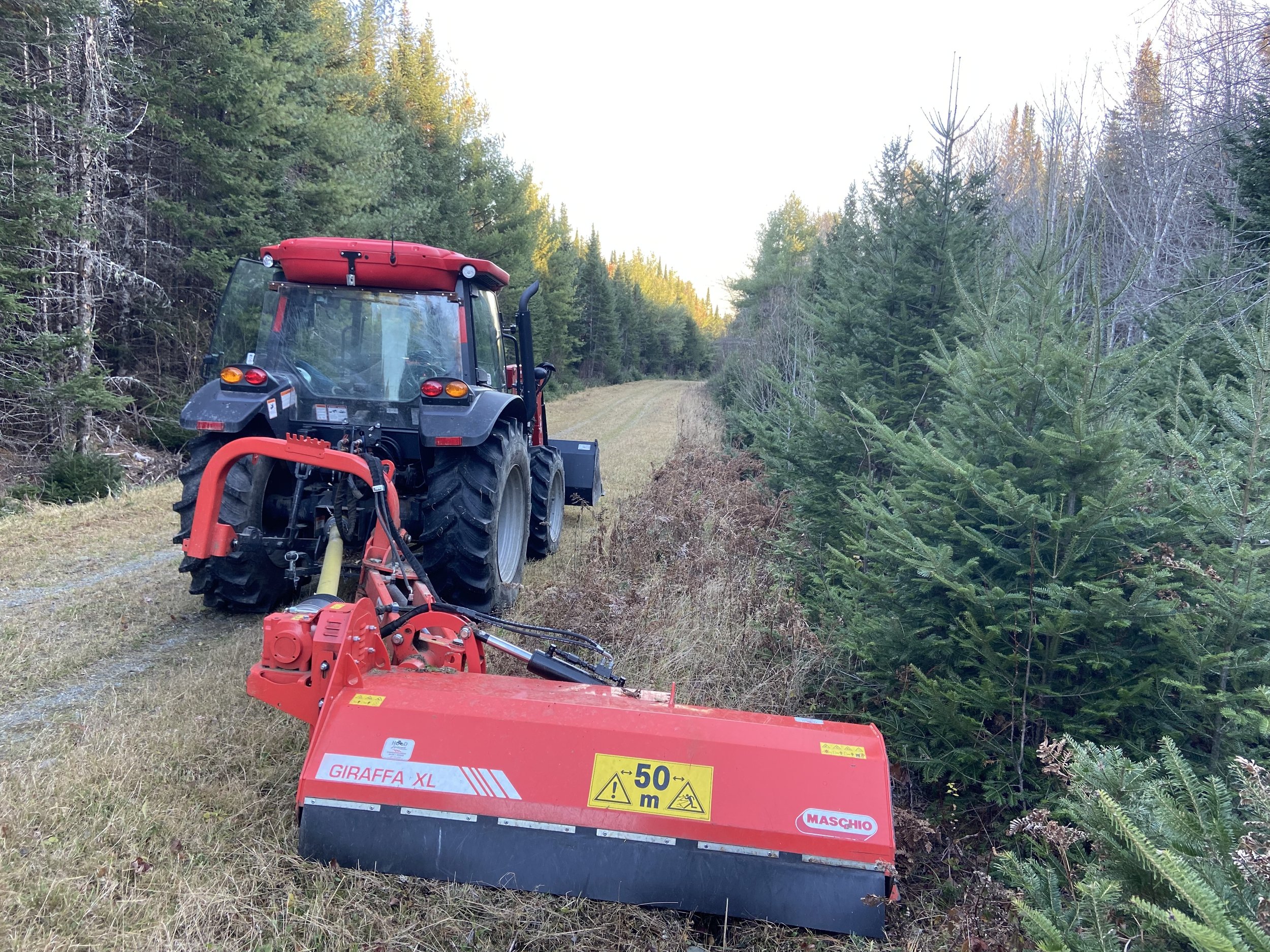
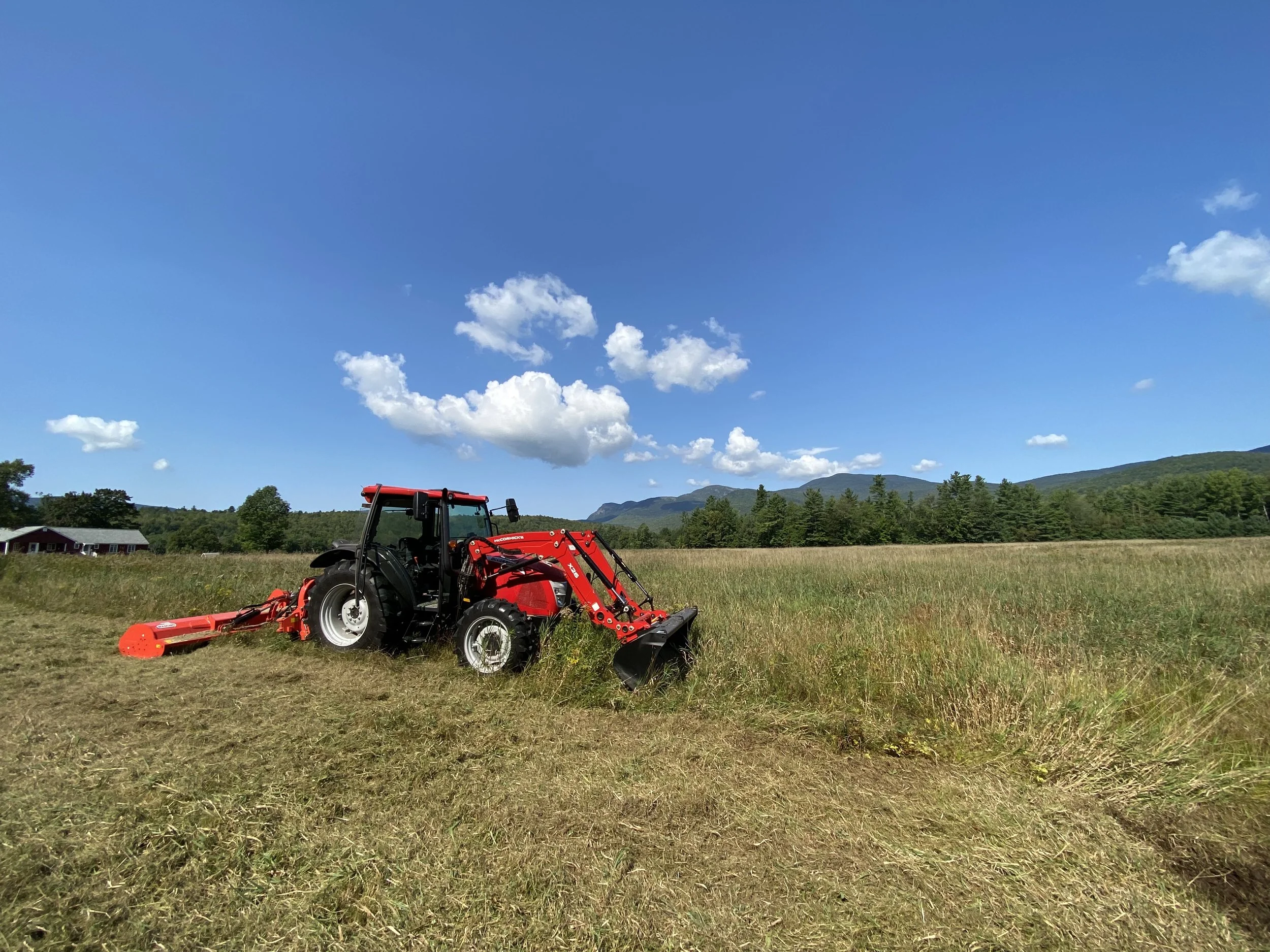
Additional mowing done in fields & wildlife areas

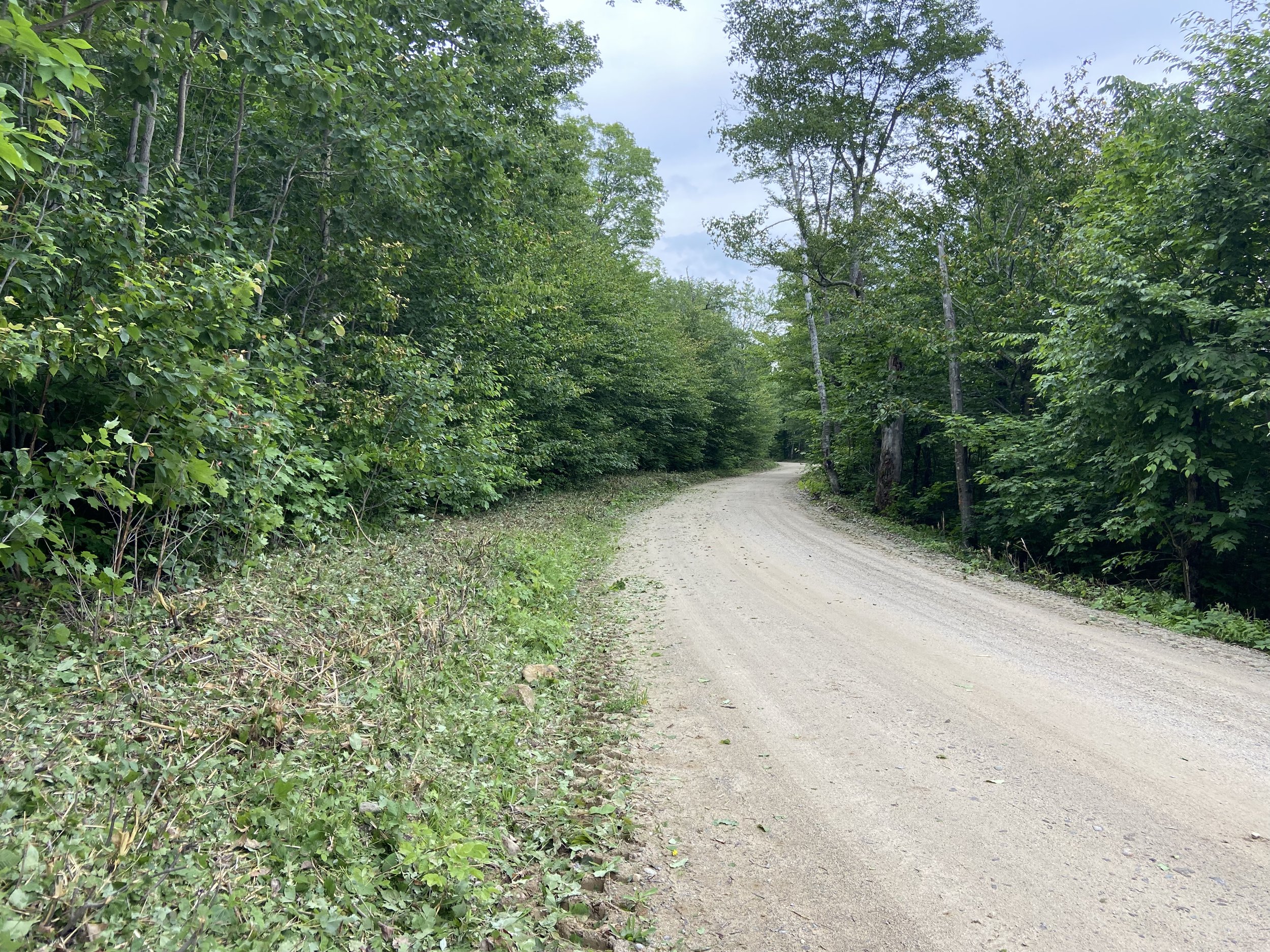
Additional mowing done along gravel roadside shoulders

Large 2" poison sumac, red oak, and shrubbery growth overhanging roadway limiting road use and obstructing view of oncoming traffic.

Regained full use of roadway and a clear sight line of oncoming traffic.
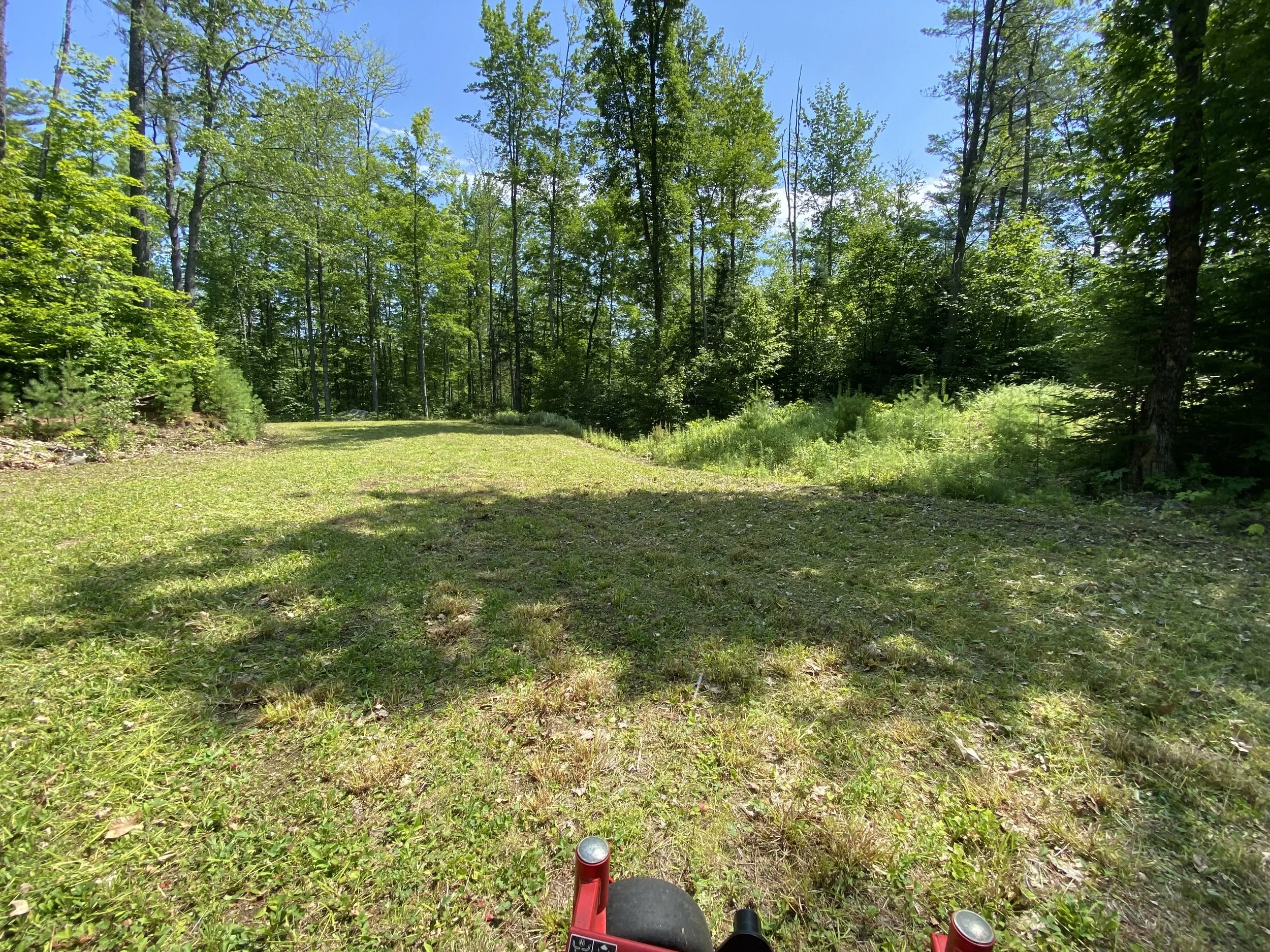
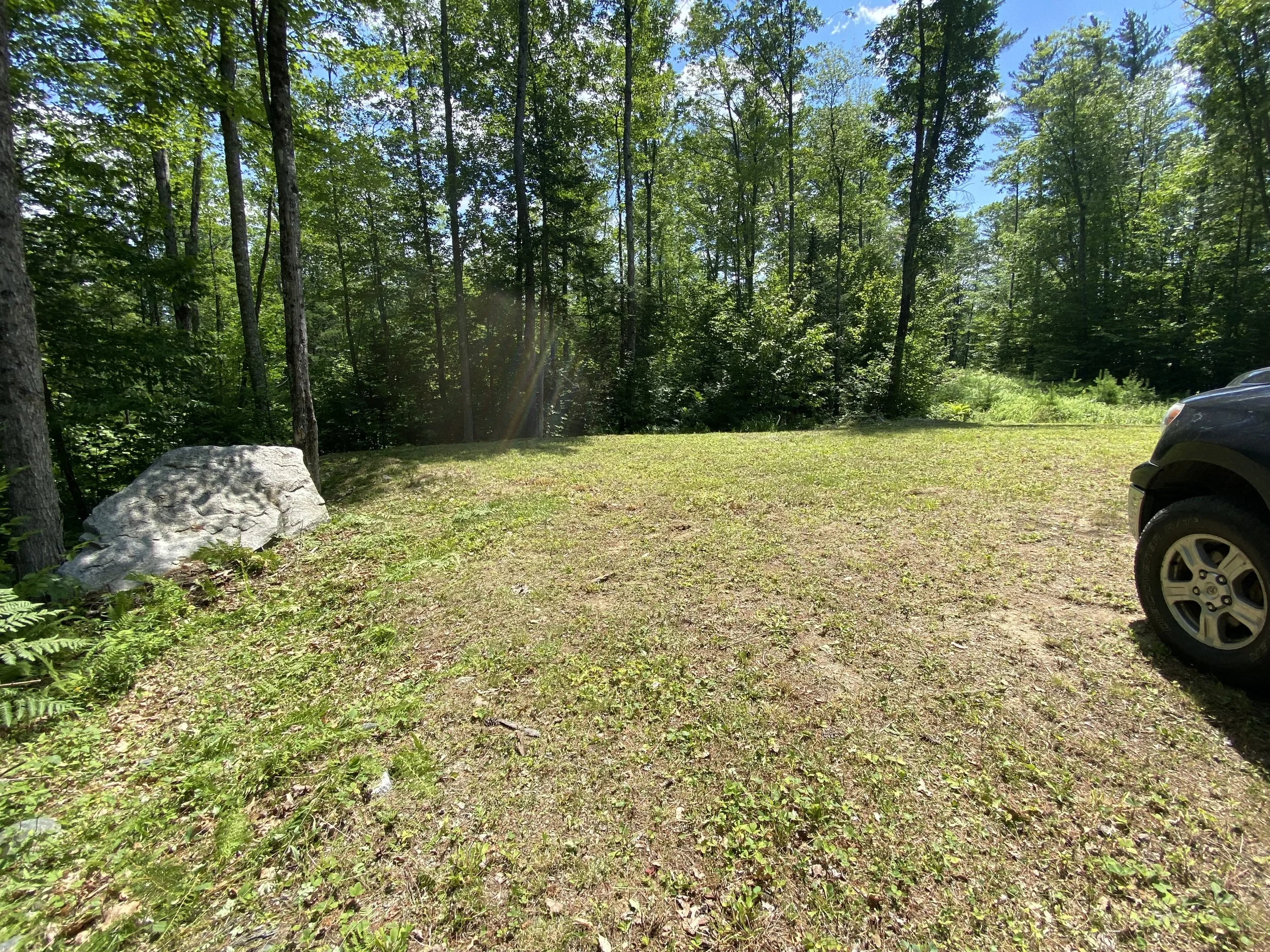
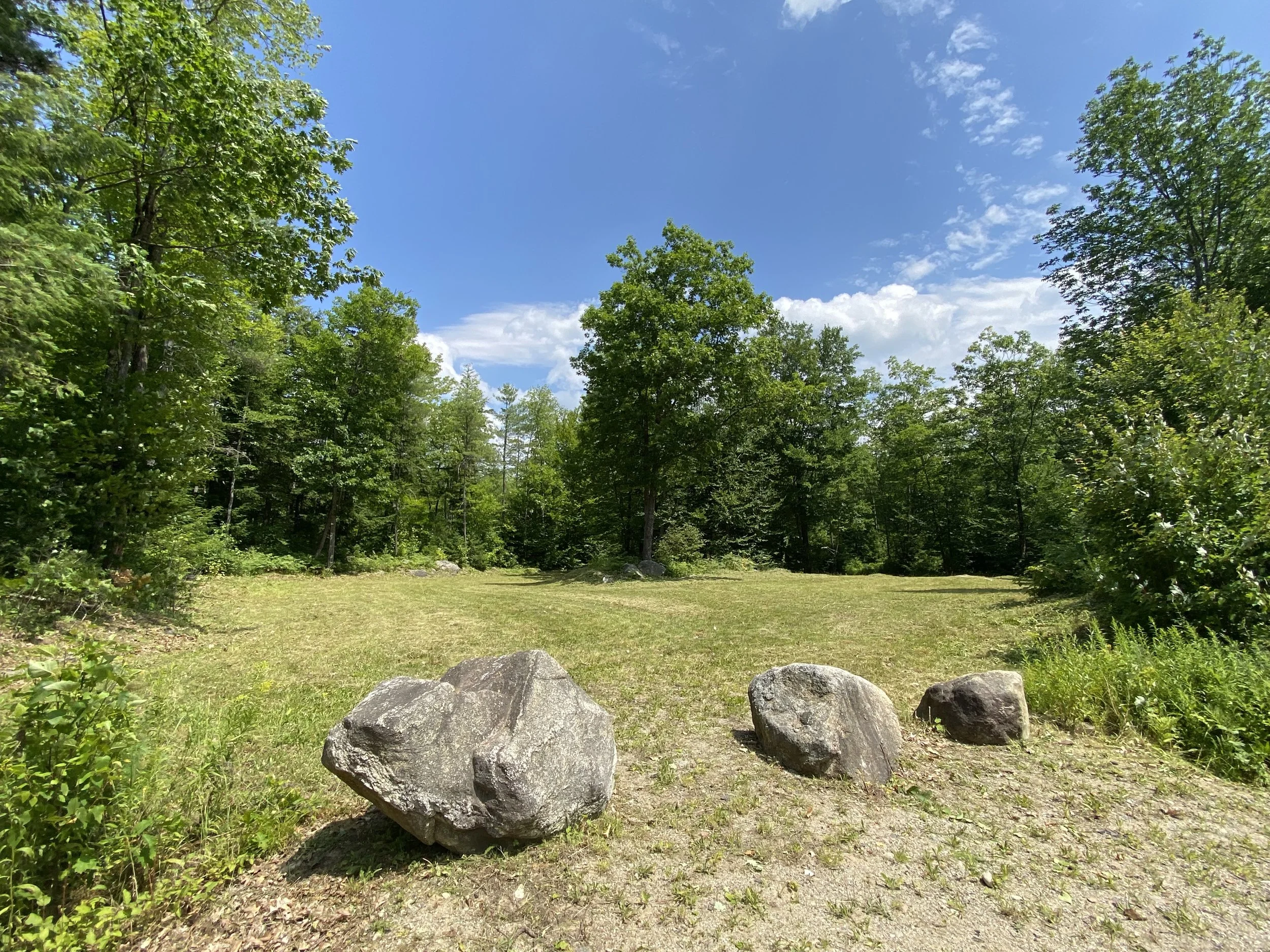
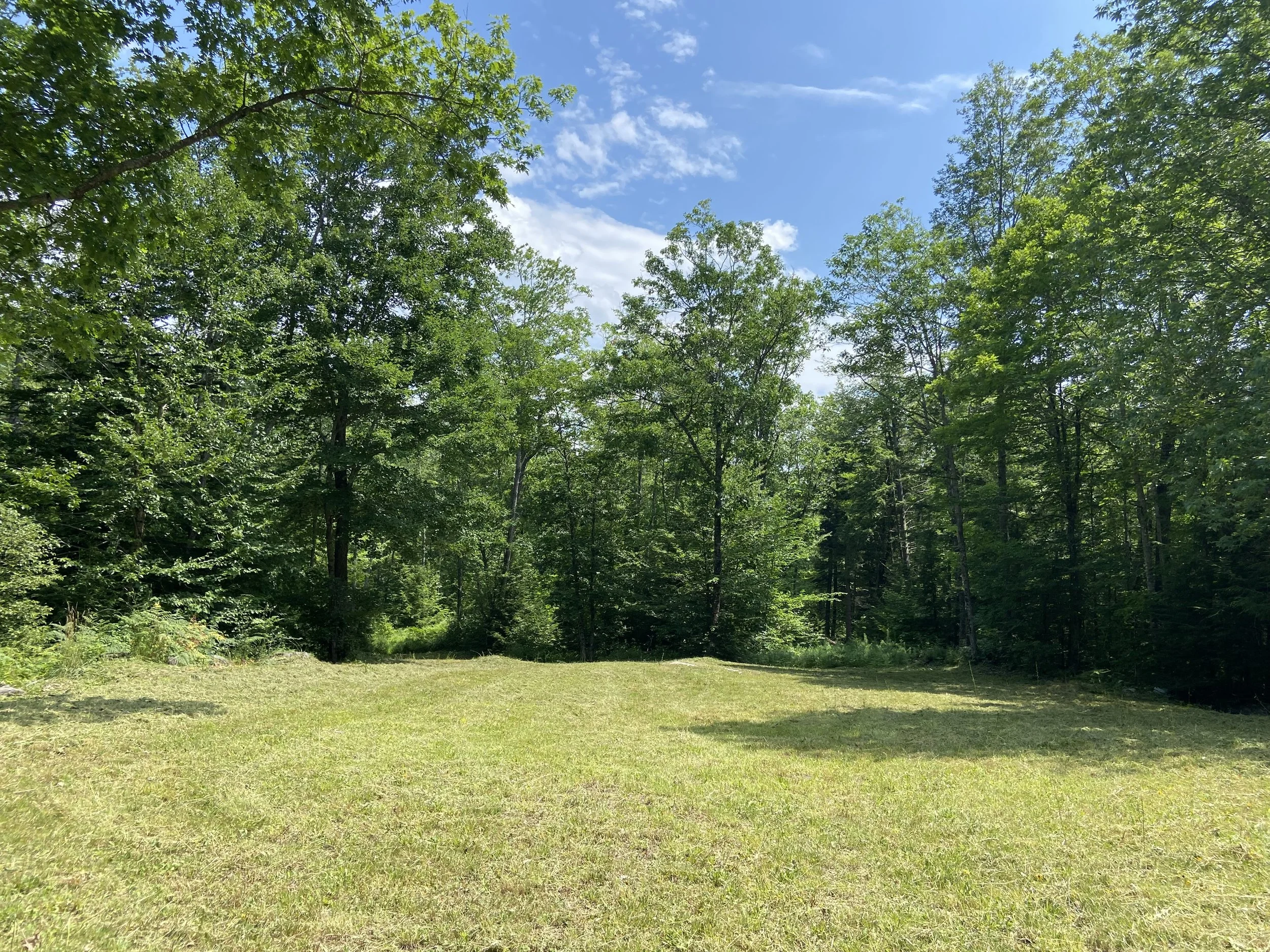
Mowing of Past Timber Harvest Landings for Wildlife Habitat Diversification


Logging Road Entrance Maintenance
Before & After

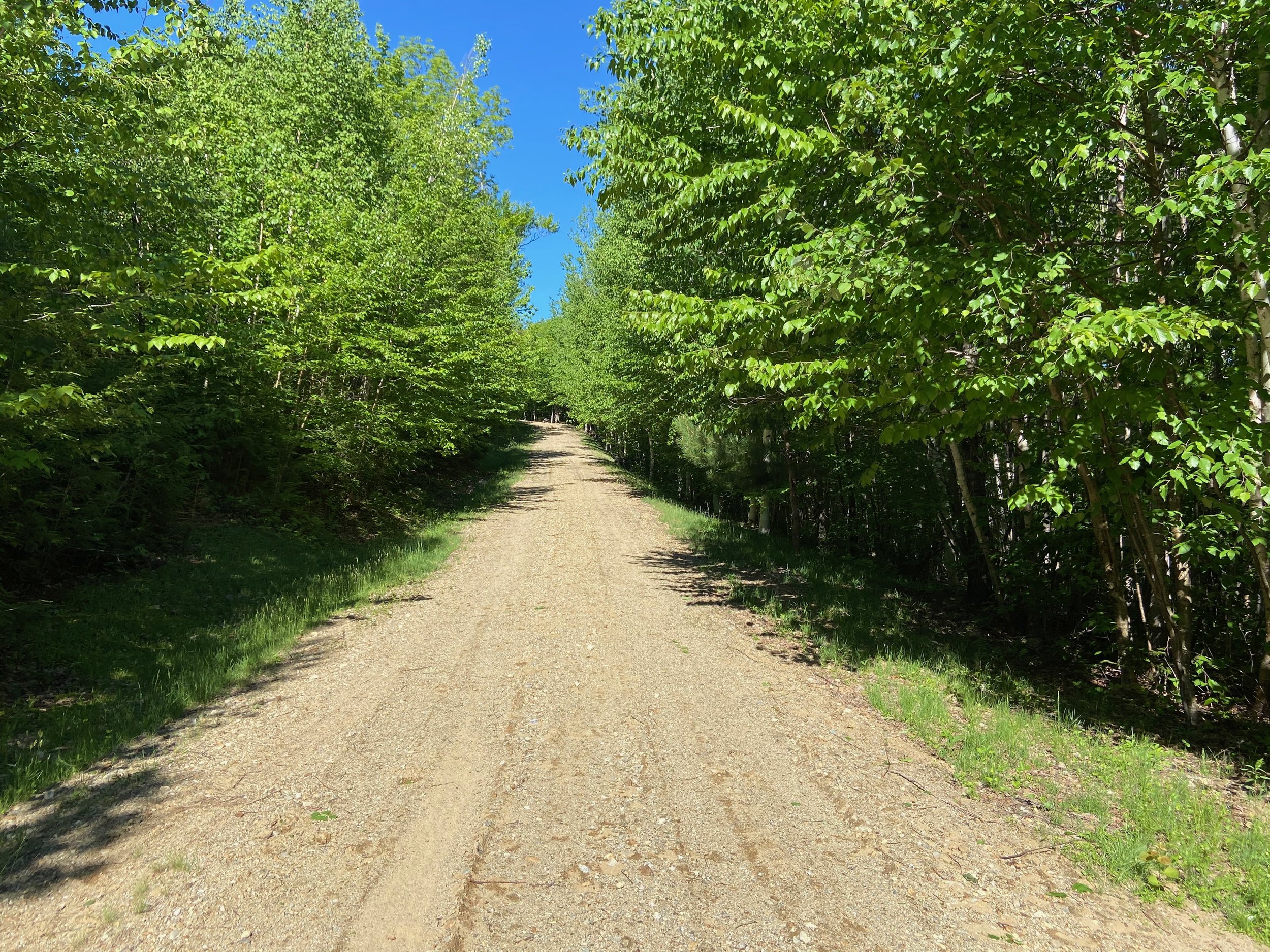
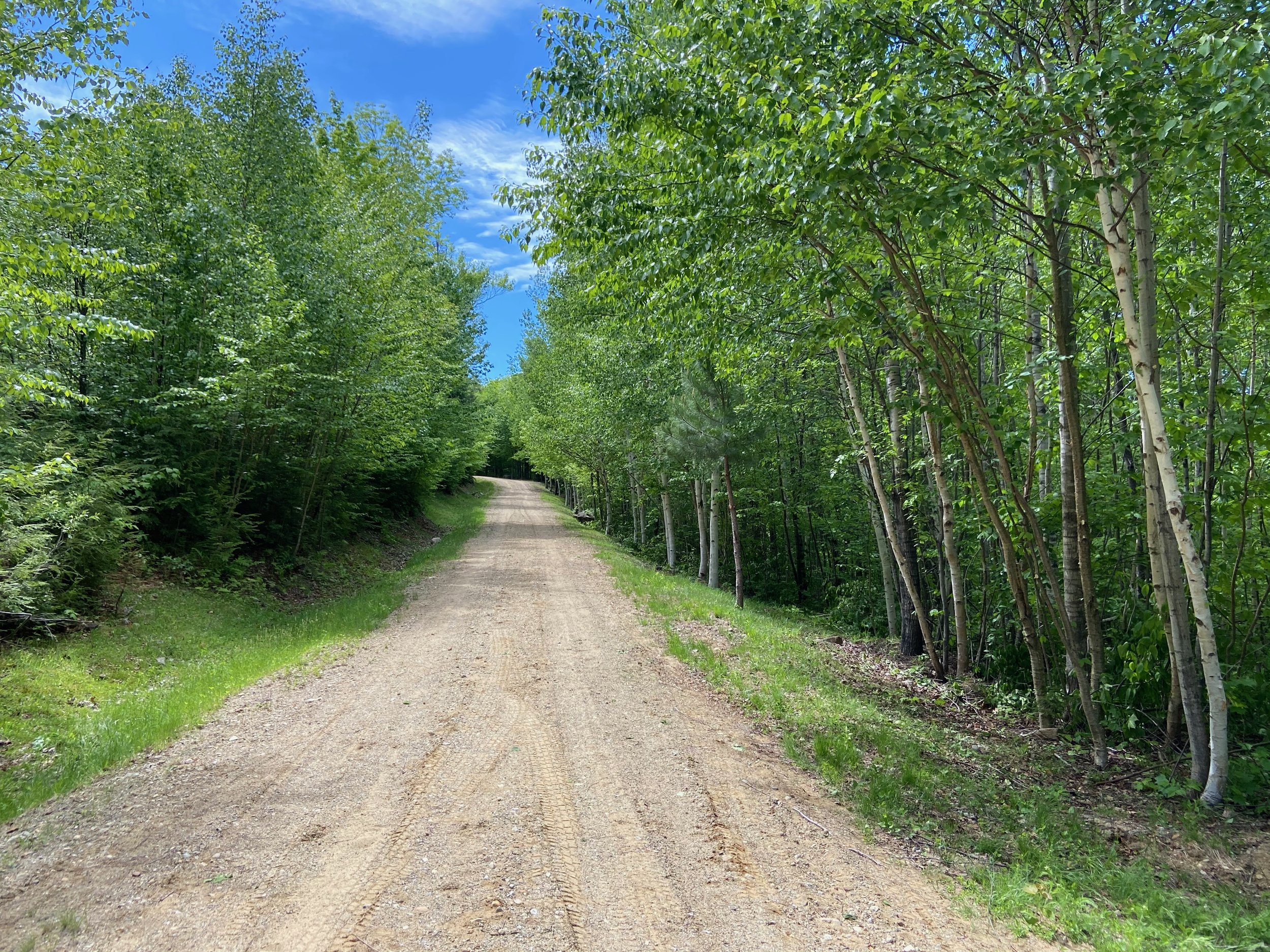
Pruning Logging Roads for Pickup, Dump Truck and/or Log Truck Clearances
Before & After
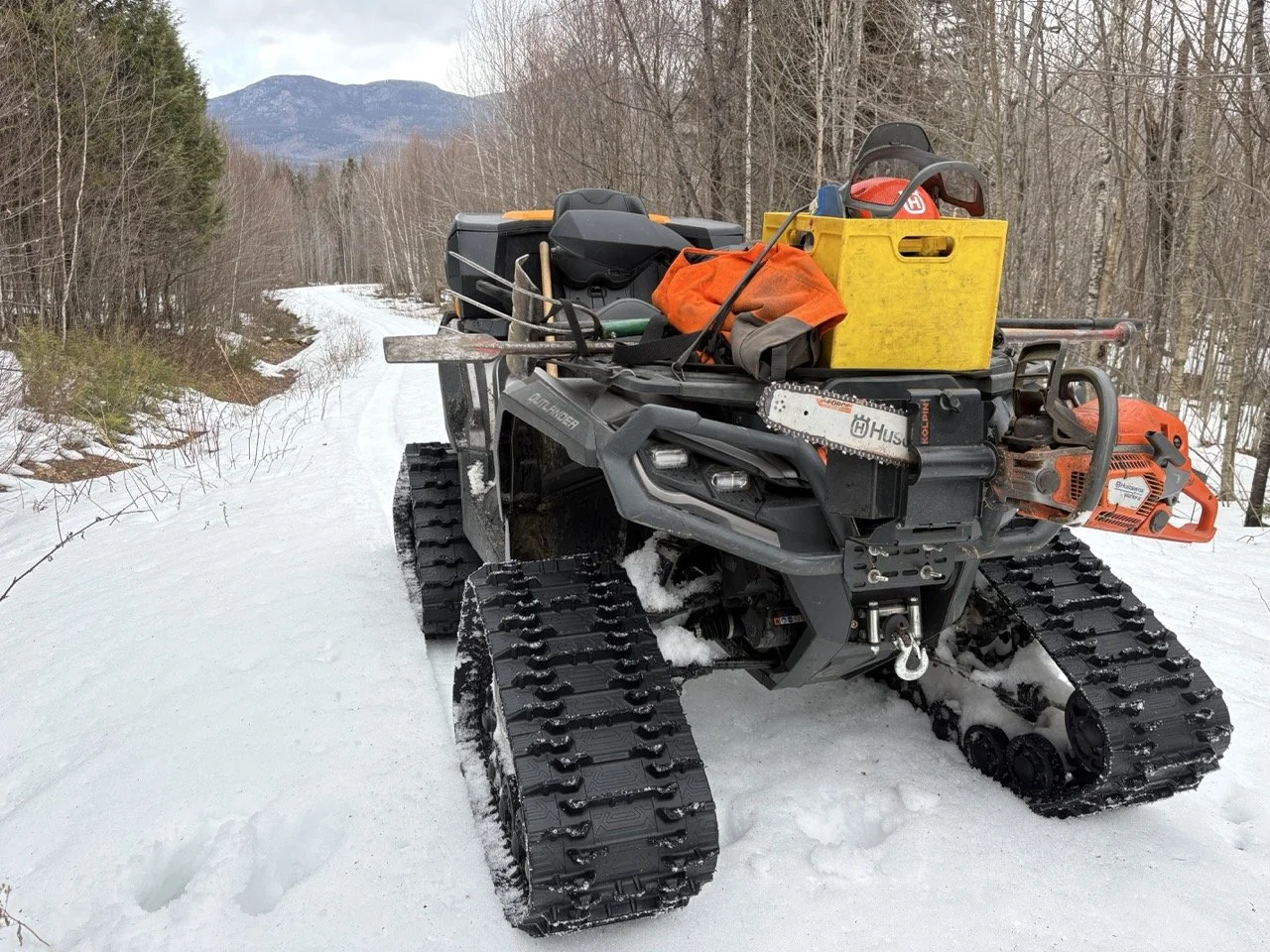
Logging Road Maintenance
Gate Installation; Culvert Cleaning; Debris Removal
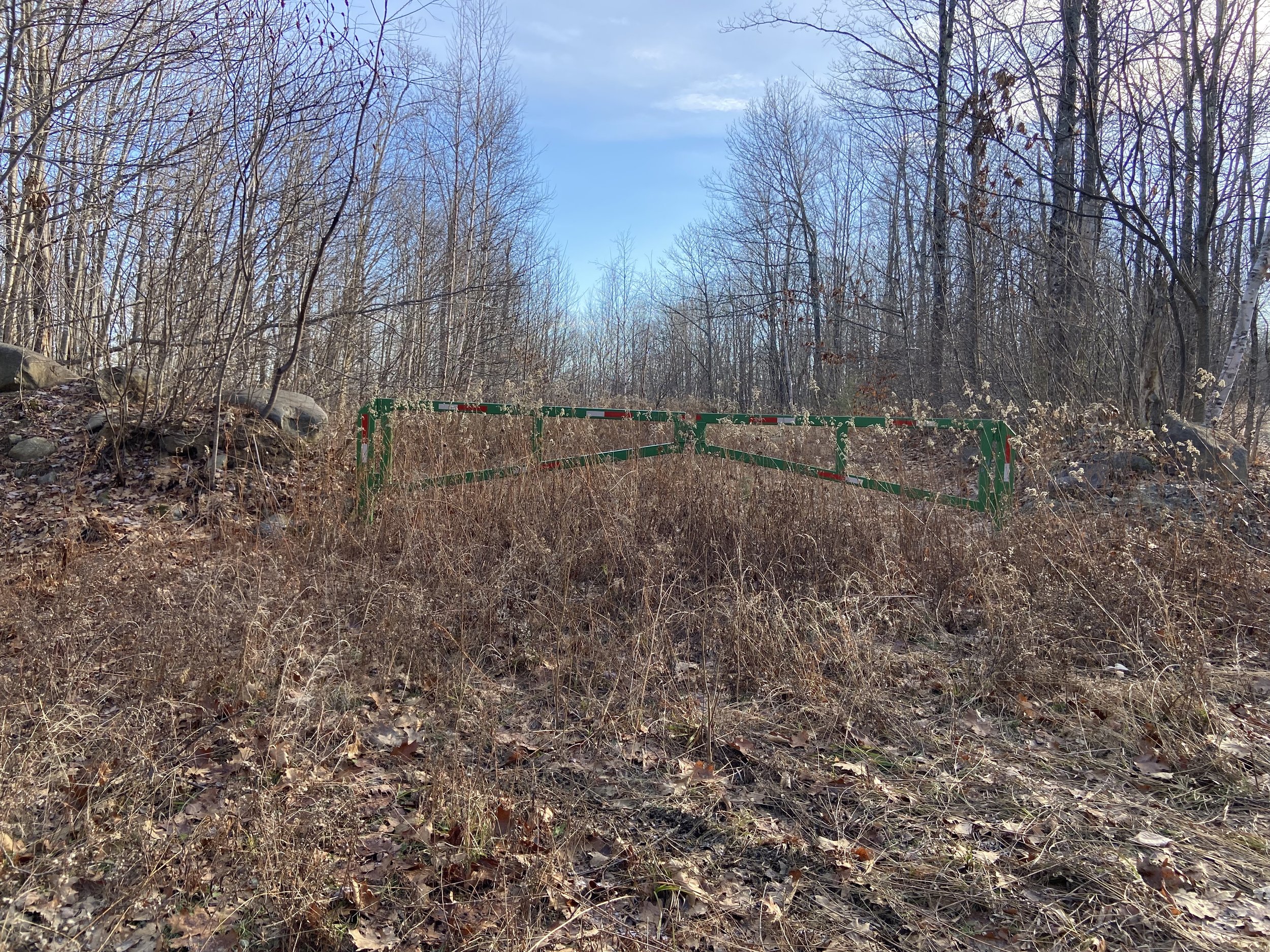
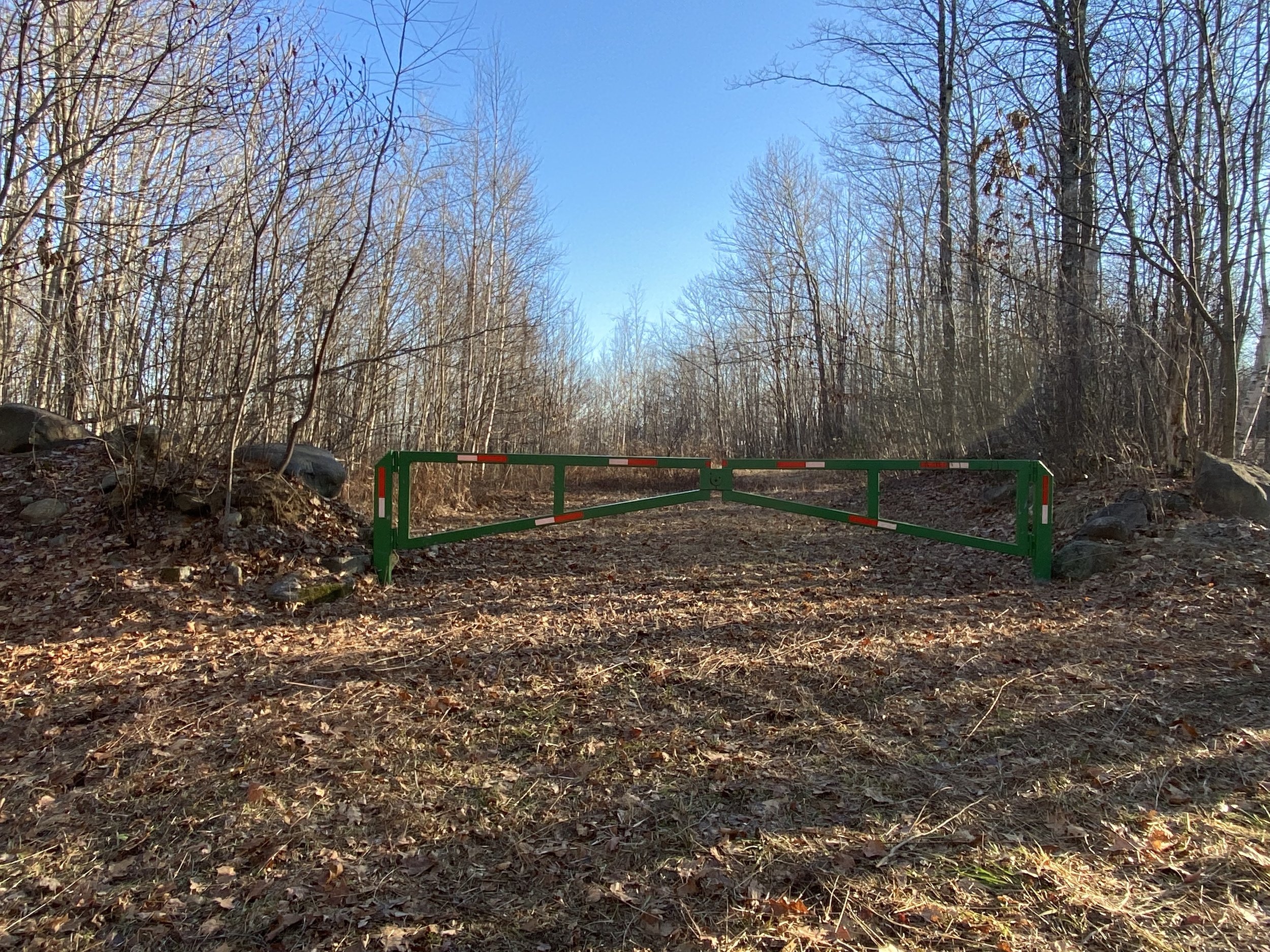
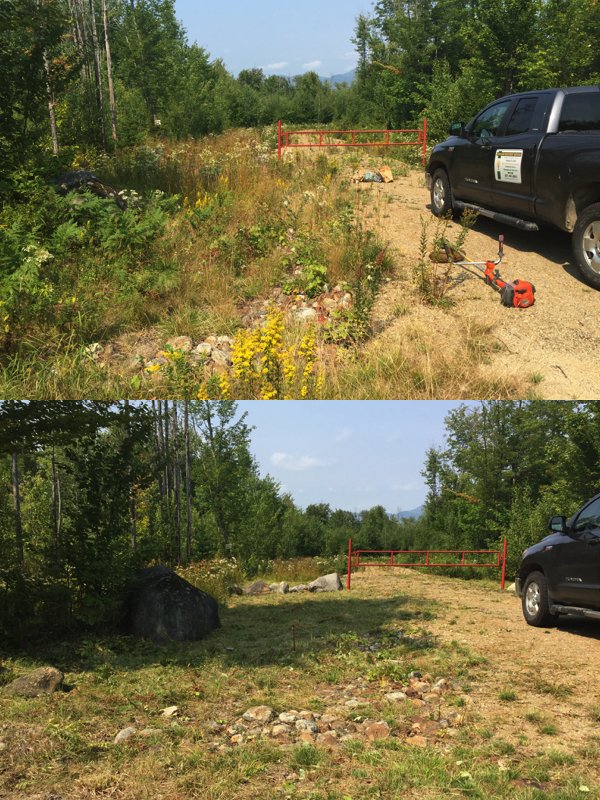
Gate Installation
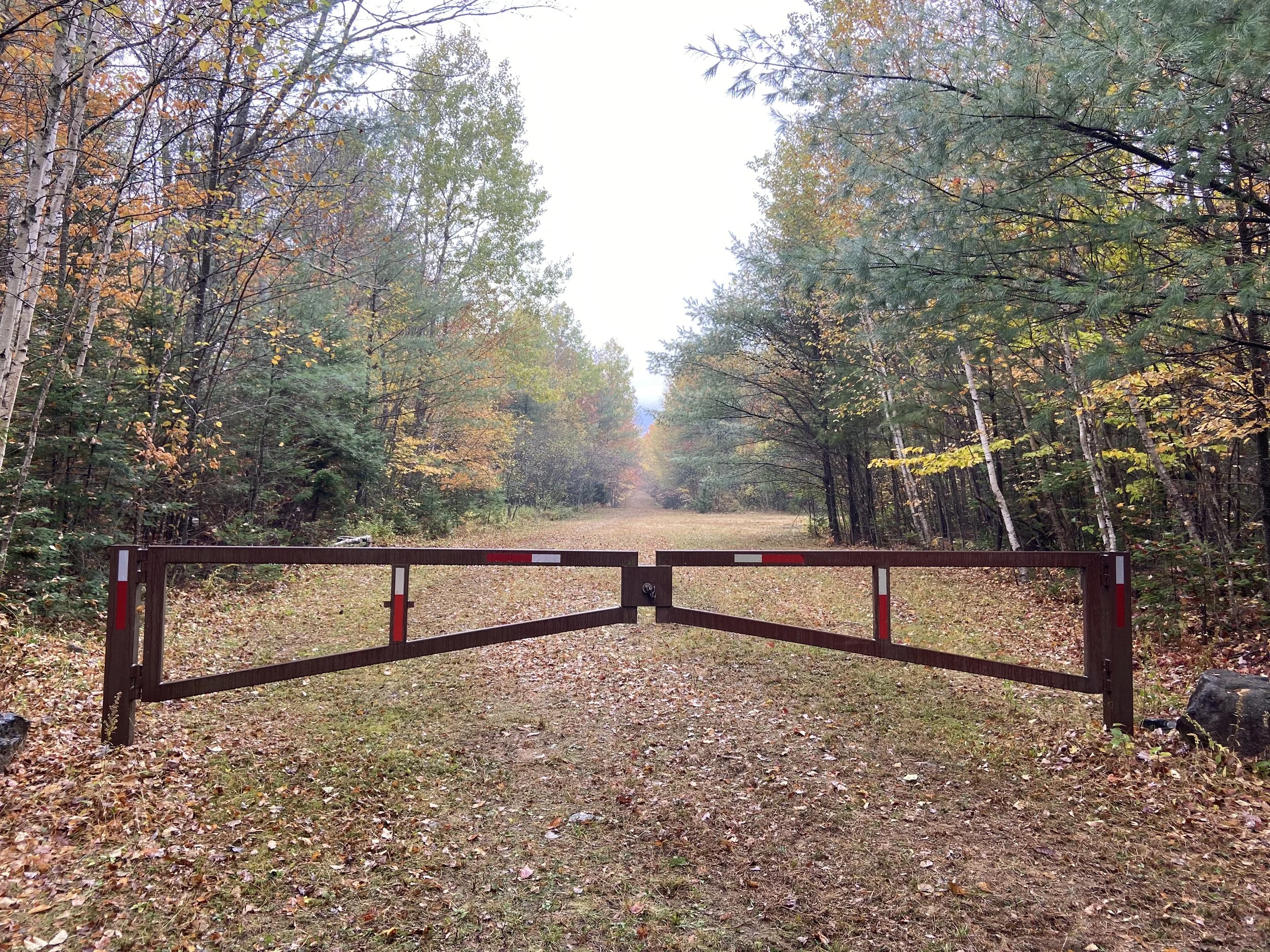
Limit Land Access
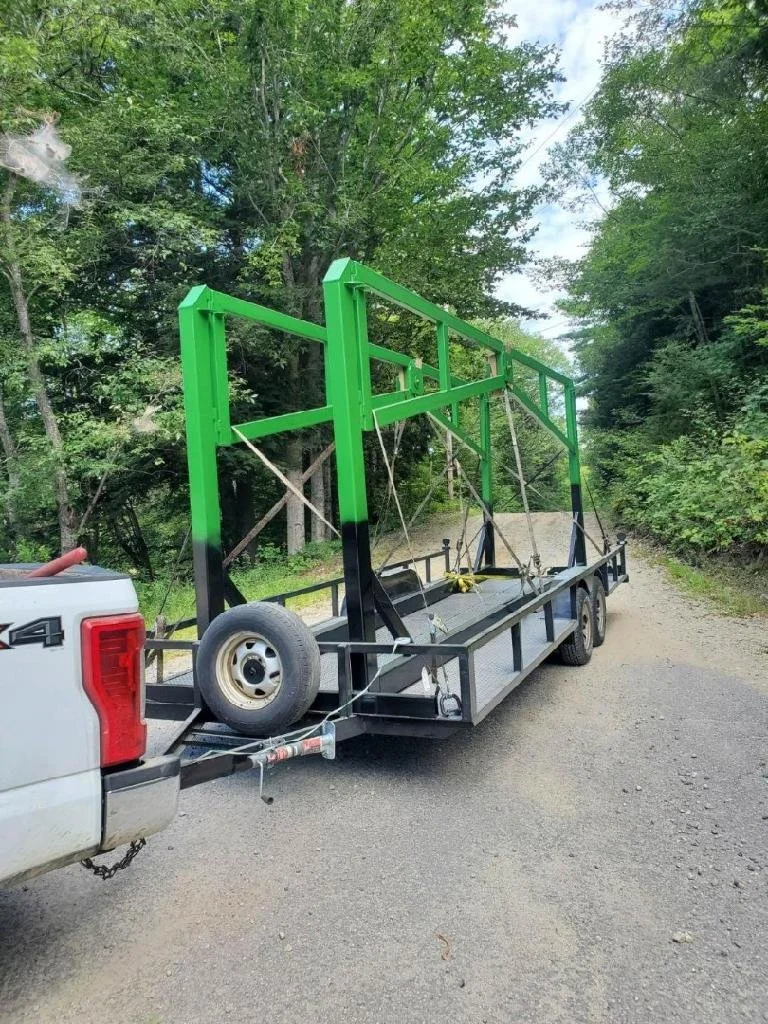
Custom Made
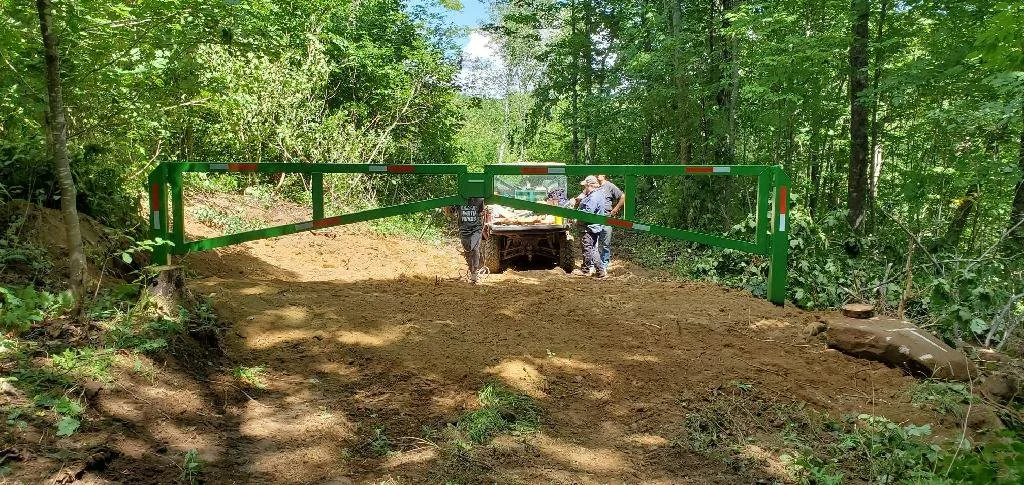
We Install
Cleaning Culverts
Scheduled Every Spring and Fall
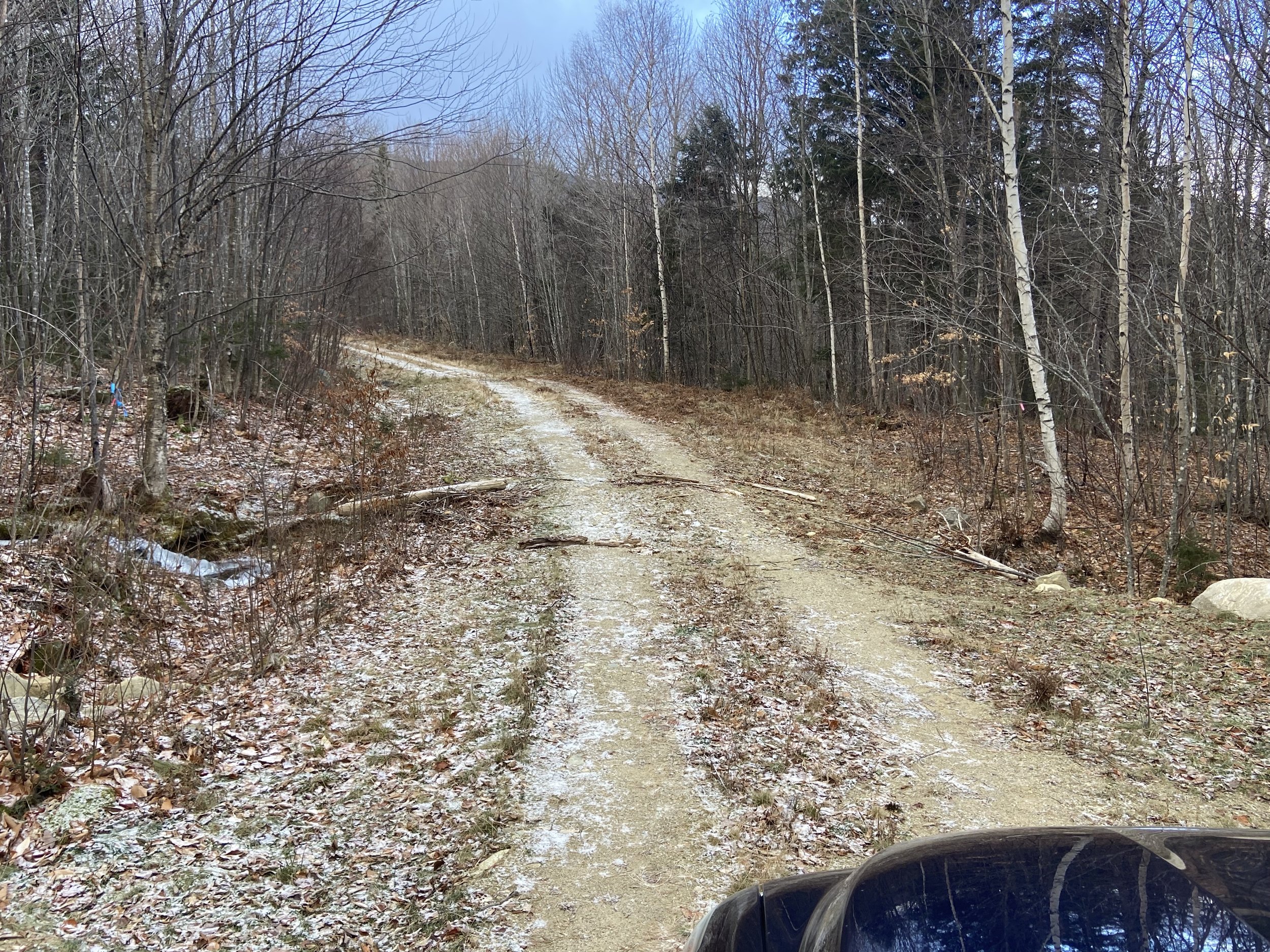
Debris observed on roadway as evidence of water flow over top the road due to a plugged culvert.
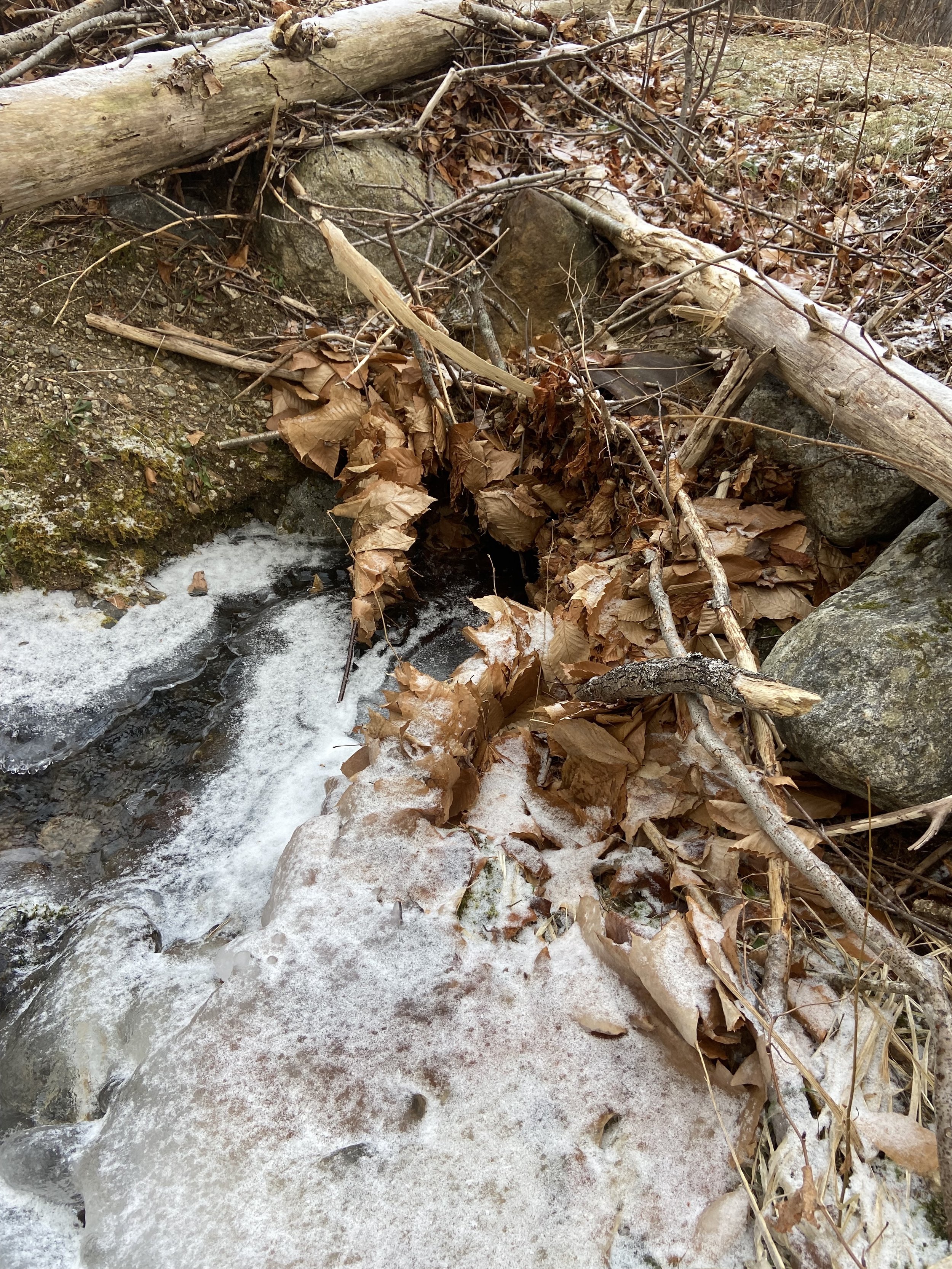
Plugged Culvert with Leaf Litter
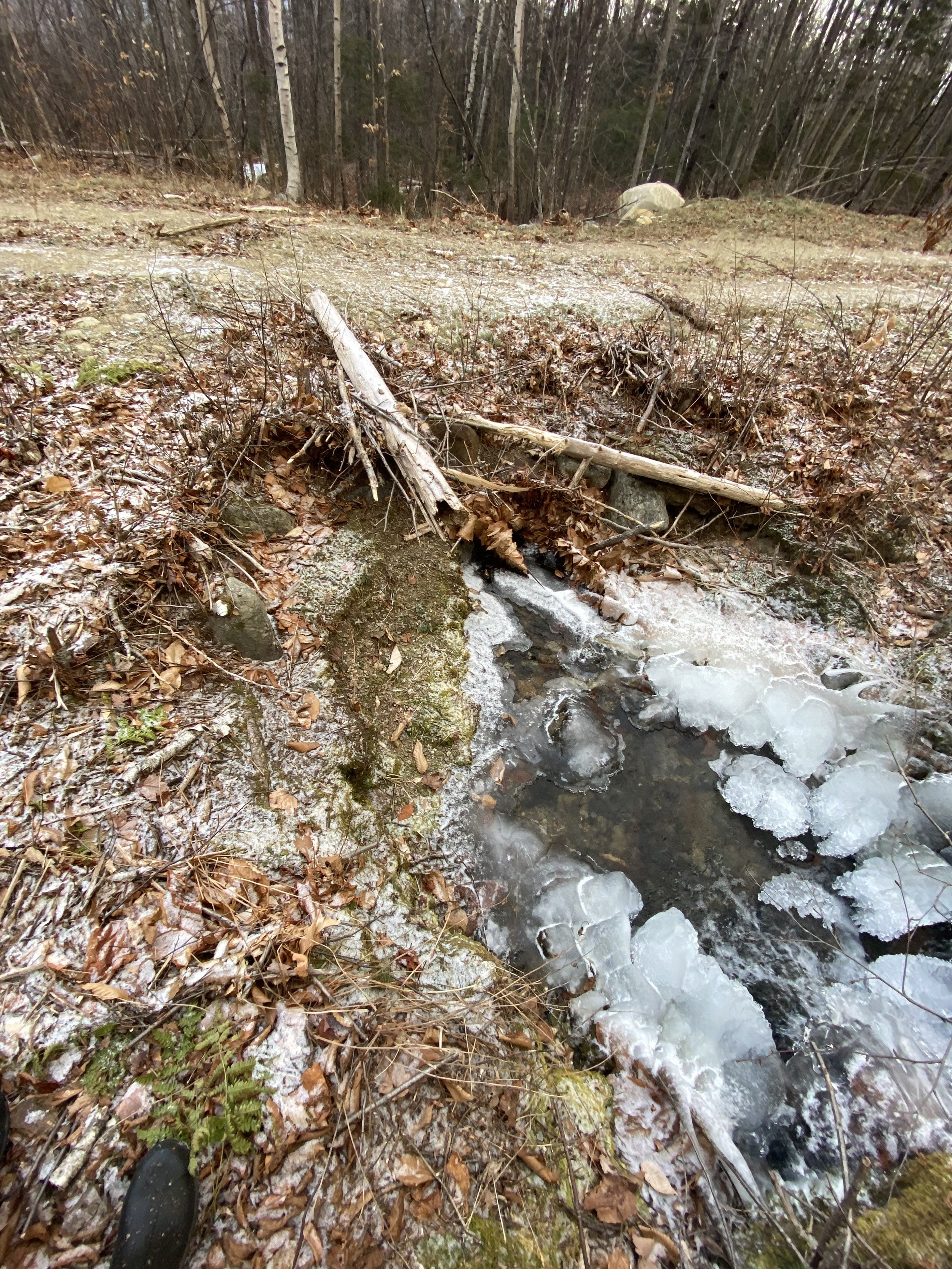
Evidence of High Water Line
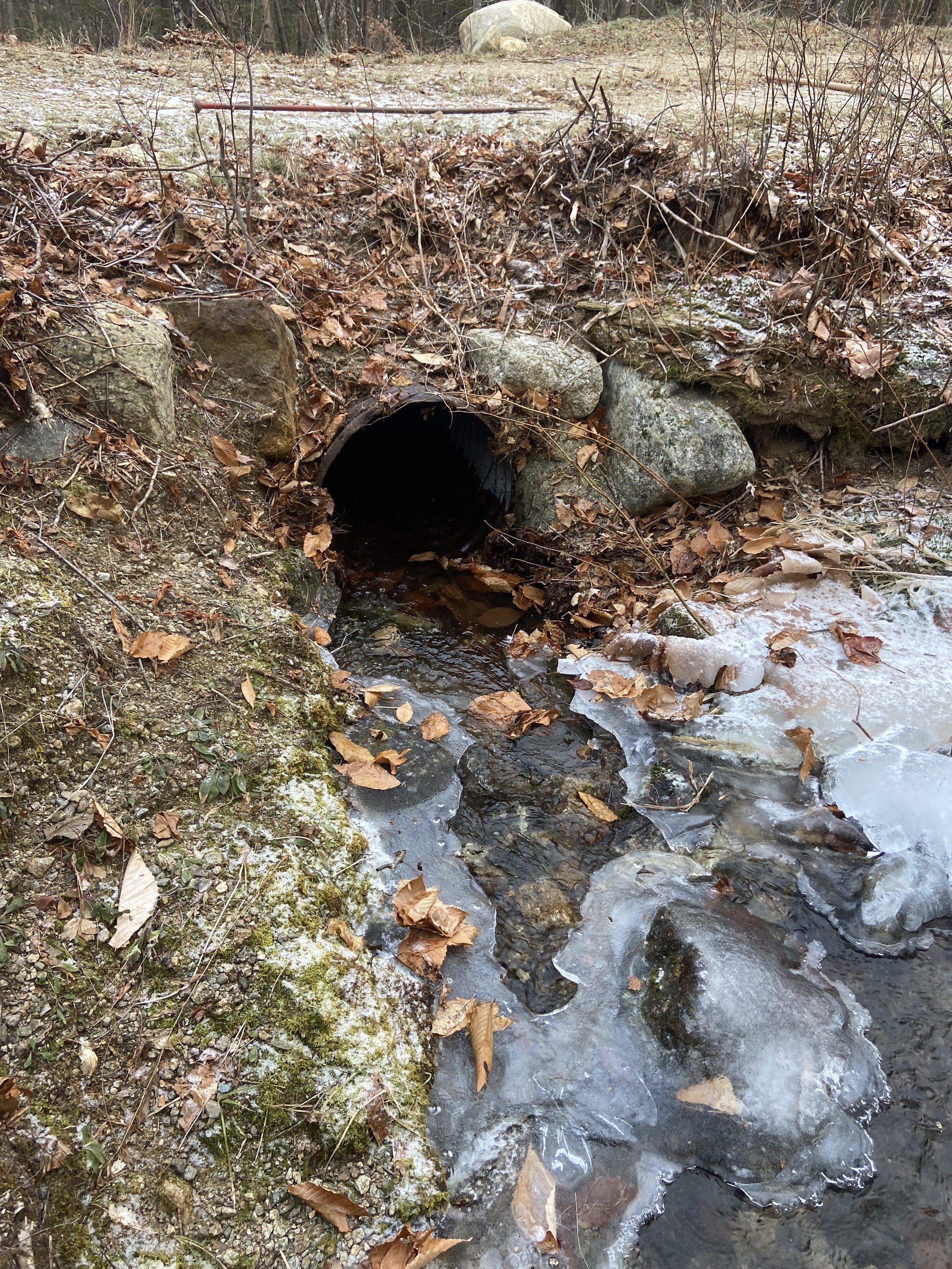
Cleaned Culvert
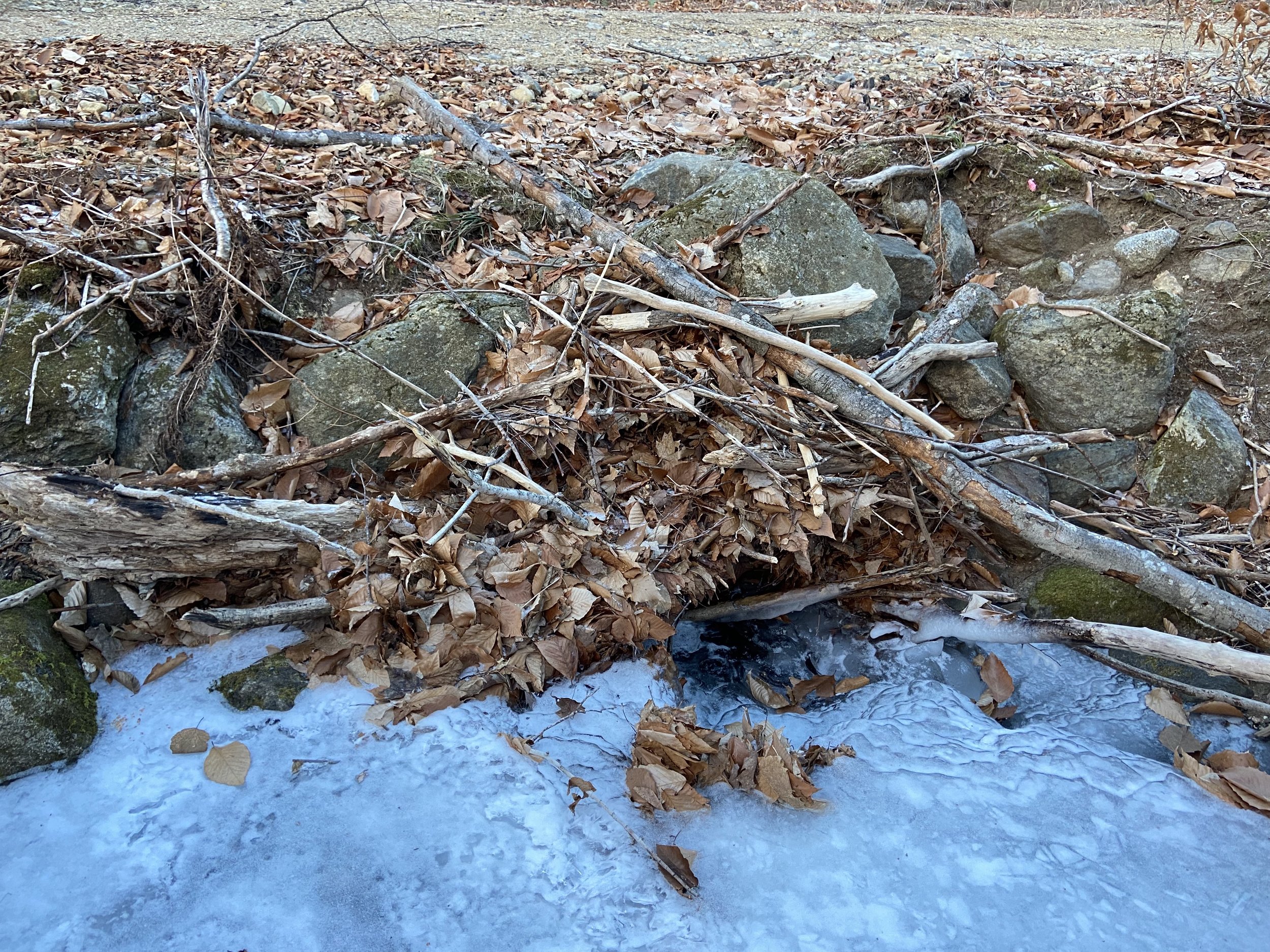
Plugged
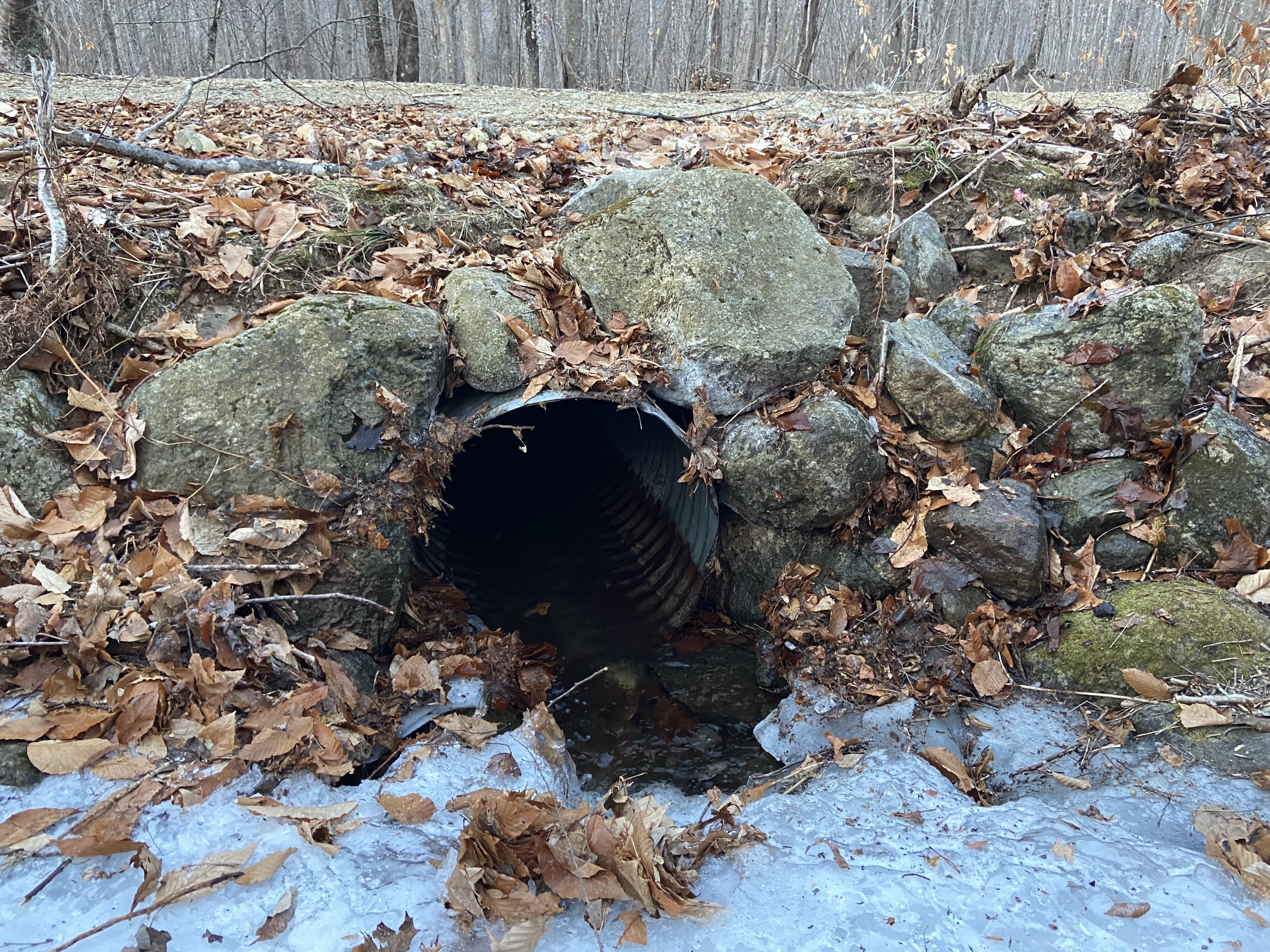
Open
Debris Removal
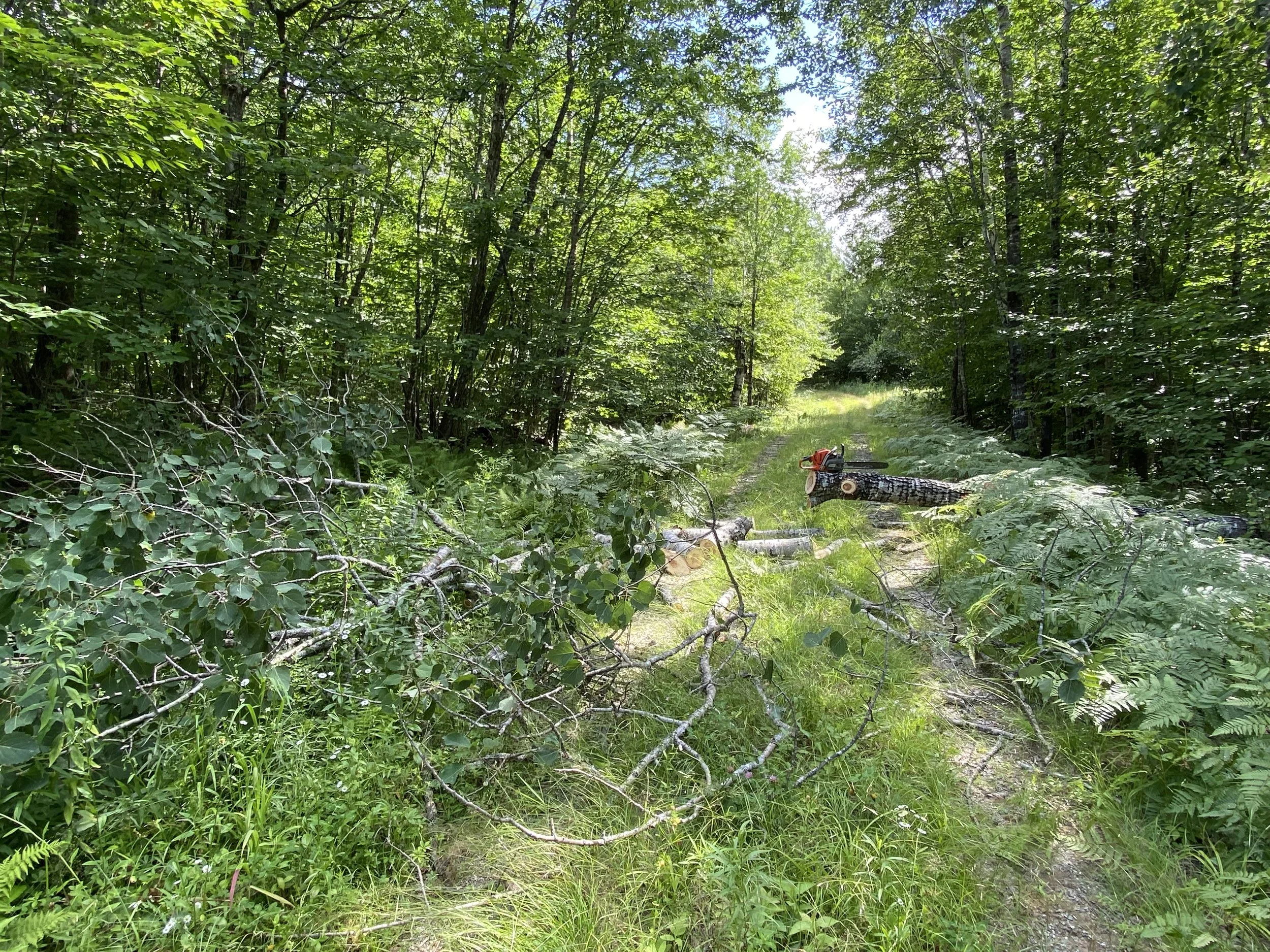
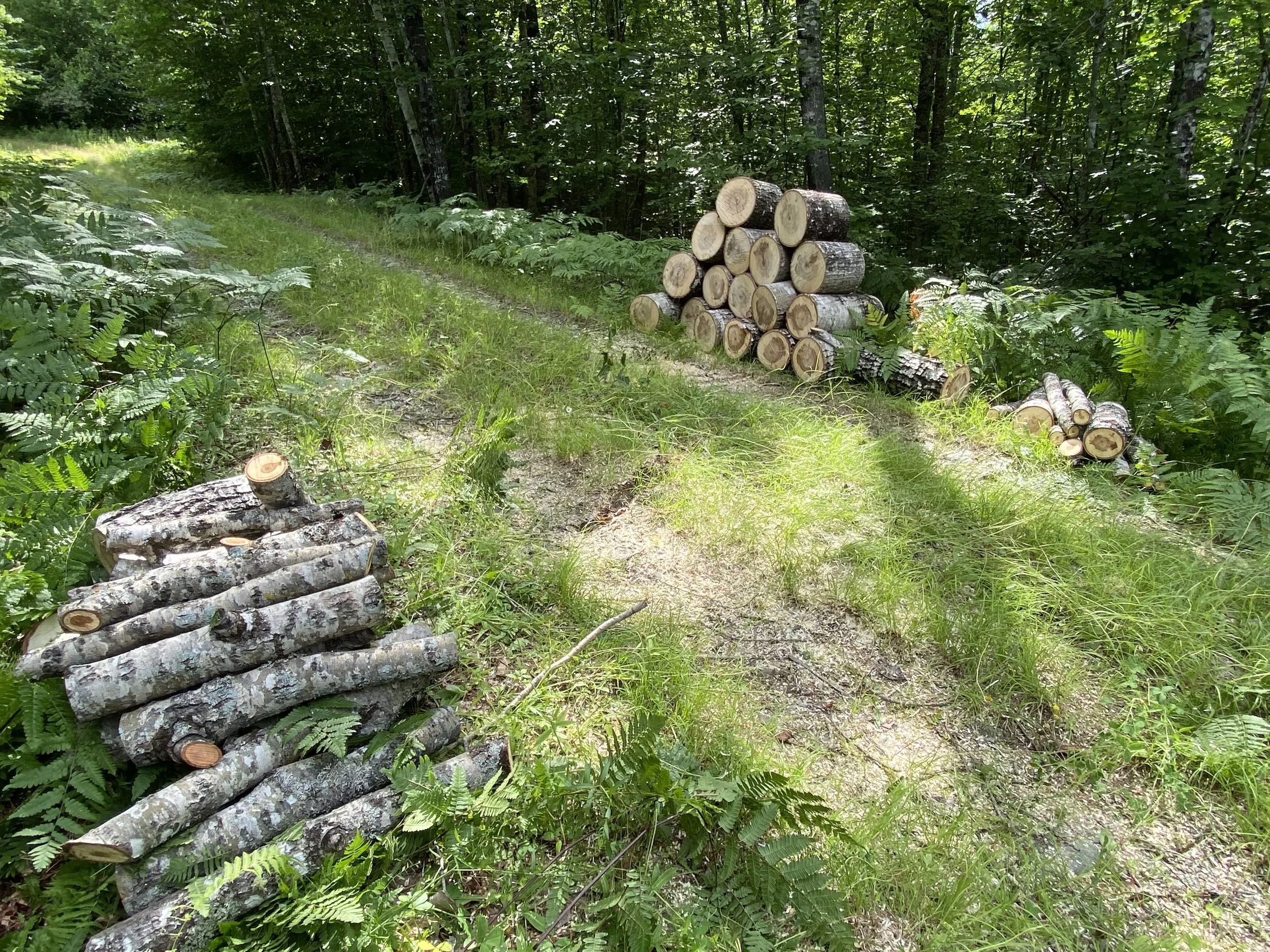
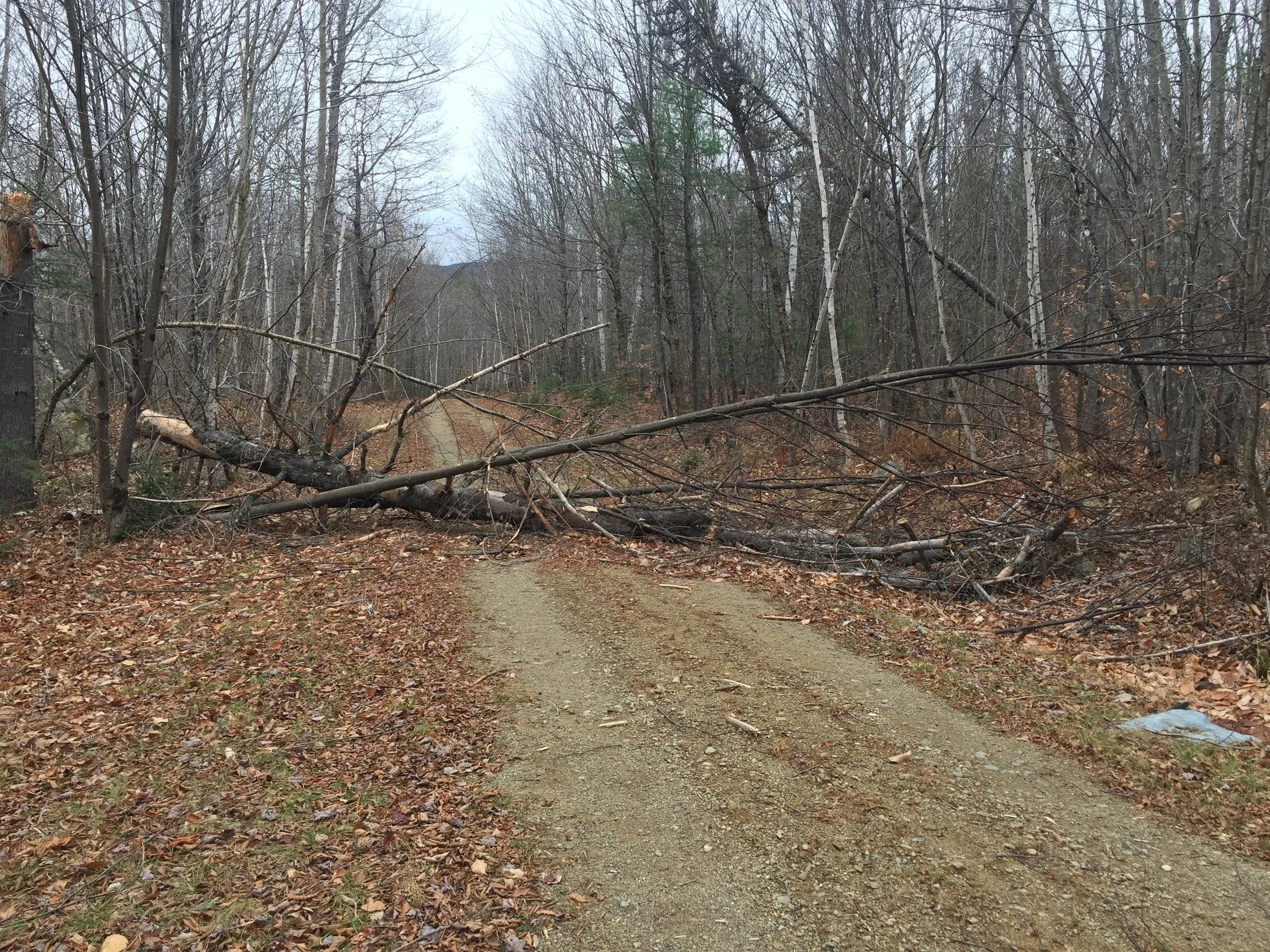
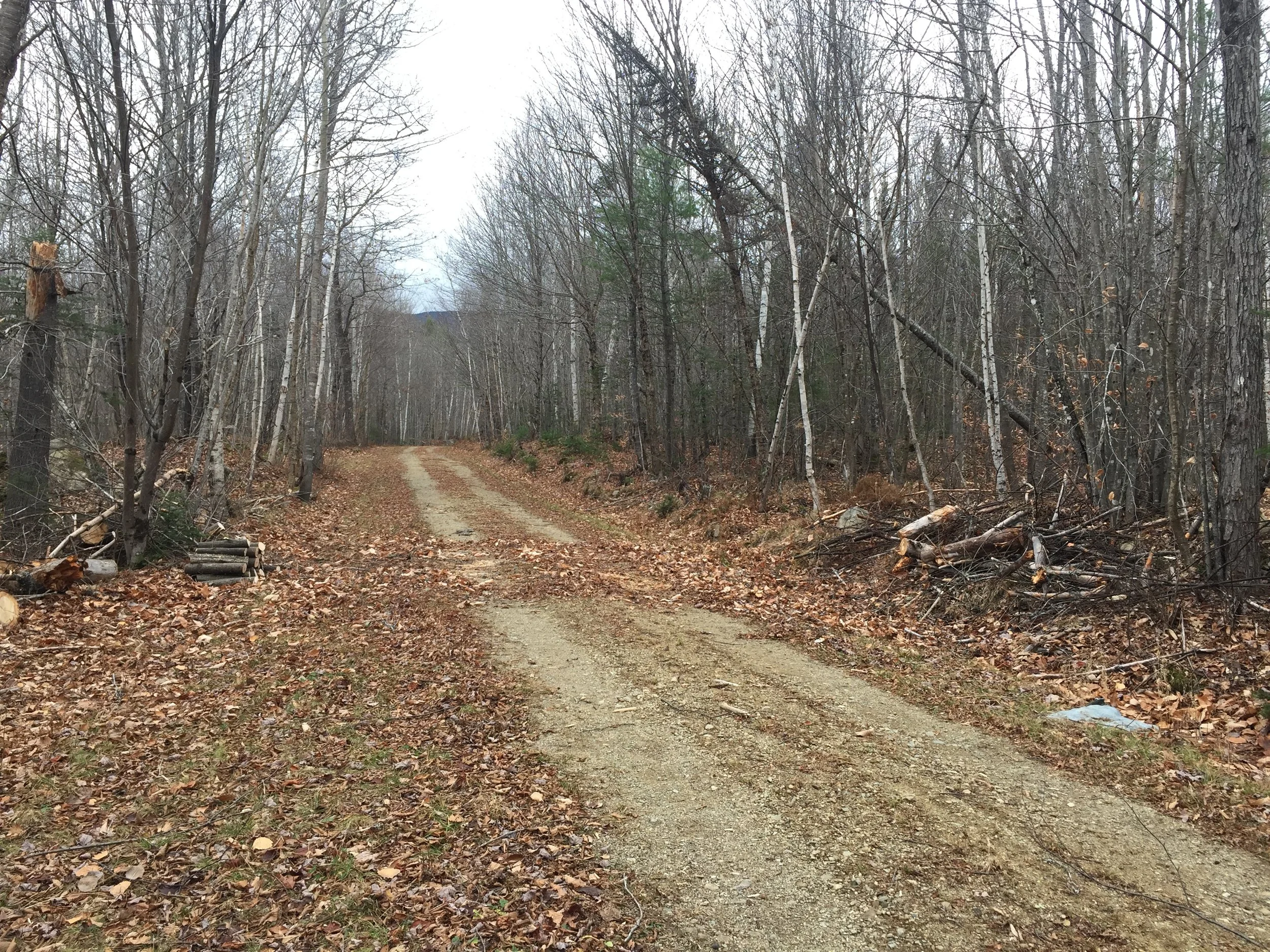
Why is all this logging road maintenance necessary?
Ignoring routine maintenance puts your investment at risk resulting in high repair costs in the long-term.